


Table of Contents
The arrival of Nvidia RTX Spark Mini PCs marks a monumental shift in compact desktop computing for machine learning engineers and creative professionals. Asus, Dell, and MSI have officially launched their flagship desktop hardware featuring Nvidia’s groundbreaking RTX Spark N1X superchip today.
Engineered specifically to handle intensive local artificial intelligence workloads and real-time ray tracing, these ultra-compact workstations bridge the gap between portable laptops and noisy server racks. They offer unprecedented tensor throughput directly on developer desks.
| Hardware Specification | Nvidia RTX Spark N1X (Asus GR1X) | Apple M4 Pro (Mac Mini) | Nvidia DGX Spark Workstation |
|---|---|---|---|
| GPU Architecture | 6,144-Core Nvidia Blackwell RTX | 20-Core Apple Metal Architecture | Dual Blackwell RTX Enterprise GPUs |
| CPU Architecture | 20-Core Nvidia Grace ARM CPU | 14-Core Apple Silicon SoC | 72-Core Grace Neoverse Architecture |
| Unified System Memory | Up to 128GB LPDDR5X Unified | Up to 64GB Unified Memory | Up to 256GB Unified Memory |
| Local AI Peak Throughput | 1 PFLOPS (1,000 TOPS INT4/FP4) | 273 TOPS Aggregate Platform | 2 PFLOPS Enterprise Compute |
| Base Starting Price | $4,499 (64GB RAM / 1TB NVMe) | $1,399 (24GB RAM / 512GB SSD) | $19,999 Base Rack/Tower Model |
| Primary Target Workloads | Local LLMs, CUDA, 3D Rendering | macOS Creatives, Video Editing | Multi-Model Enterprise Training |
Nvidia RTX Spark Mini PCs Architecture and Blackwell Silicon
At the core of these new compact workstations sits the Nvidia RTX Spark N1X superchip, an integrated silicon marvel marrying advanced GPU compute with efficient CPU power. Nvidia designed this package to deliver high-performance computing without the massive footprint of traditional towers.
The graphics compute engine features a 6,144-core Blackwell RTX GPU equipped with fifth-generation Tensor Cores and fourth-generation Ray Tracing cores. This hardware pipeline enables rapid local inference for billion-parameter neural networks alongside accelerated FP4 and FP8 precision math.
Coupled directly to the graphics silicon is a 20-core Nvidia Grace processor based on ARM architecture. This processor provides exceptional single-thread responsiveness and multi-threaded throughput while generating significantly less thermal dissipation than traditional x86 server chips.
By merging GPU and CPU dies onto a coherent high-speed interconnect, these compact workstations eliminate traditional PCIe bus bottlenecks entirely. Data passes seamlessly across shared memory pools, allowing real-time parameter streaming without latency penalties.
Hardware system builders like Asus and MSI have engineered specialized vapor chamber cooling assemblies within compact sub-three-liter enclosures. These custom thermal solutions prevent thermal throttling even during sustained multi-hour machine learning model fine-tuning sessions.
Through this cohesive packaging, Nvidia RTX Spark Mini PCs demonstrate how specialized system-on-chip architectures can successfully outshine bulky modular workstation computers. Developers gain server-tier compute density while maintaining whisper-quiet acoustic profiles in private office spaces.
Unified Memory Subsystem: 128GB High-Bandwidth Architecture
Memory capacity remains the most critical physical bottleneck when operating advanced generative language models on local hardware. Nvidia addresses this challenge directly by outfitting these compact systems with up to 128GB of high-speed unified LPDDR5X system memory across wide memory channels.
Unlike discrete gaming graphics cards constrained by 16GB or 24GB of dedicated VRAM, this unified memory structure allows large models to load fully into memory. Developers can comfortably execute 70-billion-parameter open-weights models locally without quantizing weights into unworkable precision tiers.
The shared memory architecture ensures that both the 20-core Grace CPU and the Blackwell GPU access the identical physical memory space. This completely eliminates redundant data copies between system RAM and video memory during complex computational tasks.
With memory bandwidth exceeding hundreds of gigabytes per second, prompt processing and continuous token generation operate with silky smoothness. In practical development environments, developers notice immediate latency reductions when testing agentic workflows and interactive retrieval systems.
For machine learning practitioners considering compact hardware upgrades, Nvidia RTX Spark Mini PCs represent a generational leap forward. Memory capacity finally matches the ambitious computational demands of modern local generative models on desktop hardware.
By offering unified pooling, these high-bandwidth systems ensure that large transformer attention caches remain persistently resident in fast memory. Researchers can explore contextual reasoning across extended token windows without encountering catastrophic memory allocation failures.
Local AI Developer Workflows: Native CUDA and WSL Integration
A defining competitive strength of these new desktops lies in their deep software compatibility with modern data science tooling. Nvidia RTX Spark Mini PCs provide full native support for CUDA and TensorRT through Windows on Arm and Windows Subsystem for Linux.
Engineers can launch standard Docker containers, PyTorch environments, and Hugging Face pipelines within WSL without rewriting underlying code. The underlying hardware translation layers ensure that existing Linux-based training scripts function immediately with zero architectural modifications.
Nvidia promotes these machines as dedicated local workstations for always-on autonomous agents and private enterprise intelligence. Organizations can process sensitive intellectual property on-premises, completely removing recurring cloud API tokens and external privacy vulnerabilities from the equation.
The onboard Blackwell Tensor Cores deliver up to one petaflop of AI performance for quantized FP4 numerical operations. This staggering compute density allows local models like Llama 3, Mistral, and DeepSeek to run at high generation speeds.
As detailed in recent The Verge reporting, these systems deliver an unprecedented combination of desktop silence and server-grade computational capabilities.
With immediate acceleration across key machine learning frameworks, Nvidia RTX Spark Mini PCs allow software teams to iterate on complex model architectures rapidly. Local compilation loops finish in seconds rather than queueing behind busy remote cluster jobs.
OEM Hardware Implementations: Asus, Dell, and MSI Hardware
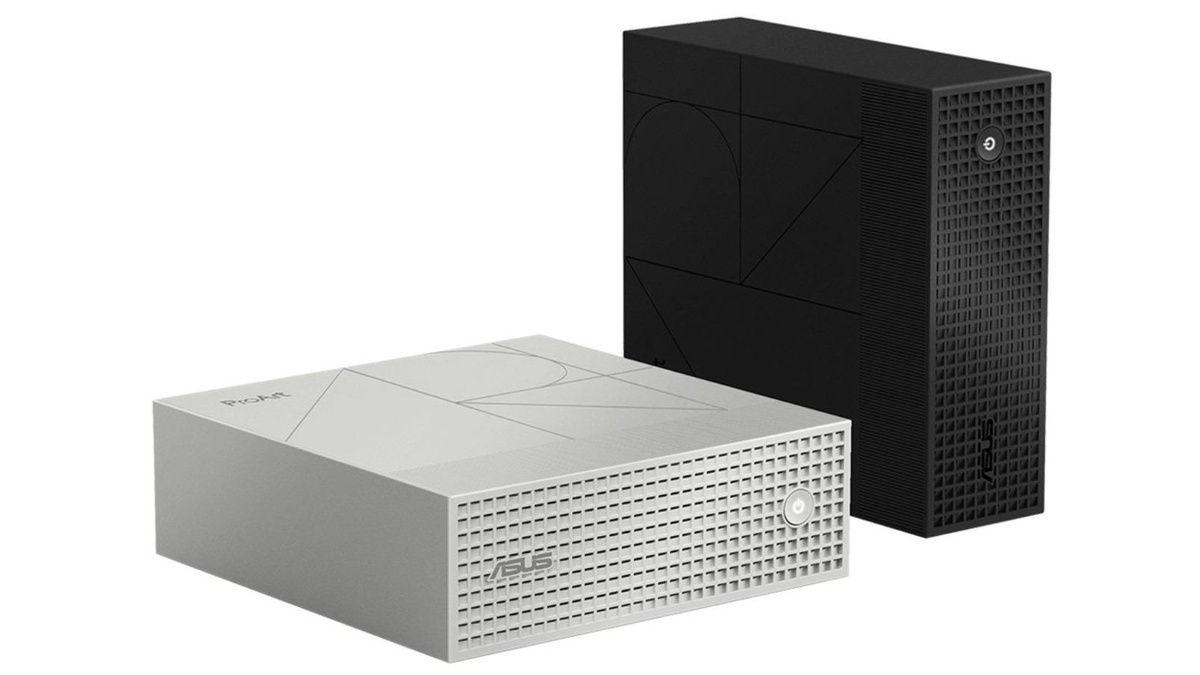
Major computer manufacturers have tailored distinctive designs around the N1X superchip to serve demanding workstation buyers. Asus leads the initial launch with its ProArt GR1X, a minimalist chassis boasting premium CNC-machined ventilation grilles and whisper-quiet operation.
The Asus ProArt GR1X includes dual Thunderbolt 4 ports, 10-gigabit Ethernet connectivity, and support for up to 4TB of high-speed NVMe storage. Asus specifically calibrated the fan acoustic profiles to maintain sub-28-decibel sound levels during intense AI workloads.
Dell enters the fray with its Precision Spark Compact, targeting managed corporate deployments and mission-critical developer environments. Dell bundles enterprise vPro remote management, ECC memory verification modes, and comprehensive three-year on-site professional service support agreements.
MSI targets hybrid digital creators with its Creator Spark Studio, featuring an eye-catching anodized aluminum enclosure and accessible expansion slots. MSI integrates rapid-access M.2 drive bays for external project staging alongside optimized HDMI 2.1 video output pipelines.
Later this year, Acer, Gigabyte, and HP will expand the ecosystem with additional commercial designs. Furthermore, Microsoft plans to begin shipping its dedicated Surface RTX Spark Dev Box before the end of November.
Across all manufacturing partners, Nvidia RTX Spark Mini PCs maintain rigorous thermal performance envelopes within compact footprints. Enterprise customers gain dependable hardware options tailored specifically to their administrative, technical, and aesthetic deployment requirements.
| OEM Manufacturer | Model Designation | Unified Memory & Storage | Chassis Volume | Starting MSRP | Market Availability |
|---|---|---|---|---|---|
| Asus | ProArt GR1X | 64GB / 128GB LPDDR5X, 1TB-4TB NVMe | 2.5 Liters | $4,499 | Available Today |
| Dell | Precision Spark Compact | 64GB / 128GB Unified, 2TB Gen5 NVMe | 2.8 Liters | $4,650 | Available Today |
| MSI | Creator Spark Studio | 64GB / 128GB Unified, 1TB-2TB NVMe | 2.6 Liters | $4,449 | Available Today |
| Microsoft | Surface RTX Spark Dev Box | 128GB Unified LPDDR5X, 2TB NVMe | 3.0 Liters | $4,999 | Shipping Late Nov 2026 |
| Gigabyte | AI Box Studio | 64GB / 128GB Unified, Dual M.2 PCIe | 2.4 Liters | TBA | Coming Q1 2027 |
| HP | ZBook Mini Workstation | 64GB / 128GB Unified, Enterprise SSD | 2.7 Liters | TBA | Coming Q1 2027 |
Nvidia RTX Spark Mini PCs Specifications Matrix
Analyzing the comprehensive specifications reveals how Nvidia RTX Spark Mini PCs fundamentally differ from conventional x86 desktop towers. Instead of balancing bulky modular graphics cards and heavy power supplies, these systems utilize tightly integrated silicon subsystems.
Power consumption remains exceptionally modest, with total system power draw peaking at under 180 watts under maximum combined compute load. That efficiency enables compact 200-watt external power adapters, drastically reducing desk clutter and electrical operating expenses.
In terms of input and output versatility, manufacturers provide Wi-Fi 7 wireless connectivity alongside dedicated ultra-fast Ethernet ports. High-bandwidth external storage arrays connect effortlessly via multiple 40Gbps USB4 and Thunderbolt ports situated on front and rear panels.
Internal storage scalability is preserved through standard M.2 PCIe 5.0 solid-state drive sockets supporting multi-terabyte upgrades. Developers can store massive training datasets locally, eliminating external network latency bottlenecks during high-throughput pipeline testing.
These robust physical characteristics confirm that Nvidia RTX Spark Mini PCs represent enterprise-grade computing solutions. They deliver uncompromising hardware dependability without sacrificing the compact aesthetic demanded by modern studio and home office workspaces.
By engineering specialized silicon interfaces, Nvidia RTX Spark Mini PCs provide sustained computational performance under rigorous production conditions. System thermal dissipation stays stable across hours of non-stop deep neural network execution.
Creative App Acceleration: Blender 5.3 and Adobe Premiere Pro
Beyond pure machine learning development, creative professionals will find massive rendering benefits inside these miniature powerhouses. Nvidia RTX Spark Mini PCs accelerate digital content creation through specialized OptiX ray tracing and hardware-accelerated encoding pipelines.
In Blender 5.3, the Blackwell architecture introduces official support for DLSS 4.5 Ray Reconstruction technology. Interactive viewport navigation remains smooth and noise-free even while previewing complex scenes filled with intricate volumetric lighting and glossy reflections.
Video editors utilizing Adobe Premiere Pro and DaVinci Resolve gain dedicated hardware encoders for AV1, HEVC, and ProRes footage. High-resolution 8K timeline scrubbing operates effortlessly without generating proxy media files or requiring external caching drives.
Generative AI extensions integrated into Adobe Photoshop and After Effects execute directly on the local Blackwell Tensor Cores. Tasks like generative fill and neural image upscaling complete in seconds without uploading private client assets to external cloud servers.
Software developers can explore extensive documentation and acceleration guides directly on Nvidia developer documentation, unlocking maximum performance across customized production pipelines.
Digital artists working on commercial 3D assets will appreciate how Nvidia RTX Spark Mini PCs eliminate the tedious rendering stalls common to older workstations. Creative workflows flow smoothly without disrupting focused studio production cycles.
Pricing Analysis and Mac Studio Comparison
With base models starting at $4,499 for 64GB configurations, Nvidia RTX Spark Mini PCs command a noticeable price premium. This positioning places them directly in competition with high-end Apple silicon workstations like the Mac Studio.
While users exploring an Apple M4 Mac Mini redesign enjoy lower entry pricing, Apple hardware lacks native CUDA acceleration. For data scientists committed to standard PyTorch and CUDA workflows, Apple silicon requires extensive translation overhead.
Furthermore, Windows on Arm gaming support continues to improve, although gaming remains a secondary justification at this price point. Prospective buyers must view these machines primarily as professional income-generating workstations rather than conventional consumer entertainment rigs.
As modern operating systems evolve and Nvidia Windows 10 support lifecycle shifts users toward newer architectures, Windows on Arm is gaining tremendous momentum. These mini PCs represent the vanguard of that modern architectural transition.
When factoring in avoided cloud computing bills, the $4,499 capital investment offers rapid return on investment for small engineering teams. Eliminating monthly cloud GPU instances often offsets hardware costs within several months of active local development.
For research labs managing proprietary algorithms, Nvidia RTX Spark Mini PCs provide long-term operational autonomy from hosted public cloud infrastructure. Total cost of ownership calculations clearly favor on-premises execution over recurring data ingestion subscription fees.
Frequently Asked Questions
What are the primary hardware specifications of Nvidia RTX Spark Mini PCs?
Nvidia RTX Spark Mini PCs combine a 6,144-core Blackwell RTX GPU with a 20-core Grace ARM processor on a single superchip. The system accommodates up to 128GB unified memory and delivers one petaflop of AI compute.
How do Nvidia RTX Spark Mini PCs compare against Apple silicon workstations?
While Apple silicon offers competitive power efficiency, Nvidia RTX Spark Mini PCs deliver native CUDA and TensorRT acceleration. That native software support is essential for running industry-standard PyTorch libraries and local LLM fine-tuning pipelines without translation hurdles.
Can Nvidia RTX Spark Mini PCs run Windows PC games smoothly?
Nvidia RTX Spark Mini PCs can run games through Windows on Arm emulation and native ports, supported by Blackwell ray tracing. However, their premium workstation pricing and development focus make them impractical choices for pure gaming enthusiasts.
What software environments support local AI development on these mini PCs?
These systems feature native CUDA drivers on Windows on Arm and comprehensive Windows Subsystem for Linux integration. Developers can seamlessly deploy Docker containers, Ollama runtimes, Hugging Face transformers, and private multi-agent frameworks with zero modification.
Which PC manufacturers are shipping Nvidia RTX Spark Mini PCs today?
Asus, Dell, and MSI have officially launched Nvidia RTX Spark Mini PCs today, with base prices starting at $4,499. Additional systems from Acer, Gigabyte, and HP alongside Microsoft’s Surface Dev Box arrive in coming weeks.
Final Verdict: Nvidia RTX Spark Mini PCs in Enterprise
The launch of Nvidia RTX Spark Mini PCs establishes a vital new product category in professional desktop computing. By combining Blackwell graphics, Grace processing, and 128GB unified memory, Nvidia brings server-grade local AI inference directly to developer desktops.
While the $4,499 entry price points clearly target commercial enterprises and research laboratories rather than casual shoppers, the value proposition is unmistakable. Freedom from recurring cloud GPU expenses and uncompromised local privacy make these mini PCs formidable productivity powerhouses.
As Asus, Dell, and MSI initiate shipments today, developers finally have a dedicated Windows on Arm platform built for next-generation intelligence. Nvidia RTX Spark Mini PCs redefine what compact desktop computing can accomplish in the era of generative AI.
