


Table of Contents
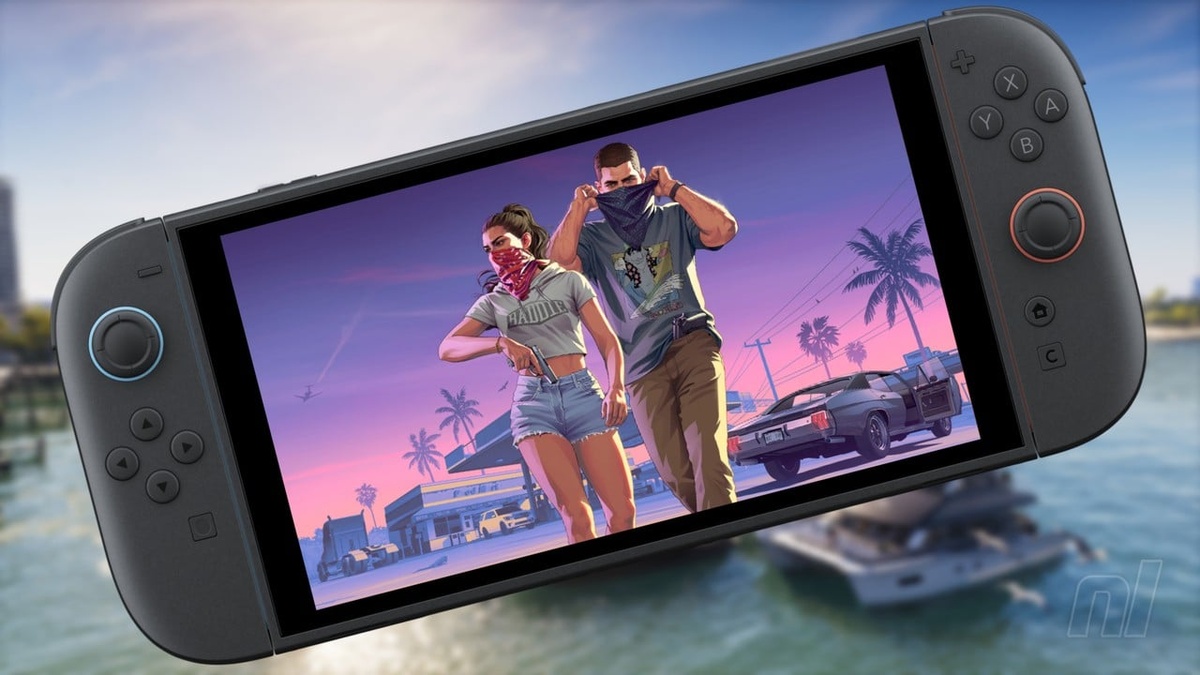
Speculation surrounding whether Nintendo’s upcoming hybrid hardware could run Rockstar Games’ magnum opus has reached a fever pitch, but a GTA 6 Switch 2 Port appears technically unfeasible. Prominent technical analysts have thoroughly evaluated the hardware demands required to render modern Vice City.
Following the global release of Grand Theft Auto 6, hardware experts dissected the extreme computational workloads governing next-generation open-world simulation. Their definitive findings indicate that delivering a functional GTA 6 Switch 2 Port would require unprecedented architectural compromises that fundamentally alter core game mechanics.
| Platform Architecture | SoC & Compute Units | CPU Setup & Frequency | Memory & Bandwidth | Storage & I/O Speed | Target Output & Upscaling | Port Feasibility Rating |
|---|---|---|---|---|---|---|
| Nintendo Switch 2 (Docked) | Nvidia T239 Ampere (1536 Cores) | 8x ARM Cortex-A78C @ ~1.5–2.0 GHz | 12 GB LPDDR5X (102 GB/s) | Custom NVMe / UFS 3.1 (~1.5–2.0 GB/s) | Dynamic 1080p via DLSS 3.1 | Severely Bottlenecked (Sub-20 FPS) |
| Nintendo Switch 2 (Handheld) | Nvidia T239 Ampere (Downclocked) | 8x ARM Cortex-A78C @ ~1.0 GHz | 12 GB LPDDR5X (Shared ~80 GB/s) | Internal Flash / Fast Cartridge | Dynamic 720p via DLSS 3.1 | Technically Unviable (Thermal Cap) |
| Xbox Series S | Custom AMD RDNA 2 (20 CUs, 4.0 TF) | 8x AMD Zen 2 @ 3.6 GHz (SMT Active) | 10 GB GDDR6 (224 GB/s Fast Bus) | Custom Gen 4 NVMe (2.4 GB/s Raw) | Dynamic 720p–800p via FSR 4.1 | Shipping Baseline (Mid-20s Dips) |
| PlayStation 5 Standard | Custom AMD RDNA 2 (36 CUs, 10.3 TF) | 8x AMD Zen 2 @ 3.5 GHz (Variable) | 16 GB GDDR6 (448 GB/s Unified) | Custom Gen 4 NVMe (5.5 GB/s Raw) | Dynamic 1440p via Dynamic TAA | Verified Native 30 FPS Standard |
| PlayStation 5 Pro | RDNA 3/4 Hybrid (60 CUs, 16.7 TF) | 8x AMD Zen 2 @ 3.85 GHz Boost | 16 GB GDDR6 (576 GB/s + 2GB DDR5) | Custom Gen 4 NVMe (5.5 GB/s Raw) | Dynamic 1600p–2160p via PSSR | Optimized 30 FPS / 60 FPS Enhanced |
T239 Tegra Silicon Architecture: Why a GTA 6 Switch 2 Port Faces Severe CPU Limits
The primary bottleneck confronting any proposed GTA 6 Switch 2 Port is not graphical horsepower, but rather central processing limitations. Nintendo’s next-generation system relies on Nvidia’s custom T239 processor featuring eight ARM Cortex-A78C cores running at conservative mobile clock frequencies.
In stark contrast, desktop current-generation home consoles deploy desktop-derived eight-core AMD Zen 2 microarchitectures operating at up to 3.8 gigahertz. Rockstar’s engine schedules dense crowd behaviors, multi-threaded vehicular traffic, and systemic pedestrian artificial intelligence across high-throughput desktop CPU threads.
Digital Foundry highlighted that Grand Theft Auto 6 incurs a massive CPU burden that restricts frame rates to thirty frames per second even on Sony’s flagship hardware. When top-tier home consoles struggle with CPU load, mobile ARM cores face insurmountable mathematical hurdles.
Architectural scaling laws demonstrate that lowering graphical resolution does nothing to relieve saturated processor instruction queues. Similar to processing bottlenecks detailed in our examination of AMD Ryzen 7 9800X3D gaming architecture, CPU throughput dictates foundational simulation limits.
Without fundamentally gutting pedestrian counts, vehicular pathfinding algorithms, and interactive physics calculations, the mobile processor would experience catastrophic frame pacing stalls. This stark architectural reality makes an uncompromised GTA 6 Switch 2 Port practically impossible on handheld silicon.
Digital Foundry Assessment: Examining Xbox Series S Performance Parallels
To evaluate feasibility, hardware analysts at Digital Foundry examined how the title behaves on Microsoft’s entry-level home console. Xbox Series S represents the lowest technical baseline currently running the ambitious open-world crime epic natively.
In their latest technical broadcast, analysts noted that the budget Xbox experiences noticeable stress during intensive city traversal and violent combat scenes. Frame rates routinely linger in the mid-to-high twenties when dense vehicular traffic and alpha particle effects saturate the render pipeline.
Tech expert John Linneman explicitly stated that unless massive architectural changes are made, a GTA 6 Switch 2 Port simply cannot function. Detailed reporting from Nintendo Life echoes this assessment, emphasizing the vast gulf separating hybrid mobile hardware from dedicated stationary boxes.
While Xbox Series S features an eight-core Zen 2 processor with robust memory throughput, GTA 6 Switch 2 Port must operate inside a tight handheld thermal budget. Demanding parity with Microsoft’s entry system overlooks the dramatic clock frequency differences between stationary and portable gaming platforms.
The empirical performance data gathered across retail consoles provides unambiguous evidence regarding engine scalability. If a fifty-watt dedicated home console struggles to maintain locked thirty-frame playback, portable silicon cannot sustain viable gameplay.
Rockstar RAGE Engine Scalability: Memory Bandwidth and Asset Streaming Bottlenecks

Beyond computational execution, a GTA 6 Switch 2 Port must confront severe physical memory capacity and bandwidth constraints. Rockstar’s upgraded RAGE engine streams vast quantities of photorealistic assets, high-resolution textures, and complex geometry models simultaneously across seamless city boulevards.
Current generation platforms leverage sixteen gigabytes of high-bandwidth GDDR6 memory providing data transfer rates exceeding four hundred gigabytes per second. Even Microsoft’s compact Series S supplies two hundred twenty-four gigabytes per second across its primary memory bank.
GTA 6 Switch 2 Port is widely reported to feature twelve gigabytes of LPDDR5X unified system memory delivering roughly one hundred two gigabytes per second. After reserving critical memory buffers for the operating system, game developers receive roughly nine usable gigabytes.
This limited memory buffer would force aggressive texture downsampling, causing visible asset popping and muddy surface details throughout Vice City. Managing constrained memory pipelines mirrors software optimization challenges covered in our analysis of Nvidia driver support lifecycles.
Memory bandwidth limits also restrict the engine’s ability to stream high-fidelity audio, dense environmental foliage, and reflective water surfaces without stuttering. These memory bottlenecks represent another massive obstacle for GTA 6 Switch 2 Port development teams.
Nvidia DLSS and Ampere GPU Limits: Can Image Reconstruction Rescue the Port?
Enthusiasts often point to Nvidia’s proprietary Deep Learning Super Sampling technology as the magic bullet capable of bridging the performance gap. The custom T239 processor includes dedicated Tensor cores supporting DLSS upscaling to reconstruct crisp high-definition output from lower internal render resolutions.
While DLSS performs miraculous spatial upscaling, it cannot resolve foundational CPU deficits inherent to a GTA 6 Switch 2 Port. Machine-learning upscaling alleviates pixel shading demands on the graphics cores, but does nothing to reduce simulation processing overhead.
Furthermore, modern GTA 6 Switch 2 Port require a minimum baseline input resolution to generate stable, clean imagery without shimmering artifacts. Reconstructing a complex urban environment from an internal base below 540p causes severe disocclusion noise, ghosting trails, and geometric shimmering.
Similar balance considerations between dedicated silicon coprocessors and general rendering execution were observed in our breakdown of Apple M4 architecture benchmarks. AI acceleration provides substantial efficiency gains, but requires balanced underlying computing resources.
Consequently, relying solely on AI reconstruction cannot salvage an experience crippled by fundamental core architectural bottlenecks. Smart upscaling represents only one piece of the complex puzzle required for GTA 6 Switch 2 Port viability.
TDP and Thermal Envelopes: Docked Versus Handheld Power Constraints for GTA 6 Switch 2 Port
| Architectural Bottleneck Matrix | Nintendo Switch 2 Hybrid | Xbox Series S Baseline | Engineering Disparity Factor | Impact on Open-World Simulation |
|---|---|---|---|---|
| CPU Instruction Throughput | 8x ARM Cortex-A78C Mobile Cores | 8x AMD Zen 2 Desktop-Class Cores | Estimated 2.8x Deficit in Instructions | Severe thread stalls in crowd AI & physics |
| Unified Memory Bandwidth | 102 GB/s LPDDR5X System Bus | 224 GB/s GDDR6 High-Speed Bus | Over 2.1x Lower Memory Bandwidth | Extreme texture popping and geometry latency |
| Total Usable Game Memory | ~9.0 GB Usable (3.0 GB OS Reserved) | ~8.0 GB Usable (2.0 GB OS Reserved) | Comparable Capacity, Lower Speed | Aggressive LOD culling and asset degradation |
| Thermal Power Envelope (TDP) | 10W Handheld / 25W–30W Docked | ~75W Peak Wall Draw (~50W Sustained) | Up to 5x Lower Power Dissipation | Thermal throttling prevents high clock sustain |
| Hardware Ray Tracing RT Cores | Ampere Generation RT Cores | RDNA 2 Hardware BVH Accelerators | Ampere Superior Per-Core, Power-Limited | Ray-traced reflections must be disabled |
| Physical Media Storage Limits | Max 64 GB Proprietary Flash Cartridge | Ultra HD Blu-ray / Internal 512GB SSD | Over 2.5x Deficit Against 150GB Install | Requires massive digital download mandates |
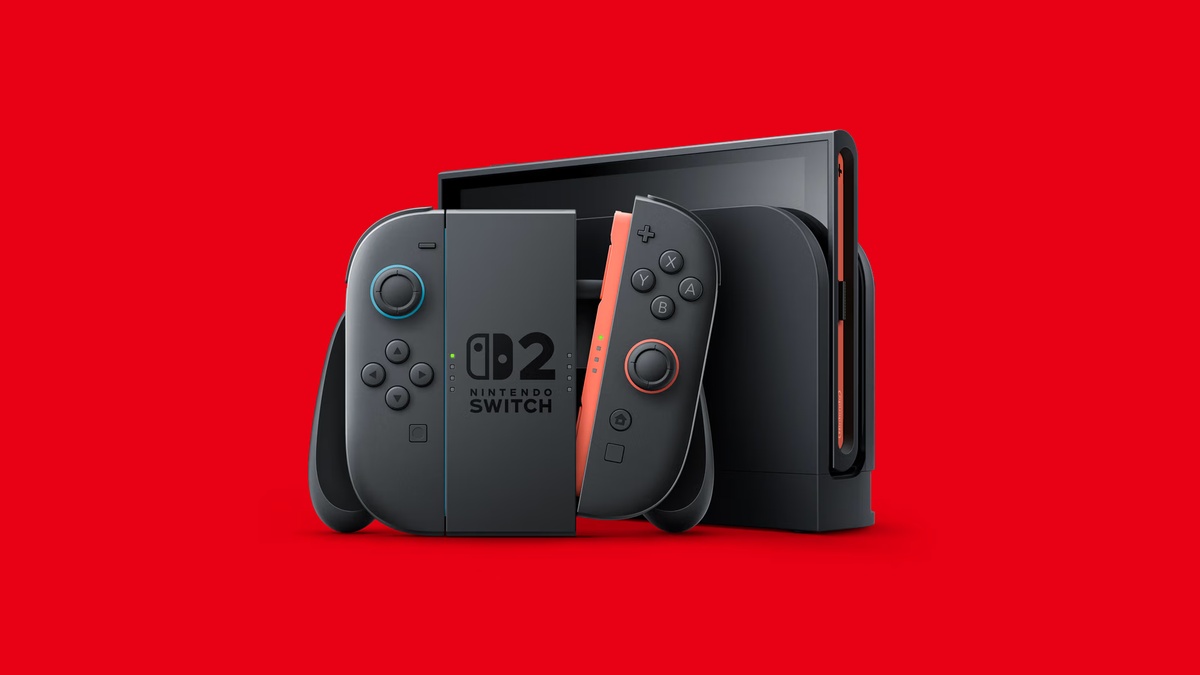
Thermodynamic realities dictate the boundaries of interactive entertainment, and this principle applies intensely to GTA 6 Switch 2 Port feasibility. Nintendo’s upcoming hybrid hardware must operate comfortably inside an ultra-portable thermal envelope drawing roughly ten to fifteen watts in handheld mode.
When docked to a television display, active cooling fans allow total system power to scale toward twenty-five to thirty watts maximum. In contrast, PlayStation 5 and Xbox Series X draw over two hundred watts during intense open-world exploration.
To prevent thermal throttling and maintain acceptable battery longevity, processor clock speeds must decrease significantly when undocked. Handheld CPU clock speeds are expected to drop below one gigahertz, cutting computational throughput in half.
A game engine engineered to push stationary two-hundred-watt desktop consoles to their absolute brink cannot gracefully scale down to a ten-watt mobile chassis. Attempting to run such complex simulation threads on battery power would drain power cells in mere minutes while generating intolerable device heat.
Maintaining consistent playability across both docked and portable configurations remains Nintendo’s mandatory technical certification standard for all developers. Failing to sustain playable frame rates in handheld mode represents a fatal roadblock for GTA 6 Switch 2 Port prospects.
Cartridge Media and Storage Speeds: Physical Cartridge Limitations Analyzed
Physical storage distribution introduces yet another severe commercial and logistical hurdle for prospective hybrid platform adaptations. Grand Theft Auto 6 is projected to command an unprecedented storage installation footprint exceeding one hundred fifty gigabytes on modern SSD storage.
Nintendo Switch 2 cartridges utilize proprietary solid-state flash memory, with premium cards likely topping out at thirty-two or sixty-four gigabytes. Manufacturing high-capacity flash memory cards in massive commercial volumes imposes prohibitive unit costs on retail software publishers.
Mandating mandatory multi-gigabyte digital downloads would frustrate consumers and consume vast portions of available internal system storage. For a prospective GTA 6 Switch 2 Port, compression algorithms would need to compress sprawling audio and video assets down to unprecedented ratios.
Moreover, while NVMe flash storage represents a huge upgrade over original Switch microSD slots, bandwidth still trails desktop consoles. Streaming vast urban assets at highway speeds requires constant high-throughput disk access that pushes mobile storage controllers to their absolute limit.
Balancing manufacturing expenses against digital download sizes creates a daunting commercial barrier that few publishers are willing to risk. These packaging realities significantly diminish the financial enthusiasm for publishing a native GTA 6 Switch 2 Port.
Historical Precedents and Cloud Gaming: The Realistic Future for GTA 6 Switch 2 Port Access
Throughout video game history, hardware manufacturers and third-party studios have engineered seemingly impossible software ports through heroic optimization efforts. Titles like The Witcher 3 and Doom Eternal arrived on original Nintendo Switch hardware through masterful programming and surgical graphical downgrades.
However, those historic conversions scaled games built originally for eighth-generation hardware, whereas a GTA 6 Switch 2 Port must bridge an entire architectural generation. The technological leap separating current-generation flagships from portable Tegra silicon is far wider than past cross-generation transitions.
If Rockstar Games and Nintendo genuinely desire to bring Vice City to hybrid players, server-side cloud streaming emerges as the only viable technical pathway. As explored in our comprehensive breakdown of cloud gaming service subscription models, remote rendering bypasses local silicon limits.
By hosting the demanding simulation on remote cloud server farms, hybrid console owners could explore Vice City without melting local hardware. Cloud delivery preserves cutting-edge ray-traced lighting and dense crowd simulations, requiring only a stable high-speed broadband wireless connection.
While cloud delivery sacrifices offline portability on airplanes and subways, it offers the only realistic avenue to experience the crime epic on Nintendo screens. For the foreseeable future, cloud streaming remains the sole plausible avenue for GTA 6 Switch 2 Port access.
Frequently Asked Questions
Can Nintendo Switch 2 run Grand Theft Auto 6 natively?
According to Digital Foundry analysts, a native GTA 6 Switch 2 Port is extremely unlikely due to severe CPU limitations and massive memory bandwidth bottlenecks.
Why is the CPU considered the primary bottleneck for the game?
The title pushes even the PlayStation 5 Pro to its limit with heavy CPU simulation demands that mobile ARM Cortex-A78C cores cannot execute smoothly.
Can Nvidia DLSS AI upscaling fix performance on Switch 2?
While Nvidia DLSS provides sophisticated image reconstruction, it only reduces GPU load and cannot resolve the critical CPU instruction bottlenecks restricting the engine.
Is a cloud streaming version of Grand Theft Auto 6 possible on Switch 2?
Yes, delivering Grand Theft Auto 6 via a dedicated cloud streaming edition represents the only technically viable method to bring the game to Nintendo hardware.
Why do game file sizes create physical cartridge complications?
Massive game file sizes exceeding one hundred fifty gigabytes would require prohibitively expensive high-capacity physical flash cartridges that erode retail publishing profit margins.
Final Verdict: Technical Reality Against Hybrid Gaming Ambition
The definitive technical verdict delivered by industry hardware experts confirms that an uncompromised GTA 6 Switch 2 Port remains firmly in the realm of fantasy. Rockstar Games crafted an uncompromising masterpiece engineered specifically to push high-wattage desktop consoles to their absolute physical thresholds.
While Nintendo’s upcoming hybrid hardware represents an admirable leap over its predecessor, mobile silicon cannot overcome fundamental physical limits. Shrinking dense crowd simulations, sophisticated physics, and ray-traced lighting into a ten-watt handheld chassis requires sacrifices that compromise the core experience.
Enthusiasts dreaming of portable Vice City escapades should temper their expectations or look toward future remote cloud streaming solutions. Until mobile processor architectures achieve unprecedented generational leaps, GTA 6 Switch 2 Port feasibility remains out of reach for portable hybrid gaming.
