


Table of Contents
The highly anticipated arrival of Rockstar Games next open-world opus introduces groundbreaking acoustic fidelity, showcasing the GTA 6 Headphones Mechanic as one of the most transformative quality-of-life additions ever designed for free-roam urban navigation across the fictional state of Leonida.
According to former Rockstar technical director Obbe Vermeij, this exact personal music concept was originally planned for 2002 retro classic Grand Theft Auto: Vice City before crippling PlayStation 2 hardware bottlenecks forced developers to scrap the feature entirely.
| Architectural Dimension | 2002 GTA: Vice City (Cut Concept) | Grand Theft Auto 6 (Modern Engine) | Generational Evolution Impact |
|---|---|---|---|
| Listening Device | Analogue cassette Walkman | Digital smartphone & wireless earbuds | Modernized lifestyle tech seamlessly integrated into UI |
| Storage Bandwidth | 4x DVD-ROM (approx. 5.28 MB/s) | Custom PCIe 4.0 NVMe (over 5,000 MB/s) | Eliminates audio stuttering and seek latency completely |
| Memory Allocation | 2MB audio RAM partition | Unified multi-gigabyte GDDR6 pool | Allows concurrent radio streaming alongside complex open-world geometry |
| Audio Scope | Linear music radio loops only | Music, podcasts, talk shows & news | Massive narrative immersion reacting to active storyline milestones |
| Spatial Physics | Basic stereo channel separation | 3D audio rays & dynamic environmental ducking | Preserves tactical situational awareness during combat and traffic |
| Playback Flow | Vehicle exit instantly stopped audio | Seamless continuous playback anywhere | Unbroken rhythm transitioning between pedestrian and automotive gameplay |
Ex-Rockstar Technical Revelations: The Cut 2002 PS2 Mechanic
Decades before modern multi-threaded console architectures arrived, Rockstar North engineers attempted to revolutionize pedestrian audio during the rapid development of Grand Theft Auto: Vice City on Sony sixth-generation home hardware.
Writing on social media, veteran technical director Obbe Vermeij confirmed that designers conceived an in-game Walkman cassette player pick-up icon, allowing protagonist Tommy Vercetti to enjoy licensed eighties radio stations outside vehicular cockpits.
However, severe optical disc seek times and the console stringent thirty-two megabyte main memory partition created insurmountable hurdles, forcing studio leads to purge the portable audio player before retail pressing began.

Primary reporting from IGN highlights that early PlayStation 2 game discs struggled to stream ambient open-world asset data while concurrently decompressing continuous high-fidelity stereo audio tracks on foot.
Vehicular radios succeeded only because vehicle travel cached dedicated streaming buffers alongside standardized road streaming pipelines, whereas pedestrian sprint mechanics triggered unpredicted disc head thrashing across sprawling suburban geometry.
Consequently, the beloved cassette player concept remained locked inside developer archives for twenty-four years, waiting until next-generation solid-state architectures matured enough to fulfill Rockstar original ambient audio vision.
How GTA 6 Headphones Mechanic Transforms On-Foot Exploration
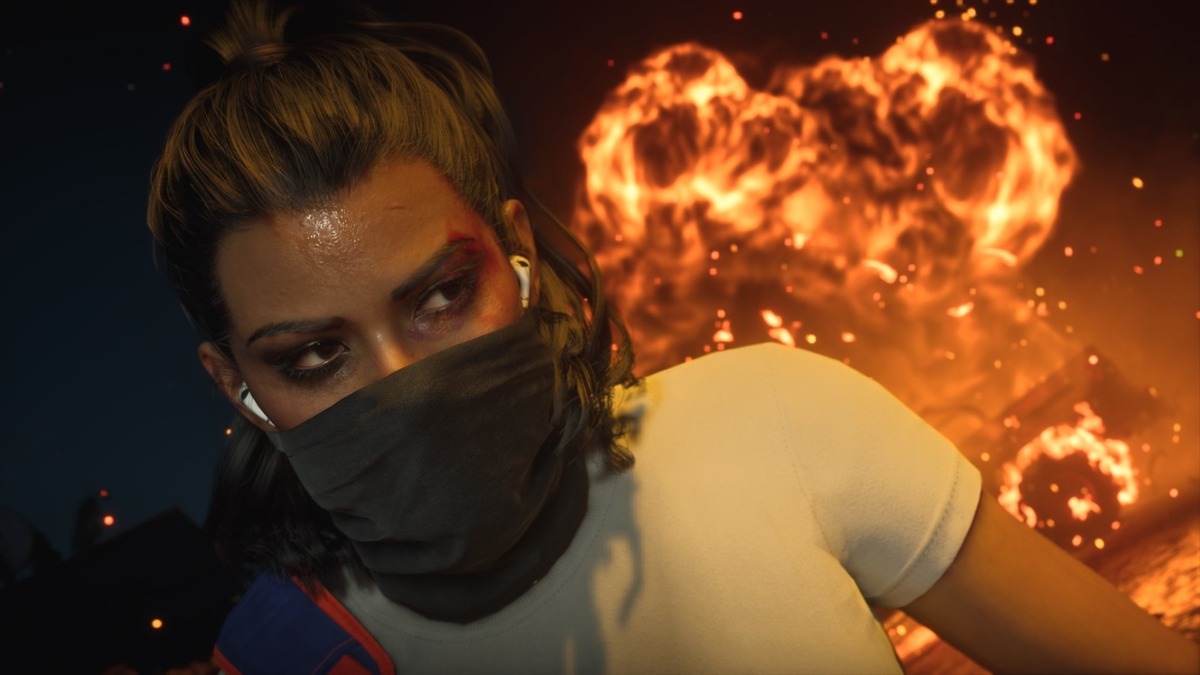
Modern Leonida completely reimagines personal listening by outfitting protagonists Lucia and Jason with high-end digital smartphones paired directly to wireless low-latency earbuds.
Operating the seamless GTA 6 Headphones Mechanic allows players to step out of high-performance sports coupes without interrupting ongoing talk shows, hip-hop sets, or synthy synthwave hits across bustling metropolitan streets.
In previous franchise installments, stepping onto pavements instantly halted automotive radios, forcing fans to remain parked in dangerous intersections merely to hear iconic musical tracks reach their emotional crescendo.
Now, pedestrian movement feels remarkably cinematic as atmospheric Vice City rain patters against asphalt while licensed eighties pop tracks or modern trap anthems resonate smoothly through private wireless stereo channels.
Whether jogging along the sun-bleached promenades of Ocean Beach or browsing high-end boutique storefronts, personal audio playback introduces continuous rhythm that fundamentally alters the subjective pacing of open-world exploration.
Furthermore, players analyzing high-end audio setups on modern hardware can witness similar platform leaps seen across contemporary cloud gaming infrastructure, delivering zero-latency streaming directly into player ear canals.
Hardware Architecture: Streaming Audio From 32MB PS2 to Modern NVMe
To understand why this feature languished in development limbo for nearly a quarter of a century, one must examine the staggering generational gulf in hardware throughput.
The 2002 PlayStation 2 utilized a specialized SPU2 sound processor possessing a mere two megabytes of dedicated sound RAM alongside a sluggish four-speed DVD-ROM drive.
Streaming continuous forty-four kilohertz uncompressed music files while streaming geometry textures strained memory budgets, but the wireless personal audio architecture on PlayStation 5 leverages customized PCIe 4.0 solid-state drives streaming over five gigabytes per second.
This colossal bandwidth pipeline allows the RAGE engine to stream multi-channel acoustic environments, radio stems, pedestrian conversations, and environmental reverberation matrices without dropping a single sample frame.
Much like cutting-edge silicon architectures delivering generational speedups in gaming CPU specifications, modern console input-output coprocessors offload streaming decompression completely from main CPU cores.
By eliminating drive seek times and bandwidth constraints, the development team finally unified vehicular and pedestrian sound pipelines into a singular, cohesive acoustic system.
Confirmed GTA 6 Headphone Audio Features and Podcasts
Rockstar Games has expanded in-game media well beyond traditional music rotations, building an enormous multimedia library designed specifically for mobile headphone consumption.
Through the GTA 6 Headphones Mechanic, listeners access extensive true-crime investigations, conspiracy podcasts, political talk debates, and satirical wellness broadcasts mirroring contemporary digital culture across Florida.
These serialized audio shows unfold dynamically based on story progression, commenting directly on recent heists, corporate scandals, and mayoral election controversies triggered by protagonist actions.
Working out in Vice City fitness centers or executing long recon surveillance stakes becomes deeply engaging as informative podcasts unravel background lore and underworld syndicates.
Music stations span diverse regional genres, featuring classic retro disco, aggressive modern rap, sultry Latin salsa, synthpop, and heavy metal tailored to diverse geographical counties.
Each station includes authentic commercial breaks, eccentric DJ banter, and breaking news bulletins, maintaining the studio trademark satirical mirror on contemporary Western commercialism.
| Grand Theft Auto Title | Release Year | Hardware Platform | Total RAM Pool | Audio Processing Pipeline | Pedestrian Audio Capability |
|---|---|---|---|---|---|
| Grand Theft Auto III | 2001 | PlayStation 2 | 32MB Unified | Sony SPU2 (2MB Sound RAM) | Automotive radio only |
| GTA: Vice City | 2002 | PlayStation 2 | 32MB Unified | Sony SPU2 / ADPCM Streams | Walkman pick-up cut due to disc seek limits |
| GTA: San Andreas | 2004 | PlayStation 2 | 32MB Unified | SPU2 Enhanced ADPCM | Automotive radio only |
| Grand Theft Auto IV | 2008 | PS3 / Xbox 360 | 512MB Split | Custom XMA / Software Mix | In-vehicle radio only |
| Grand Theft Auto V | 2013 | PS3 / PS4 / Xbox | 512MB / 8GB | Multi-stream dynamic mix | Automotive radio only |
| Grand Theft Auto 6 | 2026 | PS5 / Xbox Series | 16GB GDDR6 | Tempest 3D / Hardware Raytrace | Full wireless earbuds & smartphone streaming |
Acoustic Spatial Balancing and Dynamic Environmental Mixing
Implementing personal audio throughout an unpredictable open-world sandbox presents intricate acoustic engineering challenges, particularly regarding tactical situational awareness and accurate environmental positional balance.
Rockstar engineers calibrated the personal listening pipeline with sophisticated dynamic ducking, allowing emergency police sirens, approaching vehicle horns, and weapon discharges to cut smoothly through background audio.
When protagonists equip earbuds, the engine simulates realistic ear canal isolation by slightly filtering higher frequencies while maintaining crystal-clear dialogue intelligibility.
Leveraging Sony Tempest 3D AudioTech and Microsoft Spatial Sound, players running studio headsets or systems matching desktop audio setups perceive precise three-dimensional object coordinates.
If a hostile cartel shooter opens fire from an elevated rooftop, sound waves echo off adjacent concrete facades while your personal music automatically ducks to preserve tactical awareness.
This harmonious blend between intimate personal media and chaotic exterior world physics prevents the headphone feature from feeling like a disconnected UI overlay.
Tactical Gameplay Advantages and Cinematic Immersion During Encounters
Beyond pure aesthetic lifestyle immersion, personal wireless audio dynamically amplifies spontaneous cinematic moments throughout emergent open-world encounters and intense coordinated syndicate skirmishes.
Reviewers testing the in-game earbuds feature reported breathtaking scenarios where iconic licensed tracks synchronized perfectly with tense tactical operations, creating cinematic gameplay memories that scripted set pieces rarely match.
Approaching a fortified gang compound on foot as eighties power ballads build toward their dramatic climax elevates adrenaline, transforming ordinary territorial shootouts into memorable blockbuster cinema.
Protagonists can also customize individual earbud playback preferences, enabling audio streaming in one ear while keeping the other ear unobstructed to monitor discreet perimeter guard movements.
During intense law enforcement pursuits across Everglades swamps, switching to high-energy electronic stations fuels relentless momentum as swamp airboats jump over submerged mangrove branches.
This fluid synergy between player autonomy and curated musical emotion cements personal listening as a vital cornerstone of twentieth-century open-world immersion.
Future Playlist Expansion and Vice City Community Demands
While the current implementation offers unprecedented access to in-game radio channels, community enthusiasts have noted the absence of user-curated personal playlists.
Currently, protagonists must tune into broadcast frequencies rather than assembling bespoke song sequences or repeating specific favorite tracks on endless loops.
Industry observers speculate that Rockstar intentionally preserved traditional radio formats to encourage organic musical discovery, preventing players from sequestering themselves inside repetitive playlists.
Nevertheless, post-launch title updates or the forthcoming multiplayer ecosystem could introduce digital in-game streaming apps, allowing syndicates to craft collaborative tracklists for safehouse parties.
Community dataminers have already discovered UI placeholders indicating potential smartphone app updates, hinting that future patches might expand media player functionality.
Regardless of potential feature expansions, the existing foundation represents a monumental victory for open-world design, fulfilling an ambitious vision conceived two decades ago.
Frequently Asked Questions
Who confirmed that the headphones mechanic was originally planned for GTA Vice City?
Former Rockstar North technical director Obbe Vermeij confirmed on social media that developers created an in-game cassette player pick-up icon for GTA Vice City before hardware limitations forced its removal.
Why was the portable music player cut from the original 2002 PlayStation 2 release?
Severe optical DVD-ROM seek times and the PlayStation 2 limited thirty-two megabyte memory prevented the console from simultaneously streaming pedestrian open-world world assets and uncompressed high-bitrate audio.
How do protagonists use the headphones mechanic in GTA 6?
Protagonists Lucia and Jason equip wireless earbuds connected to their in-game smartphones, enabling uninterrupted listening to radio stations, podcasts, and talk shows while walking, running, or fighting.
Can players create custom music playlists using the in-game headphones in GTA 6?
At launch, players must listen to broadcast radio stations and serialized podcasts rather than building custom playlists, encouraging organic discovery of the game curated musical soundtrack.
Does wearing headphones affect player situational awareness during combat?
No, the audio engine utilizes dynamic acoustic ducking and 3D spatial sound, automatically lowering music volume when gunfire, vehicle horns, or police sirens occur nearby.
Final Verdict: Realizing a Twenty-Year Open-World Vision
The realization of the GTA 6 Headphones Mechanic stands as a testament to how generational hardware advancements finally empower visionary game designers to overcome historic technical compromises.
What began as an unfulfilled cassette player concept on the constrained PlayStation 2 has blossomed into a sophisticated multimedia ecosystem that elevates open-world exploration to new artistic heights.
By bridging automotive radio culture and pedestrian freedom, Rockstar Games has delivered an essential feature that ensures modern Vice City remains vibrant, immersive, and unforgettable.
