



Table of Contents
Rockstar Games has confirmed that GTA 6 empathy mechanics will allow players to experience compassionate and non-lethal paths for the first time in franchise history, fundamentally transforming open-world criminal roleplay across the state of Leonida.
In an interview with The Guardian, studio co-head Rob Nelson detailed how modern narrative storytelling and GTA 6 empathy mechanics give players genuine agency to de-escalate volatile robberies without punishing those who prefer unbridled chaos.
| Gameplay Feature | Grand Theft Auto V (2013) | Red Dead Redemption 2 (2018) | Grand Theft Auto VI (2026) |
|---|---|---|---|
| Primary Morality System | Static mission choices with fixed binary endings | Linear Honor Meter tracking virtuous vs evil deeds | Contextual social simulation and dynamic narrative reactivity |
| Civilian Empathy Options | Limited to minor spontaneous sidewalk rescues | Full conversation greets, defuse options, and antagonize tree | Deep non-lethal hold-up intimidation and crowd control tactics |
| Law Enforcement Escalation | Immediate lethal police response upon civilian aggression | Bounty hunter tracking with municipal surrender mechanics | Graduated tactical response based on heist violence and body count |
| Player Playstyle Penalty | Zero narrative impact for random open-world rampages | Severe honor penalties gating cosmetic items and story endings | Zero punitive restrictions for classic chaotic criminal gameplay |
| Protagonist Moral Dynamic | Three distinct archetypes from psychopath to retired thief | Single protagonist seeking personal spiritual redemption | Grounded couple navigating criminal survival and emotional trust |
Narrative Rationale: Grounding Jason and Lucia in Human Vulnerability
For nearly three decades, Grand Theft Auto has built its identity upon unrepentant criminal audacity, celebrating vehicular carnage, illicit contraband, and satirical cultural excess across sprawling urban playgrounds.
However, Grand Theft Auto VI reframes this relationship through co-protagonists Jason and Lucia, a criminal duo whose Bonnie and Clyde dynamic anchors the overarching narrative in personal survival and mutual trust.
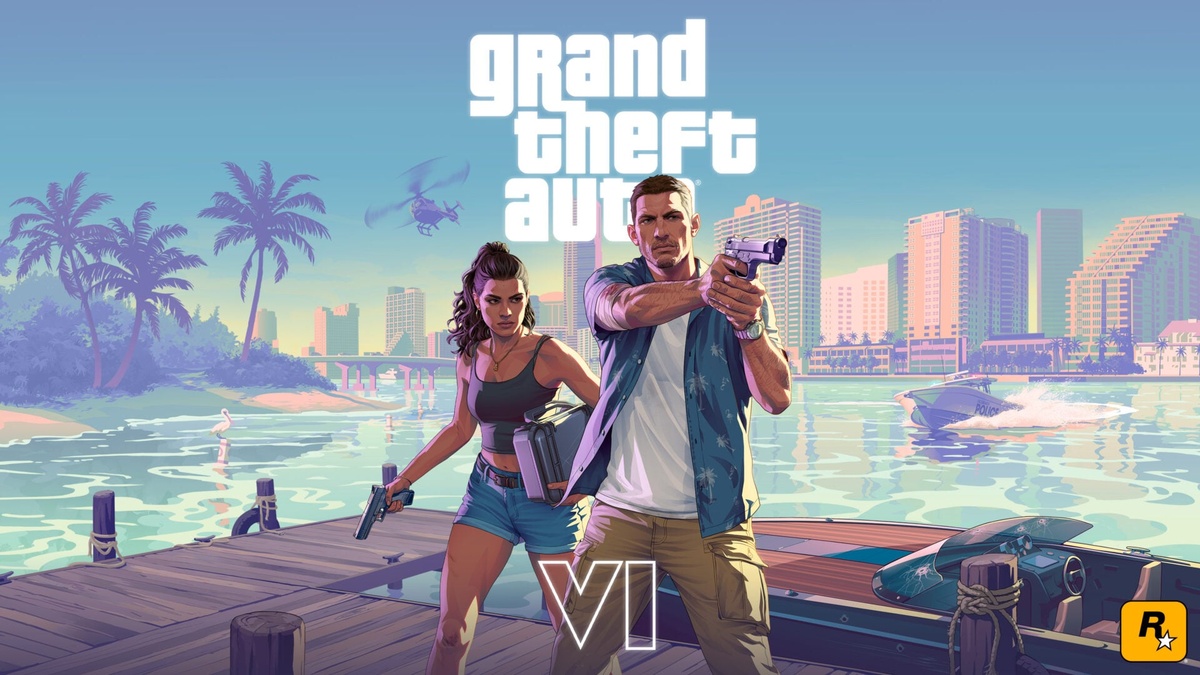
Speaking to media outlets, Rob Nelson explained that mindless civilian slaughter frequently clashes with the emotional nuance of characters pushed into lawlessness by economic hardship, justifying GTA 6 empathy mechanics across mission design.
Rather than casting players as remorseless sociopaths disconnected from consequence, the narrative structure acknowledges empathy as a legitimate survival instinct when navigating treacherous underworld cartels and corrupt municipal authorities.
By establishing believable human motivations behind every armed robbery, Rockstar ensures GTA 6 empathy mechanics feel like an authentic extension of character storytelling rather than arbitrary moral posturing imposed on players.
Systemic Morality Design: Contrasting Red Dead Honor with Leonida Crime Systems
To understand how Rockstar approaches ethical agency in Vice City, one must contrast GTA 6 empathy mechanics against the binary morality systems previously deployed in Red Dead Redemption 2.
In Arthur Morgan’s western saga, the Honor Meter explicitly tracked virtuous deeds against malicious cruelty, gating cosmetic outfits, store discounts, and cinematic story conclusions behind quantifiable moral thresholds.
According to investigative coverage from Insider Gaming’s reporting, Nelson emphasized that GTA 6 deliberately avoids reductive karma meters in favor of organic reactivity.
Instead of watching a meter slide between saint and sinner, players discover that GTA 6 empathy mechanics manifest through contextual dialogue options, non-fatal physical takedowns, and variable hostage control strategies during holdups.
Just as advanced hardware ecosystems like the AMD Ryzen 7 9800X3D enable deeper physics simulations, modern game engines provide granular social interactions that render artificial karma bars obsolete.
Dynamic Non-Lethal Heists: Resolving High-Stakes Confrontations Without Bloodshed
During convenience store stickups, bank vault breaches, and armored convoy intercepts, GTA 6 empathy mechanics empower players to manage crowd tension through intimidation tactics rather than lethal force.
Protagonists can utilize zip-ties, verbal commands, and suppressive warning shots to subdue witnesses, ensuring successful heists without triggering mandatory casualty counters or immediate maximum police alerts.

As documented in The Guardian’s studio interview, Rockstar designed multi-layered encounter mechanics so non-violent coordination delivers equal or superior monetary rewards compared to chaotic shootouts.
By leveraging GTA 6 empathy mechanics to minimize civilian casualties, players actively reduce downstream law enforcement mobilization, sparing themselves relentless tactical SWAT ambushes during high-stakes getaways.
Much like how flexible streaming architectures in Xbox Cloud Gaming pay-as-you-go pricing optimize user bandwidth, dynamic heist pacing adapts seamlessly to player restraint and tactical choices.
World Simulation and AI Reactivity: NPC Social Memory and Law Enforcement Tiers
The systemic depth supporting GTA 6 empathy mechanics relies heavily on Leonida’s advanced artificial intelligence routines, where non-player characters exhibit social memory, communicative panic responses, and situational awareness.
Bystanders who witness player restraint during spontaneous street altercations are far less likely to report detailed vehicle descriptions or arm themselves in preemptive self-defense.

Conversely, developing a bloodthirsty reputation turns entire urban neighborhoods hostile, prompting rival gang members and armed shopkeepers to shoot on sight whenever protagonists enter local districts.
This persistent behavioral simulation ensures GTA 6 empathy mechanics have meaningful civic consequences, shaping how municipal emergency services, criminal syndicates, and ordinary pedestrians perceive Jason and Lucia over time.
Just as migrating operating systems during Nvidia Windows 10 driver retirement requires strategic planning, navigating Leonida demands thoughtful consideration of long-term social friction.
| Heist Approach Style | Primary Tactical Tools | Civilian Casualty Count | Initial Police Heat Level | Neighborhood Reputational Impact |
|---|---|---|---|---|
| Empathetic De-escalation | Verbal threats, zip-ties, and warning shots | Zero civilian or guard fatalities | 1-Star local precinct investigation | High community trust with reduced civilian witness reports |
| Disciplined Professional | Suppressed weapons, EMP charges, and gas grenades | Minimal security guard incapacitations | 2-Star patrol response with delayed dispatch | Neutral status with criminal cartels respecting professionalism |
| Aggressive Smash-and-Grab | Shotguns, explosive breaching, and intimidation | Moderate bystander injuries or collateral damage | 3-Star tactical SWAT perimeter deployment | Elevated local alertness and armed merchant resistance |
| Full Anarchic Rampage | Heavy machine guns, RPGs, and explosive ordnance | Catastrophic civilian and officer casualties | 5-Star military and federal agency response | Permanent district hostility with vigilante retaliation |
Preserving Anarchic Player Freedom: Balancing Casual Chaos with Narrative Depth
A central concern among veteran players was whether introducing GTA 6 empathy mechanics would neuter the anarchic freedom that has defined the Grand Theft Auto experience for three decades.
Rob Nelson addressed this hesitation directly, affirming that Rockstar has no intention of penalizing gamers who desire unrestrained explosive carnage, supersonic police chases, and destructive sandbox rampages.
The studio engineered gameplay restraint as voluntary playstyle mechanisms rather than compulsory moral mandates, allowing casual speedrunners and demolition fans to wreak total havoc with zero artificial gameplay blocks.
Whether setting up enthusiast workstations with the compact Apple M4 Mac mini or gaming on flagship consoles, players retain complete autonomy over their interactive journey.
By supporting both empathetic restraint and unrestrained mayhem, Rockstar bridges the gap between sophisticated dramatic art and uncompromised open-world entertainment in Vice City.
Frequently Asked Questions
What are GTA 6 empathy mechanics according to Rockstar Games?
According to co-studio head Rob Nelson, GTA 6 empathy mechanics represent optional gameplay systems allowing players to de-escalate robberies, spare civilian lives, and utilize non-lethal tactics while pursuing main story objectives across Vice City.
Does GTA 6 feature an Honor Meter like Red Dead Redemption 2?
No, Rockstar has confirmed that GTA 6 avoids rigid binary karma bars, choosing instead to reflect player morality through contextual world reactivity, NPC memory, police investigation aggression, and emergent narrative dialogues.
Will players be penalized if they ignore empathy and cause chaos?
Rob Nelson confirmed that Rockstar will never punish players for traditional chaotic sprees, ensuring that ignoring GTA 6 empathy mechanics remains completely viable for those who prefer unbridled sandbox mayhem.
How do non-lethal choices affect police response and wanted levels?
Executing robberies without civilian casualties significantly delays police dispatch response times and limits initial wanted ratings, demonstrating the practical tactical advantages integrated directly into GTA 6 empathy mechanics.
Why did Rockstar introduce empathy systems for Jason and Lucia?
Because Jason and Lucia are written as a grounded couple seeking financial freedom rather than detached psychopaths, GTA 6 empathy mechanics align mission mechanics directly with their relatable emotional and narrative struggles.
Final Verdict: A Mature Evolution for Rockstar’s Open-World Philosophy
The integration of GTA 6 empathy mechanics marks a pivotal maturation point for Rockstar Games, synthesizing narrative humanity with peerless open-world simulation across Vice City and greater Leonida.
By empowering players to choose between calculated, non-violent heists and catastrophic criminal rampages without punitive restrictions, the studio elevates player agency to unprecedented heights in interactive media.
As Grand Theft Auto VI prepares for launch, these nuanced systems prove that franchise storytelling can evolve emotionally while honoring the chaotic sandbox spirit fans cherish.
