


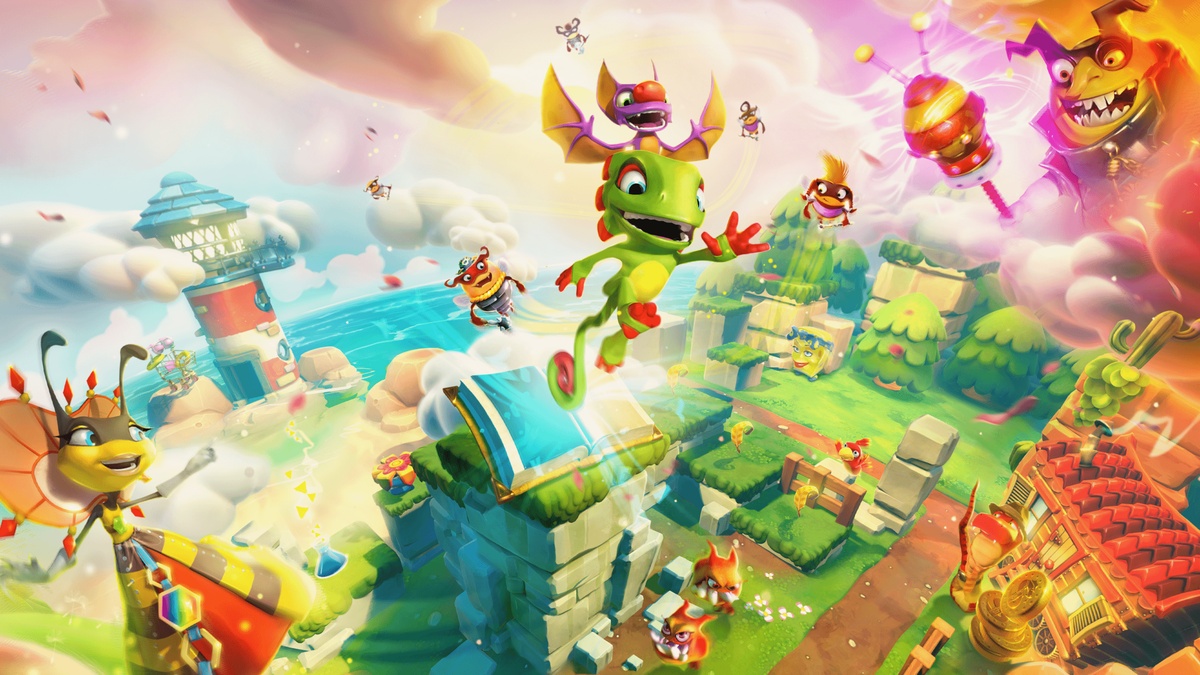
Independent game publishing requires ruthless engineering prioritization when modernizing legacy catalog titles, forcing boutique development teams to weigh extensive console certification overhead against projected player engagement across diverse ninth-generation hardware ecosystems.
The conversation surrounding platform parity erupted this week after Playtonic Games confirmed that the Yooka-Laylee Xbox Upgrade has been shelved indefinitely, while PlayStation 5, Nintendo Switch 2, and PC players receive the enhanced Definitive Edition completely free of charge.
| Platform Destination | Resolution & Frame Rate | Audio & Visual Enhancements | Upgrade Cost & Status |
|---|---|---|---|
| PlayStation 5 | Native 4K @ 120Hz Mode | Dynamic Occlusion & Orchestrated OST | Free Digital Upgrade (Dec 15) |
| Nintendo Switch 2 | Enhanced Docked / Handheld 120Hz | Overhauled Textures & Lighting | Free Digital Upgrade (Dec 15) |
| PC (Steam Storefront) | Unlocked 4K @ 120Hz+ Ultra Preset | Dual Soundtracks & Full Tonics | Free Digital Upgrade (Dec 15) |
| Xbox Series X | Legacy 4K @ 60Hz (Backwards Compat) | Standard 2019 Shaders & Audio | No Definitive Edition Scheduled |
| Xbox Series S | Legacy Sub-4K @ 60Hz Profile | Original Base Console Lighting | No Definitive Edition Scheduled |
Why the Yooka-Laylee Xbox Upgrade Was Sidelined by Playtonic
Official reporting published by The Verge confirms that the anticipated Yooka-Laylee Xbox Upgrade will not accompany the December launch of Yooka-Laylee and the Impossible Lair: Definitive Edition across digital storefronts.
Studio representatives issued a transparent statement to players explaining that severe budgetary constraints and technical porting hurdles prevented the team from committing engineering resources to Microsoft’s console ecosystem for the foreseeable future, prioritizing sustainable studio operations.
The omission of the Yooka-Laylee Xbox Upgrade sparked immediate debate across digital gaming forums, where loyal community members questioned why a studio founded by veteran platformer developers would bypass an established install base that supported earlier crowd-funded initiatives.
Playtonic acknowledged the community frustration directly, emphasizing that managing simultaneous multi-platform pipelines as a compact independent studio demands difficult commercial compromises when financial margins remain tightly constrained across modern digital storefronts.
While rival consoles receive complimentary visual enhancements, the missing Xbox upgrade underscores how shifting platform economics influence post-launch maintenance cycles for beloved indie platformers striving to sustain long-term digital relevance.
Industry analysts monitoring the platform landscape highlight that smaller studios must concentrate finite QA teams where digital unit sales reliably offset platform licensing fees, backend compliance audits, and ongoing operational maintenance overhead.
Technical Challenges: Dual Certification and Engine Refactoring Hurdles
Modern console development presents distinct architectural complexities, particularly when studios transition older Unity engine projects into native ninth-generation builds supporting advanced high-frame-rate display pipelines and dynamic asset streaming.
Delivering the Yooka-Laylee Xbox Upgrade would require engineering squads to refactor rendering pipelines to meet Microsoft’s mandatory certification standards across both Xbox Series X and the resource-constrained Xbox Series S console architectures.
Balancing dynamic resolution scaling while sustaining a rock-solid one hundred and twenty frames per second on memory-limited hardware demands bespoke memory allocation passes that strain boutique engineering teams lacking expansive internal tech divisions.
In contrast, optimizing for PlayStation 5 and upcoming Nintendo Switch 2 hardware provided straightforward target profiles, allowing Playtonic to implement modernized ambient occlusion and enhanced lighting shaders without managing dual-SKU memory bifurcation.
Because the Yooka-Laylee Xbox Upgrade necessitated extensive automated testing suites across divergent memory pools, engineering costs quickly escalated beyond the commercial returns realistically expected from an older catalog reissue.
Similar optimization challenges mirror broader industry trends, where desktop developers pairing AMD Ryzen 7 9800X3D processors observe how hardware symmetry streamlines software deployment compared to segmented console hardware tiers.
PlayStation 5 and Nintendo Switch 2 Generational Feature Enhancements
While Xbox enthusiasts navigate disappointment, PlayStation 5, Switch 2, and PC owners gain substantial visual and auditory improvements when the Definitive Edition launches across digital platforms on December 15th.
On modern Sony hardware, players experience pristine native 4K presentation running alongside an ultra-responsive 120Hz display mode that drastically sharpens jump precision and input responsiveness throughout intricate obstacle gauntlets.
The absence of the Yooka-Laylee Xbox Upgrade means Microsoft owners miss out on overhauled environmental lighting, refined particle simulations, and two newly orchestrated musical soundtracks recorded specifically for this definitive release by veteran industry composers.
Nintendo Switch 2 enthusiasts benefit from higher portable display resolutions and fluid frame pacing, revitalizing the title on hybrid hardware where classic platforming adventures historically achieve exceptional player engagement and long-tail retail endurance.
Furthermore, digital owners on supported platforms receive these premium upgrades automatically, leaving the Yooka-Laylee Xbox Upgrade community stranded on legacy eighth-generation code without access to bundled tonic gameplay modifiers or modern user interface refinements.
The bundled Trowzer’s Top Tonic Pack introduces transformative gameplay toggles, visual filters, and speedrun enhancements that modernize the overall pacing without altering core stage layout geometry or compromising original design intent.
How the Yooka-Laylee Xbox Upgrade Exposes Indie Financial Realities
Examining the Yooka-Laylee Xbox Upgrade through a commercial lens illuminates shifting realities across console ecosystems, where software attachment rates dictate third-party development priorities for independent teams navigating rising operational overhead.
Prominent media reporting from Pure Xbox notes that Xbox’s smaller hardware footprint makes it increasingly difficult for independent developers to justify bespoke porting investments without external co-publishing support.
Without subscription guarantees or direct platform co-funding, financing the Yooka-Laylee Xbox Upgrade represented a significant capital risk that an independent studio could not responsibly absorb amidst rising production costs across global software markets.
Playtonic must carefully balance operational budgets across multiple active initiatives, preserving crucial working capital for marquee productions rather than expending reserves on complimentary catalog updates that yield limited incremental revenue.
| Ecosystem Profile | Hardware Target Complexity | QA Certification Overhead | Commercial Port Viability |
|---|---|---|---|
| PlayStation 5 Ecosystem | Single Fixed Hardware Spec | Standard Console QA Cycle | High (Massive Digital Attach) |
| Nintendo Switch 2 Ecosystem | Single Modern Mobile Chipset | Unified Handheld / Docked API | Very High (Core Platformer Base) |
| PC (Steam Storefront) | Scalable Graphics Direct3D API | Automated Digital Deployment | Extremely High (Zero Cert Fees) |
| Xbox Series X & Series S | Mandatory Dual-SKU Parity | Intensive Series S Memory Tuning | Low (High Cost / Low Unit Sales) |
The economic calculus behind the Yooka-Laylee Xbox Upgrade demonstrates how subscription-dominated ecosystems can unintentionally disincentivize traditional digital sales models for standalone indie updates, echoing patterns seen across Xbox Cloud Gaming subscription tiers.
When digital storefront conversion rates lag behind competing storefronts, pursuing boutique console ports becomes an untenable allocation of scarcely available engineering personnel needed for upcoming commercial flagships.
Backwards Compatibility Realities: Xbox Series X Visual Parity
Despite widespread frustration regarding the missing update, technical analysts have highlighted unique silver linings inherent to Microsoft’s robust backwards compatibility architecture on current ninth-generation hardware platforms.
Technical evaluations by Digital Foundry observed that the original 2019 release already executes at a crisp native 4K resolution on Xbox Series X, leveraging high-spec Xbox One X legacy code without requiring code refactoring.
Consequently, while the Yooka-Laylee Xbox Upgrade would have introduced 120Hz support and enhanced shading, existing Xbox Series X owners already enjoy a notably cleaner presentation than base PlayStation 4 players experienced on previous-generation hardware.
Nevertheless, technical parity remains incomplete without the Yooka-Laylee Xbox Upgrade, as Xbox Series S owners remain capped at standard sub-4K resolutions with legacy texture filtering and older visual assets that show their age on modern displays.
The inability to deliver the platform upgrade highlights how backward compatibility can function as both a protective preservation cushion and a disincentive for studios considering native current-generation conversions with dedicated platform perks.
For hardcore fans, the lack of a native build means missing the seamless integration of quick resume, advanced spatial audio, and instantaneous solid-state drive level transitions that define modern console gaming experiences.
Digital Storefront Economics and the Future of Catalog Preservation
The conversation ignited by the Yooka-Laylee Xbox Upgrade reflects a broader dilemma facing mid-tier video game developers tasked with sustaining older intellectual property across increasingly fragmented digital marketplaces that demand continuous technical maintenance.
Unlike massive blockbuster publishers equipped with internal remaster divisions, independent outfits must carefully allocate development capital toward titles that demonstrate guaranteed long-tail commercial velocity across active player cohorts.
As storefront algorithms increasingly prioritize brand-new releases, allocating engineering weeks toward a complimentary catalog refresh fails to generate sufficient secondary storefront discovery to justify total port expenditure and platform re-licensing.
This commercial friction often forces developers to explore selective platform updates, targeting consoles whose demographics exhibit high historical attachment rates for vibrant character-driven platformers and classic collect-a-thon adventures.
Consequently, the absence of the Yooka-Laylee Xbox Upgrade illustrates how commercial selectivity is rapidly superseding universal platform parity across the independent publishing landscape during challenging macroeconomic industry conditions.
Industry historians caution that without standardized automated remaster pipelines, catalog titles risk technical stagnation on hardware platforms that require costly manual re-certification workflows and bespoke hardware compliance checks.
Studio Roadmap and Future Outlook for the Yooka-Laylee Xbox Upgrade
While current announcements exclude Microsoft consoles, Playtonic stopped short of permanently ruling out a future Yooka-Laylee Xbox Upgrade if commercial circumstances and development bandwidth shift favorably over upcoming financial quarters.
The studio is currently dedicating primary development resources toward Yooka-Replaylee, the comprehensive 3D remaster of their debut adventure designed to showcase modernized animations, fluid camera controls, and updated visual mechanics.
Should Yooka-Replaylee achieve strong multi-platform commercial momentum, renewed publishing bandwidth could theoretically open doors for revisiting the Yooka-Laylee Xbox Upgrade through later digital maintenance updates funded by catalog revenue.
Industry observers at Eurogamer suggest that platform holder grants or Game Pass inclusion could rapidly alter the commercial viability of a native Yooka-Laylee Xbox Upgrade.
Until external funding or automated porting workflows materialize, the studio remains laser-focused on completing deliverables for platforms where technical architecture and audience demand align seamlessly with operational priorities.
For now, the story of this platform disparity serves as a cautionary benchmark for indie catalog preservation during an era of fragmented console architectures, rising certification hurdles, and tightening production capital.
Frequently Asked Questions
Why is the Yooka-Laylee Xbox Upgrade skipping Xbox Series X and Series S?
Playtonic Games explained that technical challenges and porting costs made supporting Xbox unviable for their small independent team at this time.
When does Yooka-Laylee and the Impossible Lair: Definitive Edition launch?
The Definitive Edition launches on December 15, 2026, as a free upgrade for existing digital owners on PlayStation 5, Switch 2, and PC.
Will existing Xbox owners receive any free updates for the original game?
No, the Definitive Edition content, 120fps display support, and new soundtracks are not scheduled to release on Xbox consoles for the foreseeable future.
How does the original Impossible Lair currently perform on Xbox Series X?
The 2019 game runs via backward compatibility on Xbox Series X at native 4K resolution at 60fps, utilizing enhanced Xbox One X visual profiles.
Is Playtonic still bringing Yooka-Replaylee to Xbox platforms?
Playtonic has announced Yooka-Replaylee for major platforms, but specific console certification targets will be finalized closer to its official launch date.
Final Editorial Verdict: Navigating Mid-Generation Ecosystem Shifts
The cancellation of the Yooka-Laylee Xbox Upgrade illustrates the complex trade-offs confronting boutique game creators who must navigate escalating certification costs against realistic commercial returns in a splintered console market.
While PlayStation 5, Switch 2, and PC gamers celebrate comprehensive visual overhauls, the sidelined Yooka-Laylee Xbox Upgrade underscores how crucial platform engagement metrics have become for securing post-launch engineering support and studio backing.
Ultimately, the unfolding industry narrative highlights the enduring necessity of transparent communication between independent developers and dedicated community members who support cross-platform gaming ecosystems through thick and thin.
