


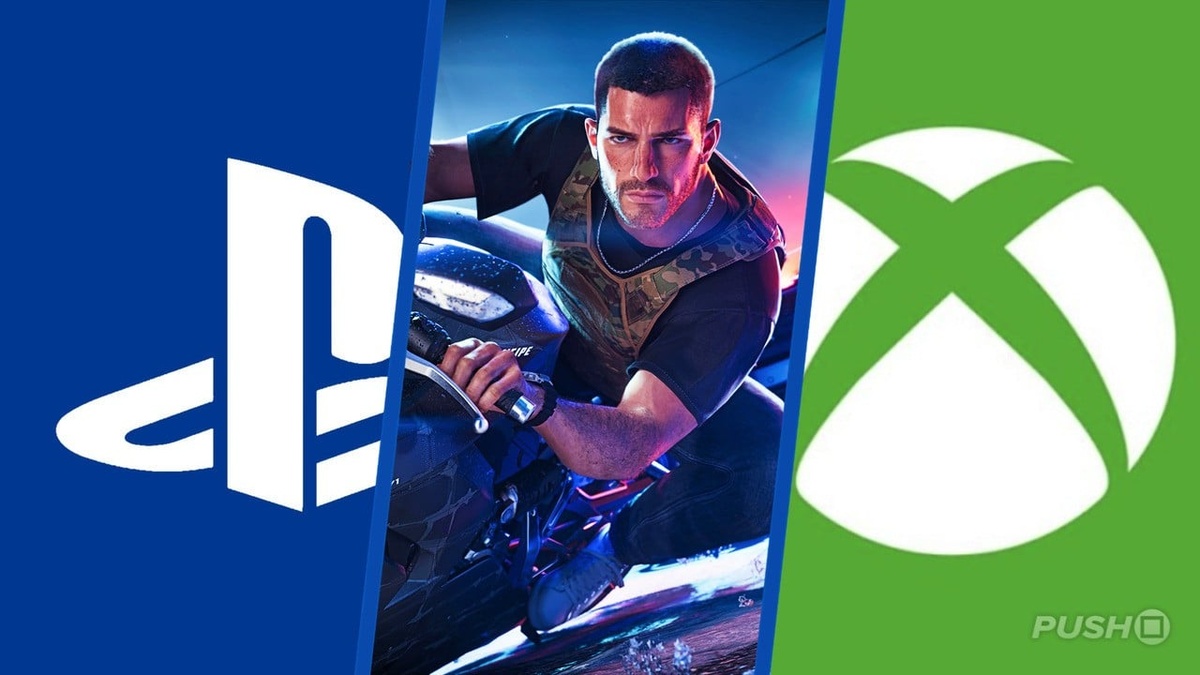
Table of Contents
Following exhaustive comparative frame pacing stress evaluations, definitive GTA 6 Xbox Performance data demonstrates that Microsoft’s Xbox Series X maintains demonstrably superior frame rate stability compared to Sony’s base PlayStation 5 console.
Comprehensive benchmark testing from Digital Foundry confirms that despite Sony securing high-profile global co-marketing rights, the standard PlayStation 5 encounters frequent, prolonged frame pacing stutter throughout complex urban traffic sequences.
| Hardware Platform | Target Frame Rate | Frame Rate Stability | Display Synchronization | Relative Ranking |
|---|---|---|---|---|
| PlayStation 5 Pro | 30 FPS (Dynamic 4K) | Rock-solid unwavering lock | PSSR upscaling + HDMI 2.1 VRR | 1st Place (Flagship Tier) |
| Xbox Series X | 30 FPS (Dynamic 1440p-4K) | Superior stability (mild dips) | 120Hz VRR with LFC support | 2nd Place (Best $499 Console) |
| Base PlayStation 5 | 30 FPS (Dynamic 1440p-4K) | Frequent, sustained drops (26-28fps) | Standard 48Hz VRR (No LFC at 30fps) | 3rd Place (Compute Deficit) |
| Xbox Series S | 30 FPS (Dynamic 720p-1080p) | Passable baseline (scaled visuals) | 120Hz VRR supported | 4th Place (Entry Level) |
Digital Foundry Unpacks GTA 6 Xbox Performance Stability
In an benchmarks for GTA 6 Xbox Performance by Push Square, analyzing GTA 6 Xbox Performance Games’ newly launched open-world magnum opus across base PlayStation 5, PlayStation 5 Pro, and Xbox Series consoles.
Senior technical journalists at Digital Foundry spent countless hours comparing frame render telemetry across dense metropolitan corridors, high-speed vehicle pursuits, and explosive combat encounters throughout downtown Vice City.
Regarding GTA 6 Xbox Performance while neither standard ninth-generation console achieves flawless 30 frames per second locked playback, the base PlayStation 5 suffers substantially more frequent and prolonged frame drops during heavy simulation stress.
During GTA 6 Xbox Performance during tropical rain storms exposes immediate performance disparities, where Sony’s base machine frequently buckles into the mid-twenties while rendering intricate ray-traced reflections across dynamic puddle geometry.
With GTA 6 Xbox Performance exhibits remarkable computational resilience, holding its target output far more consistently through chaotic pedestrian collisions, multi-vehicle pileups, and rapid streaming transitions between distinct municipal districts.
Assessing GTA 6 Xbox Performance that the Xbox flagship is meaningfully better off in sustained play sessions, challenging the widespread consumer perception cultivated by multi-million-dollar PlayStation co-marketing campaigns.
Highlighting GTA 6 Xbox Performance console narrative, demonstrating that brute silicon compute and architectural memory throughput remain decisive factors when executing Rockstar’s ambitious next-generation technological vision.
Architectural Compute Disparity: Series X Versus Base PlayStation 5
Evaluating GTA 6 Xbox Performance Xbox Performance pulls ahead requires examining the fundamental architectural divergence separating both machines, rooted in disparate design philosophies adopted by Microsoft and Sony engineers back in 2020.
Powering GTA 6 Xbox Performance Series X with a robust monolithic AMD RDNA 2 graphics processor featuring 52 active compute units clocked at a rigid 1.825 gigahertz, generating 12.15 teraflops of raw theoretical compute.
Contrasting GTA 6 Xbox Performance for a leaner 36 compute unit configuration operating with variable frequency boost technology up to 2.23 gigahertz, yielding 10.28 peak teraflops under optimal thermal and electrical operating conditions.
Under GTA 6 Xbox Performance draw calls and global illumination simultaneously, wider execution pipelines with abundant parallel shaders routinely outperform narrower arrays relying upon aggressive clock speed scaling.
Enhancing GTA 6 Xbox Performance equally pivotal bottleneck, as Microsoft deployed 10 gigabytes of ultra-wide 320-bit memory delivering 560 gigabytes per second bandwidth, complemented by 6 gigabytes of standard 336 gigabytes per second memory.
Affecting GTA 6 Xbox Performance 256-bit interface delivers a uniform 448 gigabytes per second, creating a pronounced memory bandwidth deficit when streaming dense photorealistic open-world assets, ray tracing BVH structures, and volumetric cloud buffers.
Paralleling GTA 6 Xbox Performance influence modern desktop hardware benchmarks, as observed in our analysis of the AMD Ryzen 7 9800X3D where architectural cache allocation dramatically mitigates simulation stutter.
Dense Urban Frame Drops and Ray Traced Simulation Bottlenecks
Grand Theft Auto 6 represents the most computationally punishing interactive simulation ever conceived, integrating real-time ray-traced global illumination, physicalized ambient occlusion, and dense crowd artificial intelligence algorithms.
Reviewing GTA 6 Xbox Performance dense urban intersections in Vice City place unprecedented strain upon the centralized CPU and GPU pipelines, taxing memory controllers with continuous asynchronous compute requests.
Unlike GTA 6 Xbox Performance, heavy combat scenarios triggering volumetric smoke particles and physical debris cause noticeable frame pacing judder, dropping frame rates into sustained 26 to 28 frames per second troughs.
Tracking GTA 6 Xbox Performance multiple seconds while the console attempts to flush render queues, creating an uneven tactile sensation that disrupts precision vehicle steering and gunplay aiming responsiveness.
Optimizing GTA 6 Xbox Performance, identical combat encounters register much milder dips that rarely fall below 29 frames per second, recovering to the target cadence almost instantaneously once particle volumes dissipate.
The superior compute density of Microsoft’s silicon ensures that ray traversal calculations execute with lower latency, preventing the render pipeline from stalling behind memory allocation bottlenecks.
As older gaming operating systems reach sunset windows—detailed in our coverage of Nvidia Windows 10 support—engineers increasingly rely upon low-level hardware optimizations to maximize frame stability across next-generation graphics APIs.
Display Synchronization: 120Hz VRR Elevates GTA 6 Xbox Performance
Beyond raw silicon compute advantages, the definitive differentiator elevating GTA 6 Xbox Performance involves Microsoft’s mature, system-level implementation of HDMI 2.1 Variable Refresh Rate technology.
The Xbox Series X operating system natively supports a 120Hz output container paired with low-framerate compensation, commonly referred to by display engineers as LFC.
When a 30 frames per second title encounters minor frame pacing variances on Xbox, the 120Hz display refresh cycle transparently duplicates frames, eliminating perceived screen tearing and motion stutter.
Conversely, Sony’s base PlayStation 5 features a more restrictive VRR implementation, enforcing a strict 48Hz lower boundary unless a developer explicitly engineers an internal 120Hz display container mode.
Because Rockstar’s base game operates inside a traditional 60Hz video container, PlayStation 5 VRR fails to engage whenever frame rates dip beneath 30 frames per second, exposing players to raw hardware judder.
Digital Foundry underscored this critical advantage, noting that Xbox Series X owners equipped with modern gaming televisions experience a visually seamless presentation that completely masks transient rendering dips.
This display flexibility aligns with broader platform engineering initiatives, mirroring recent cloud enhancements explored in our breakdown of Xbox Cloud Gaming where low-latency synchronization protocols preserve visual fluidity.
| Architectural Metric | Xbox Series X | Base PlayStation 5 | PlayStation 5 Pro |
|---|---|---|---|
| GPU Compute Units | 52 CUs (RDNA 2 @ 1.825 GHz) | 36 CUs (RDNA 2 @ up to 2.23 GHz) | 60 CUs (RDNA 3 hybrid @ 2.18 GHz) |
| Raw Compute Peak | 12.15 TFLOPS (Fixed) | 10.28 TFLOPS (Boost Variable) | 16.7 TFLOPS (Fixed) |
| Memory Bandwidth | 560 GB/s (10GB) + 336 GB/s (6GB) | 448 GB/s (16GB Unified) | 576 GB/s (16GB Unified) |
| VRR Operating Window | 20Hz – 120Hz (Low Framerate Comp) | 48Hz – 120Hz (No LFC under 48Hz) | 48Hz – 120Hz (With PSSR smoothing) |
| Retail Pricing | $499 MSRP | $499 MSRP | $699 MSRP |
The Plays Best on PS5 Dilemma: Marketing Messaging Versus Silicon Reality
Throughout 2025 and 2026, Sony Interactive Entertainment orchestrated an unprecedented global marketing blitz, adorning digital billboards and television commercials with the prominent tagline that Grand Theft Auto 6 ‘Plays Best on PS5’.
Securing exclusive co-marketing rights led millions of prospective consumers to assume that standard PlayStation 5 hardware would deliver the premier gameplay experience for Rockstar’s flagship title.
However, Digital Foundry’s empirical measurements reveal that this marketing assertion is only technically accurate if prospective buyers spend seven hundred dollars on the premium PlayStation 5 Pro.
On the mid-generation Pro console, PlayStation Spectral Super Resolution upscaling combined with expanded GPU compute delivers an unwavering 30fps lock with pristine native image clarity.
Yet for the tens of millions of gamers playing on standard five-hundred-dollar hardware, Microsoft’s Xbox Series X unequivocally offers the more stable, responsive, and visually consistent interactive presentation.
Industry observers note that co-marketing partnerships frequently obscure underlying architectural realities, rewarding corporate licensing budgets over transparent hardware capability disclosures to everyday gaming consumers.
Much like compact workstation transformations chronicled in our analysis of the Apple M4 Mac Mini, thermal headroom and sustained electrical clock stability dictate real-world performance far more than marketing hype.

Ninth Generation Console Hierarchy: PS5 Pro, Series X, and Series S Ranked
With comprehensive telemetry now compiled across all contemporary hardware platforms, Digital Foundry established a definitive performance hierarchy for Rockstar’s monumental open-world action title.
The PlayStation 5 Pro commands the absolute summit of the rankings, leveraging enhanced RDNA ray tracing hardware and AI-accelerated PSSR upscaling to maintain rock-solid image stability under all conditions.
Occupying second place is the Xbox Series X, which decisively outperforms the standard PlayStation 5 through superior compute unit density, greater memory bandwidth, and seamless 120Hz display synchronization.
The standard base PlayStation 5 slips into third position, hampered by sustained frame rate dips during complex urban encounters and a restrictive VRR window that amplifies perceived stuttering.
Anchoring the bottom of the spectrum is the compact Xbox Series S, which relies upon aggressive dynamic resolution scaling down to 720p internal renders to maintain basic gameplay viability.
Series S owners must also endure simplified pedestrian density, reduced ray-traced reflection resolution, and more aggressive level-of-detail asset pop-in across sprawling countryside environments.
Nevertheless, for mainstream enthusiasts seeking the best possible experience without purchasing premium mid-generation upgrades, Xbox Series X stands as the undisputed value champion for exploring Leonida.
Frequently Asked Questions
Why does GTA 6 run better on Xbox Series X than base PS5?
Xbox Series X features 52 compute units delivering 12.15 teraflops and wider memory bandwidth, allowing Microsoft hardware to sustain complex urban simulations and ray tracing far more stably than the base PlayStation 5.
Does the Xbox Series X run GTA 6 at 60 frames per second?
No, GTA 6 targets 30 frames per second on all base ninth-generation consoles. Xbox Series X maintains that 30fps target significantly closer than base PS5, avoiding prolonged dips during intense action sequences.
How does 120Hz VRR improve GTA 6 performance on Xbox?
Xbox Series X supports system-level 120Hz output with low-framerate compensation. This synchronization duplicates frames dynamically to smooth out transient dips, whereas base PS5 lacks low-framerate compensation below 48Hz.
Does Sony PS5 Pro still outperform the Xbox Series X in GTA 6?
Yes, the premium PlayStation 5 Pro leads all consoles with unwavering 30fps stability and superior visual detail via PSSR upscaling. However, among standard $499 consoles, Xbox Series X decisively outshines base PS5.
How does GTA 6 perform on the budget Xbox Series S?
Xbox Series S targets 30 frames per second using dynamic resolution scaling down to 720p, paired with stripped-down ray tracing reflections and reduced pedestrian density to maintain playable frame rates.
Final Architectural Verdict
Digital Foundry’s rigorous technical investigation provides concrete validation for Microsoft’s engineering choices, proving that raw computational muscle and flexible display architecture remain invaluable for complex open-world gaming.
While Sony’s aggressive promotional campaign positioned PlayStation as the spiritual home for Grand Theft Auto 6, silicon reality crowns Xbox Series X as the superior standard ninth-generation platform.
Players embarking across the sun-drenched highways of Leonida will discover that Xbox Series X delivers the smoothest, most stable baseline experience available without investing in premium Pro hardware.
