


Table of Contents
The official debut of Google Stitch Loop establishes an unprecedented shift in autonomous software maintenance. Rather than halting execution once pull requests merge, Google Labs has engineered an always-on product agent designed to continuously audit, optimize, and evolve live production applications.
Modern engineering teams routinely struggle with post-deployment maintenance burdens, ranging from silent latency regressions to emerging cybersecurity vulnerabilities. Google Stitch Loop operates around the clock to eliminate these technical debts, bridging the persistent gap between rapid feature shipping and long-term operational health.
| Architectural Dimension | Google Stitch Loop Platform | Standard IDE Coding Assistants | Traditional Manual DevOps |
|---|---|---|---|
| Operational Scope | Continuous 24/7 post-deployment optimization | Interactive pre-merge code completion | Periodic manual sprint engineering |
| Telemetry Ingestion | 180+ runtime sources, metrics, and MCP logs | Local active files and open workspace tabs | External monitoring dashboards and alerts |
| Execution Isolation | Autonomous ephemeral cloud sandboxes | Local host terminal and developer hardware | Staging clusters and CI runners |
| Security Remediation | Gemini 4 Carbon and DeepMind CodeMender | Basic static analysis and syntax linting | Quarterly penetration tests and patches |
| Merge Governance | Audited GitHub pull requests with media proof | Direct local inline editor acceptance | Manual peer review and branch gating |
| Closed-Loop Feedback | Automated Reflect phase guards against slips | Session terminates upon editor closure | Ad-hoc retrospective telemetry reviews |
Autonomous DevOps Evolution: Google Stitch Loop Solves Post-Deployment Maintenance
Coding assistants have transformed how engineers write software, yet their utility abruptly ceases the moment a pull request lands in main branches. The foundational vision behind Google Stitch Loop addresses the grueling maintenance lifecycle that begins immediately after production deployment.
Lean engineering organizations frequently lack dedicated site reliability engineers or security specialists to continuously monitor code health. Developers remain caught in reactive cycles, firefighting production regressions, triaging noisy bug reports, and struggling to prioritize background maintenance against roadmap deliverables.
Production software rarely fails because developers lack intelligence; it degrades because engineering hours are finite and expensive. When teams focus exclusively on shipping features, critical dependencies fall out of date, security patches languish, and subtle performance bottlenecks accumulate unnoticed across codebases.
Google Labs identified this operational deficit and constructed Google Stitch Loop as an autonomous service layer. By constantly analyzing live application telemetry alongside repository state, the system identifies degradation early, formulating actionable engineering remedies before minor bugs trigger severe customer outages.
Unlike traditional static analysis tools that flood issue trackers with false positives, Google Stitch Loop verifies real-world impact before acting. It evaluates whether a suspected bottleneck actually impedes end-user journeys, ensuring that automated engineering resources target tangible production bottlenecks.
Through Google Stitch Loop, this proactive approach shifts software engineering from intermittent maintenance sprints into continuous background optimization. Teams preserve high development velocity without sacrificing software resilience, allowing founders and core engineers to concentrate creative energies on core product innovation.
The Four-Stage Continuous Engine: Suggestions, Solutions, Build, and Reflect
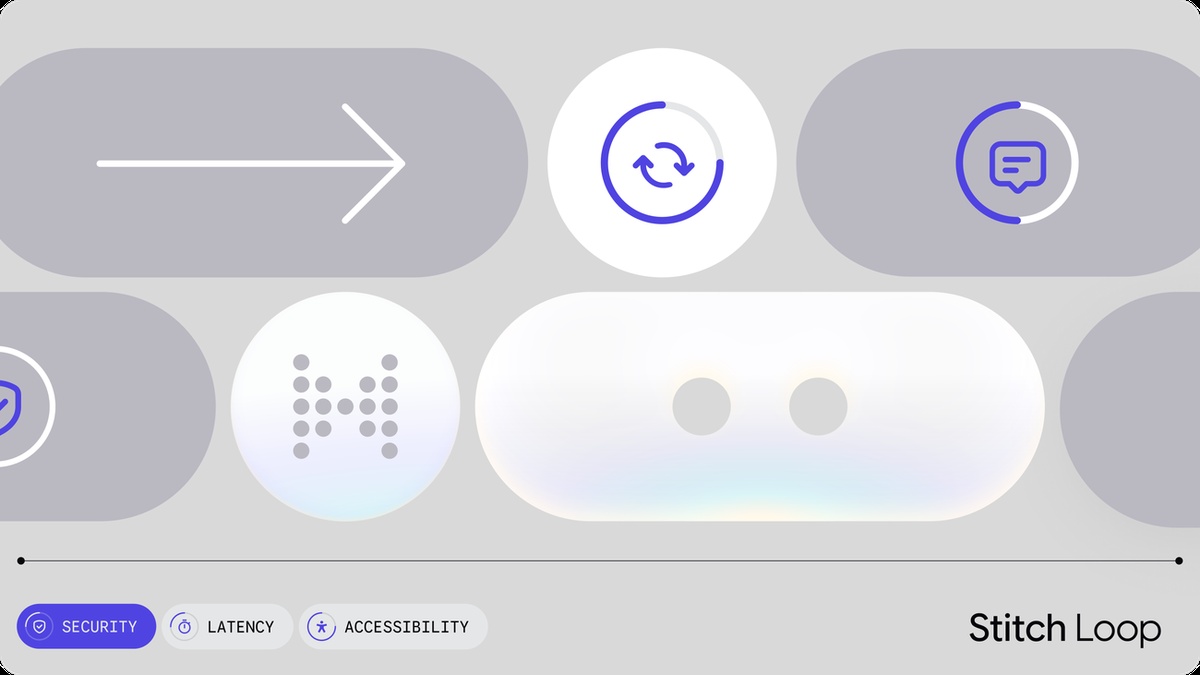
At the technical foundation of Google Stitch Loop lies a cyclical execution pipeline composed of four interconnected stages. The system methodically advances through suggestions, solutions, build, and reflect phases, ensuring that every codebase modification remains mathematically justified and verifiable.
The initial suggestions phase ingests product telemetry, user feedback, and error logs across connected monitoring stacks. Google Stitch Loop cross-references observed operational anomalies against repository source files, uncovering latent defects, rendering bottlenecks, and conversion drop-offs supported by empirical evidence.
Once an optimization target is isolated, the solutions phase generates comprehensive architectural proposals. Rather than offering opaque single-line patches, Google Stitch Loop presents multiple viable options, detailing technical tradeoffs, implementation complexity, performance forecasts, and user interface mockups where visual elements are affected.
After an engineering direction receives approval, the build phase activates an isolated cloud development sandbox. The system authors clean source code, writes regression unit tests, executes linting pipelines, and packages changes into an audited GitHub pull request ready for peer inspection.
The final reflect phase begins immediately after pull request deployment into live production infrastructure. The agent continuously monitors target performance metrics against pre-merge baselines, validating whether expected gains materialized while guarding against unexpected metric slippage over extended operational windows.
Crucially, the reflect stage feeds observational outcomes back into internal agent memory banks. When a proposed optimization succeeds, the platform reinforces effective architectural strategies; when metrics fail to improve, the agent refines subsequent suggestions, preventing repetitive failed engineering attempts.
Codebase Security Hardening: Integrating Gemini 4 Carbon with DeepMind CodeMender
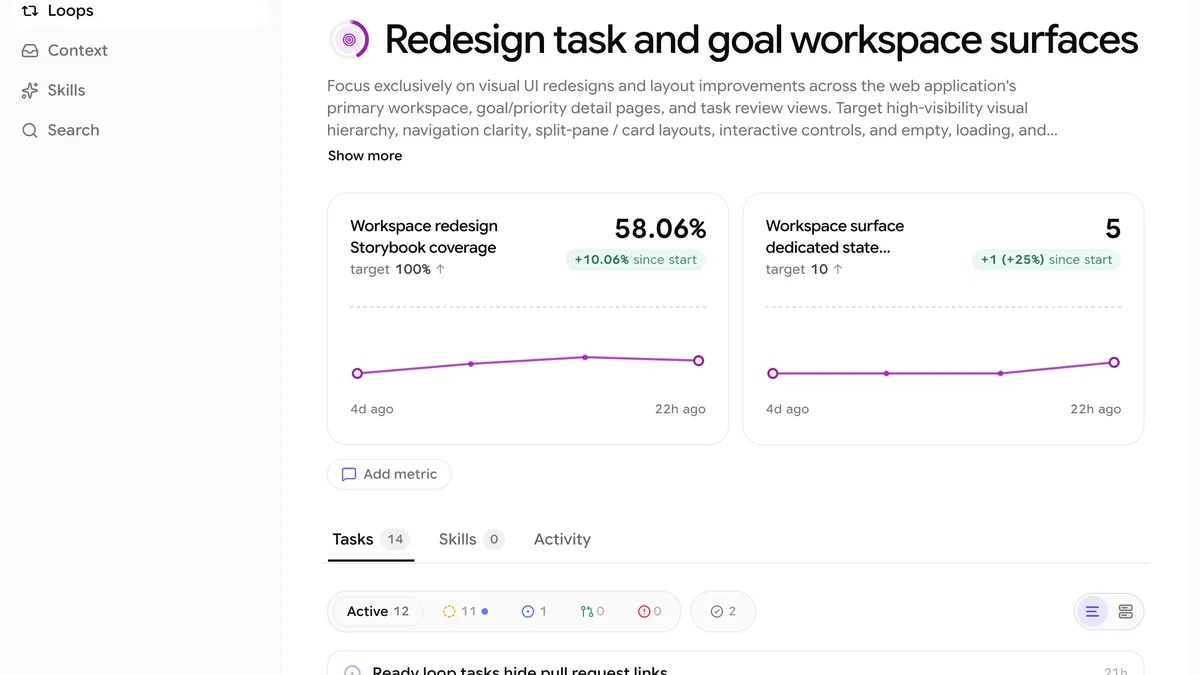
Automating cybersecurity defenses represents one of the most critical breakthroughs within the platform. Security remains notoriously difficult for lean teams to sustain, particularly when rapid release schedules outpace thorough manual threat modeling and periodic external penetration audits.
To resolve this vulnerability window, Google Stitch Loop pairs the cyber reasoning capabilities of Gemini 4 Carbon with Google DeepMind CodeMender. This integration creates an autonomous security guardian that inspects codebases against emerging exploit vectors, zero-day signatures, and logic flaws.
CodeMender specializes in autonomous vulnerability remediation, moving beyond rudimentary heuristic scanning to analyze execution flow across complex software architectures. It identifies subtle privilege escalation flaws, memory mismanagement, injection vulnerabilities, and broken access controls before hostile actors discover them in production environments.
When a vulnerability surfaces, the system constructs a deterministic proof of concept demonstrating the flaw within an isolated environment. This empirical verification guarantees that flagged issues represent authentic risks rather than harmless syntactic anomalies, saving development teams hours of false-positive triage.
The agent subsequently authors an audited pull request containing targeted defensive patches alongside comprehensive test cases. Security teams review the proposed remediation alongside side-by-side behavioral diffs, ensuring complete cryptographic safety without destabilizing existing application functionality or breaking dependent microservices.
Continuous vulnerability remediation prevents technical debt accumulation, transforming security from a quarterly panic into an invisible background process. Startups achieve enterprise-grade defensive postures without hiring dedicated security operations centers, establishing formidable barriers against sophisticated adversary intrusions.
Google Stitch Loop Agent Workflows: Model Context Protocol and CLI Architecture
| Autonomous Loop Type | Specialized Model Stack | Input Telemetry Sources | Automated Sandbox Remediations | Human Governance Gate |
|---|---|---|---|---|
| Cybersecurity Loop | Gemini 4 Carbon + CodeMender | Execution paths, CVEs, dependencies | Defensive patching and exploit unit tests | Mandatory security diff review |
| Latency Loop | Gemini 4 Multimodal Engine | TTFB, LCP, database query timing | Query indexing, bundle splitting, memoization | Synthetic benchmark approval |
| Accessibility Loop | Gemini 4 Vision + DOM Core | Screen reader trees, WCAG 2.2 rules | ARIA injection and semantic restructuring | Side-by-side rendering audit |
| Conversion Funnel | Gemini 4 Analytical Core | User analytics, drop-offs, errors | Form field refactoring and flow tuning | Staging split telemetry test |
| Technical Debt | Gemini 4 Translation Engine | Compiler warnings, deprecated APIs | Major library upgrades and refactoring | Full CI test suite execution |
Interoperability serves as a core architectural pillar for Google Stitch Loop, enabling frictionless integration across diverse developer ecosystems. The platform avoids proprietary lock-in by implementing the open Model Context Protocol alongside a high-performance command-line interface.
Through Model Context Protocol servers, the system exposes persistent product context, historical optimization traces, and repository heuristics to external coding assistants. Developers utilizing platforms like Google Antigravity or local developer environments can query real-time product context directly within existing terminals.
The native CLI utility allows developers to upload local diagnostic data, stream execution traces, and configure custom optimization loops programmatically. Engineers integrate the agent into shell scripts, automated test harnesses, and containerized deployment workflows with minimal configuration overhead.
For distributed engineering organizations, Google Stitch Loop embeds directly into team communication hubs like Slack. By mentioning the agent handle in development channels, team members receive automated daily insight digests, review active optimization cycles, and dispatch new investigative tasks effortlessly.
This unified service layer bridges the gap between disparate development utilities, creating a synchronized operational environment. Contextual knowledge flows smoothly between ideation tools, continuous integration pipelines, and runtime monitoring agents, eliminating information silos that traditionally slow down software delivery.
By establishing bi-directional communication across external developer tooling, the architecture preserves existing team workflows. Organizations adopt autonomous product evolution without overhauling established Git hygiene, continuous delivery pipelines, or internal code review guidelines.
Performance and Accessibility Optimization: Automated Latency and Compliance Loops
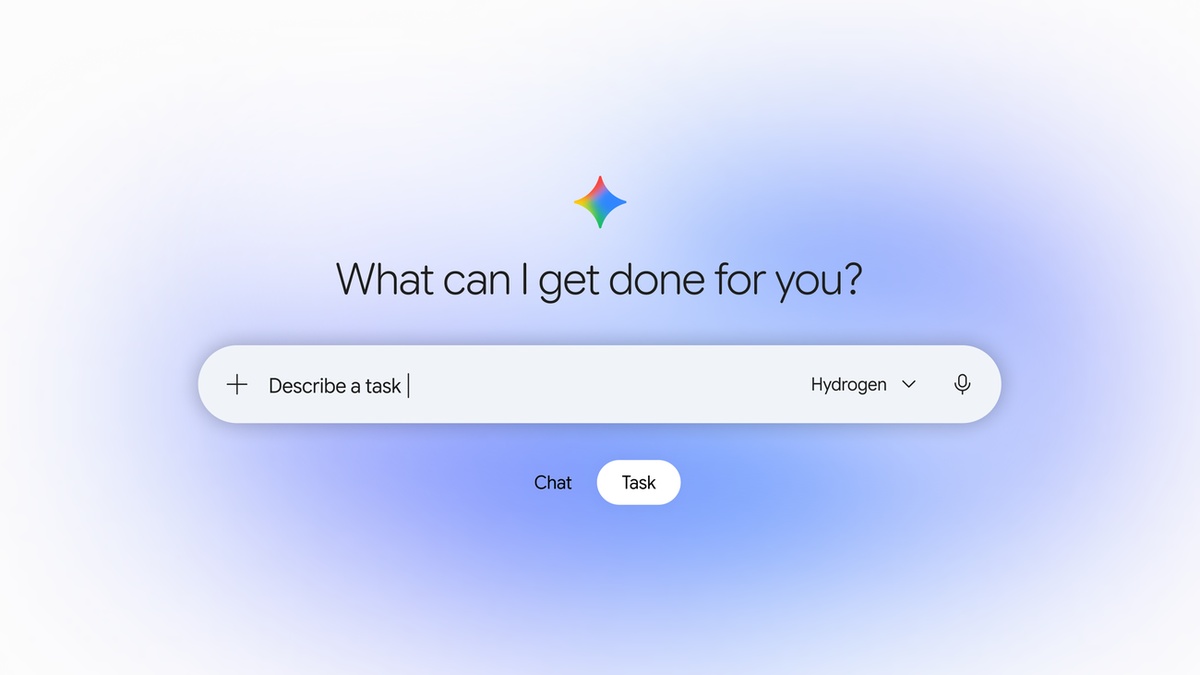
Beyond cybersecurity, the platform includes pre-configured autonomous loops dedicated to runtime latency reduction and digital accessibility compliance. These specialized pipelines continuously audit live digital touchpoints, eliminating sluggish rendering cycles and discriminatory usability barriers across user experiences.
The latency optimization loop continuously measures Time to First Byte, largest contentful paint, and database query durations under real-world network conditions. When runtime performance dips beneath acceptable thresholds, the agent profiles execution bottlenecks, optimizing asset bundles, caching strategies, and backend queries.
Simultaneously, Google Stitch Loop monitors digital accessibility across every user-facing interface, auditing conformance against WCAG 2.2 standards. The agent tests screen reader navigation, keyboard accessibility trees, color contrast ratios, and semantic HTML hierarchies to ensure universal user inclusion.
When accessibility barriers or latency regressions are discovered, the system generates targeted pull requests with visual evidence. Engineers receive comprehensive diagnostic breakdowns, including side-by-side performance benchmarks, DOM inspection traces, and automated browser rendering comparisons that clearly substantiate the required modifications.
In addition to built-in loops, organizations can define bespoke optimization objectives tailored to unique commercial key performance indicators. Teams can configure autonomous agents to optimize e-commerce checkout funnels, reduce onboarding drop-offs, or streamline subscription management workflows based on live metrics.
This targeted flexibility empowers product managers and engineering leaders to translate strategic business goals directly into autonomous code generation. The platform methodically iterates on user interface patterns and backend logic until the specified numerical targets are conclusively achieved.
Human-in-the-Loop Governance: Isolated Cloud Sandboxes and Pull Request Auditing
Autonomous code authoring naturally raises legitimate concerns regarding software safety, repository stability, and operational governance. Google addressed these critical concerns by embedding rigorous human-in-the-loop safeguards and isolated sandbox architectures into every stage of the execution lifecycle.
Under no circumstances does Google Stitch Loop merge source code directly into production branches without human oversight. Every proposed modification arrives strictly formatted as a standard GitHub pull request, complete with comprehensive engineering notes, unit test coverage, and reproducible execution artifacts.
All code authoring, build execution, and validation occurs inside isolated, ephemeral cloud sandboxes. These secure virtualization environments prevent untrusted execution traces from affecting production servers, allowing the agent to rigorously test complex builds, database migrations, and visual styling changes safely.
To facilitate rapid human review, the platform automatically attaches visual artifacts directly to each pull request. When visual interface elements are modified, the agent generates automated high-resolution screenshots and video demonstrations highlighting exact before-and-after behavioral contrasts.
Engineering leads maintain total sovereign authority over their codebases, reviewing diffs, requesting revisions, or rejecting proposals through conventional Git workflows. The agent respects repository branch protection rules, mandatory code review requirements, and cryptographic commit signing standards without requiring elevated administrative privileges.
This governance model strikes a harmonious balance between autonomous execution velocity and professional engineering discipline. Development teams benefit from tireless background optimization while retaining absolute control over what code ultimately deploys to customer-facing production infrastructure.
Google Stitch Loop Commercial Deployment: Waitlist Access, Pricing, and Ultra Priority
The commercial debut of Google Stitch Loop marks an ambitious expansion of the broader Stitch product ecosystem. Google Labs has officially opened global waitlist registration, inviting software development teams worldwide to participate in early enterprise access programs.
Eligible subscribers holding Google AI Ultra memberships receive prioritized onboarding access, allowing advanced developers to deploy the service layer immediately. Early participants gain direct access to private feedback channels within the Google Labs Discord community to collaborate directly with core product architects.
Google designed the platform to seamlessly complement existing development stacks without demanding costly enterprise migrations. By connecting over one hundred eighty third-party services alongside GitHub repositories, teams can activate autonomous maintenance loops in minutes using established organizational credentials.
Hardware efficiency also benefits developers utilizing modern workstations like the Apple M4 Mac Mini redesign, providing robust local environments for testing agent pull requests. Meanwhile, high-throughput developers benchmarking compilation workloads on the AMD Ryzen 7 9800X3D gaming CPU experience seamless local verification.
Furthermore, organizations modernizing legacy enterprise infrastructure amid the transition away from unsupported operating systems—as seen with Nvidia ending Windows 10 driver support—can leverage continuous agent loops to identify deprecated APIs and refactor aging codebases automatically.
The waitlist launch provides engineering organizations an immediate opportunity to evaluate next-generation autonomous DevOps capabilities. Detailed information on the official announcement is documented directly on the Google Keyword official blog, where teams can review architectural documentation.
Frequently Asked Questions
What is Google Stitch Loop and how does it differ from traditional coding assistants?
Google Stitch Loop is an always-on autonomous product agent from Google Labs that operates post-deployment. Unlike coding assistants that stop when pull requests merge, it continuously monitors live application telemetry to identify and fix performance, accessibility, and security bugs.
How does Google Stitch Loop safeguard codebases from unintended or broken code merges?
The platform never merges code automatically. It implements strict human-in-the-loop governance where every change is developed in an isolated cloud sandbox and opened as a GitHub pull request with test coverage, screenshots, and videos for engineer review.
Which AI models and security frameworks power the automated cybersecurity loop?
The cybersecurity loop pairs Gemini 4 Carbon with Google DeepMind CodeMender. Together, they autonomously analyze codebase execution flow, identify zero-day vulnerabilities and logic flaws, create proof-of-concept tests, and open audited pull requests containing verified security patches.
Can external developer tools and coding agents integrate with the platform?
Yes, Google Stitch Loop exposes persistent product context and optimization heuristics via the open Model Context Protocol and native CLI. External coding assistants like Google Antigravity can ingest live context, while Slack integration enables team notifications via @stitch.
How can engineering teams join the waitlist and access the early preview?
Global waitlist registration is open at stitch.google.com/loop/waitlist for all developers and organizations. Subscribers with Google AI Ultra memberships receive prioritized access, and early participants can collaborate with Google Labs engineers directly within dedicated Discord channels.
Final Verdict: Autonomous Product Maintenance Redefines Lean Engineering Teams
The introduction of Google Stitch Loop represents a transformative milestone in the evolution of software engineering tooling. By expanding artificial intelligence beyond interactive code generation into continuous, closed-loop maintenance, Google Labs has resolved one of modern technology’s most pervasive operational bottlenecks.
With specialized security intelligence from Gemini 4 Carbon and DeepMind CodeMender, robust Model Context Protocol integrations, and strict human-in-the-loop governance, the platform empowers lean organizations to achieve enterprise-tier resilience without exhausting developer productivity or compromising product quality.
As autonomous product agents mature, the boundary between software authoring and operational maintenance will permanently dissolve. Adopting Google Stitch Loop positions modern engineering teams to ship ambitious innovations rapidly while ensuring their production applications remain robust, performant, and secure around the clock.
