


Table of Contents
The official rollout of Google for Mexico AI initiatives marks a decisive turning point in regional technology deployment. Rather than treating artificial intelligence as a speculative research demonstration, Google is delivering concrete tools that directly stimulate domestic productivity across Latin America.
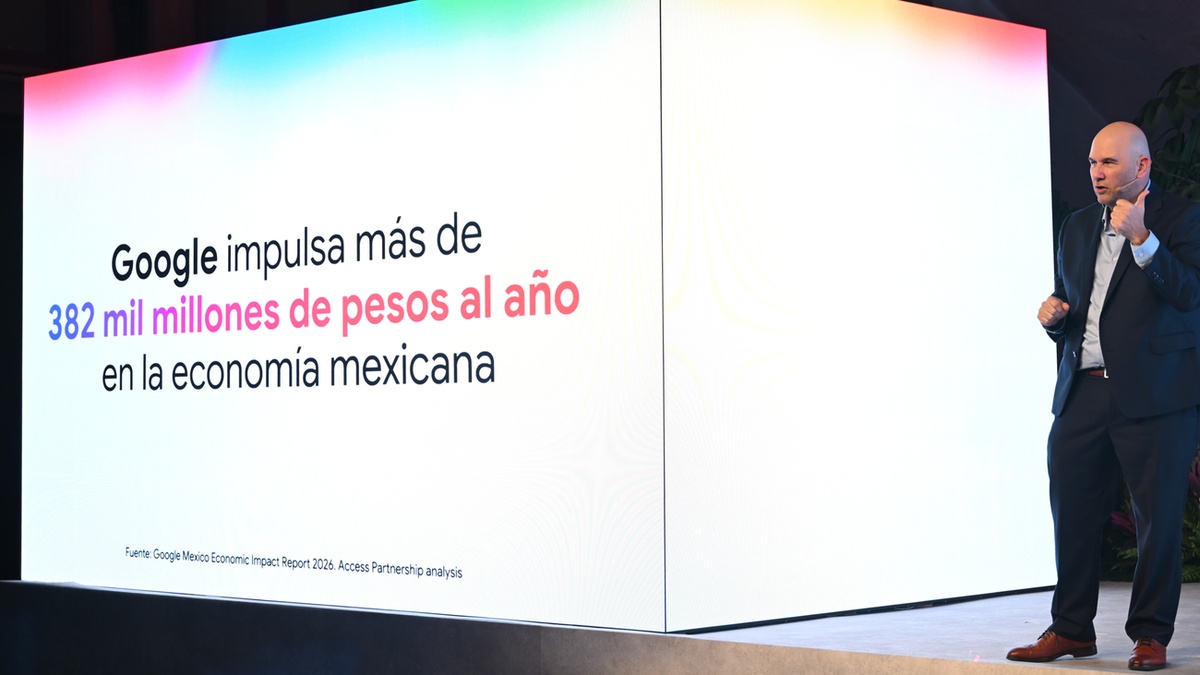
Keynote briefings delivered by Google Mexico Country Managing Director Sebastian Valverde and reported on Google Keyword confirmed that Google ecosystem services generated over 382 billion Mexican pesos in economic value during 2025.
| Strategic Pillar | Primary Technology / Framework | Deployment Scope & Demographics | Verified Real-World Impact |
|---|---|---|---|
| Mobile Machine Learning | Distilled Gemini Client Engine | Low-memory Android smartphones under 2GB RAM | Delivers voice tutoring and local business assistants to millions. |
| Disaster Risk Mitigation | GraphCast Atmospheric Modeling | Nationwide hourly predictions up to 15 days forward | Direct phone alerts in collaboration with CONAGUA meteorologists. |
| Economic Multipliers | Google Cloud & Smart Bidding | Mexican enterprises, retailers, and family fondas | Over 382 billion MXN annual impact with an 8:1 advertising return. |
| Generational Education | Google.org Digital Literacy Grants | 300,000+ Mexican teachers, students, and parents | $1.65 million UNICEF partnership for youth cyber safety. |
| Sovereign Engineering | Mexico City Headquarters Campus | Over 1,000 resident engineers and specialists | Direct contribution to global core platforms including Google Chrome. |
Google for Mexico AI Ecosystem: Translating Foundational Intelligence Into Real-World Economic Impact
The expansion of Google for Mexico AI establishes a tangible framework for measuring artificial intelligence by real-world domestic growth. Instead of confining advanced models to elite enterprise servers, Google is embedding intelligent assistance into everyday commerce across Mexican states.
Economic impact data released during the summit revealed that Google platforms generated 382 billion Mexican pesos in activity throughout 2025. That monumental metric represents more than one billion pesos circulating through local independent shops, restaurants, and startups every single day.
Small business resilience serves as the backbone of this economic velocity. For every peso invested by domestic entrepreneurs into Google advertising tools, businesses captured an average return of eight pesos, validating how algorithmic marketing levels the competitive playing field.
Furthermore, Google for Mexico AI proves that regional adoption accelerates when foundational algorithms address genuine logistical bottlenecks. Traditional family fondas now automate inventory orders, manage dynamic digital table reservations, and interface with international suppliers without requiring specialized computer science staff.
High-throughput enterprise workloads also benefit from modernized machine learning integration. Much like modern desktop workstations powered by the Apple M4 Mac Mini workstation, scalable local computing enables Mexican logistics hubs to execute multi-layered inventory reconciliation without network lag.
By connecting local entrepreneurs directly to global consumer markets, Google for Mexico AI transforms regional commerce from manual administration to automated efficiency. The underlying data demonstrates that democratized machine learning generates sustained financial inclusion rather than temporary promotional hype.
Gemini on Low-Memory Android Hardware: Bringing On-Device Assistance to 2GB RAM Smartphones
The technical highlight of the conference focused on democratizing access to Google for Mexico AI through extreme model optimization. Google unveiled an ultra-efficient Gemini application re-engineered specifically to run smoothly on budget Android smartphones equipped with only 2GB of RAM.
In emerging Latin American mobile markets, high-end flagship smartphones represent a prohibitive luxury for millions of students and workers. By optimizing neural weights and runtime memory footprints, Google ensures entry-level devices handle voice queries, natural language summarization, and creative writing tasks.
Running intelligent assistant models within severe hardware constraints requires sophisticated quantization, aggressive memory caching, and pruned transformer architectures. Mobile processors on entry-tier devices lack massive neural processing units, forcing software engineers to eliminate memory leaks and background runtime bloat.
Students across remote municipalities can now access personalized interactive educational tutoring through Google for Mexico AI without purchasing premium hardware. The specialized Gemini client delivers step-by-step math explanations, reading comprehension drills, and spoken language practice directly through low-cost mobile hardware.
Similarly, local trade workers and independent shopkeepers utilize conversational voice prompts to draft commercial supplier invoices, verify client orders, and compose formal emails. This lightweight client bridges digital divides, turning modest handheld electronics into powerful productivity engines.
Through disciplined mobile systems engineering, Google for Mexico AI proves that modern artificial intelligence does not require four-digit hardware investments. Optimizing software efficiency ensures advanced technological tools uplift everyday users across diverse socioeconomic communities.
Precision Meteorological Modeling: AI-Driven Storm Alerts and CONAGUA Early Warning Systems
Beyond financial growth, Google for Mexico AI addresses urgent environmental threats through atmospheric science innovations. Google formalized an operational partnership with the National Water Commission, known as CONAGUA, alongside the National Meteorological Service.
Mexico regularly confronts devastating tropical storms and hurricanes across Pacific coastal areas and the Gulf. Leveraging high-resolution atmospheric physics modeling, Google provides hourly predictive storm tracking up to fifteen days in advance, dramatically outperforming legacy meteorological simulation pipelines.

Accurate forward forecasting allows municipal emergency management teams to mobilize disaster relief, position emergency generators, and evacuate vulnerable flood basins days earlier. Every additional hour gained through predictive forecasting directly preserves critical civil infrastructure and saves civilian lives.
Google integrates these computational forecasts directly into consumer mobile interfaces, pushing urgent localized weather notifications to millions of residents. When extreme rainfall or storm surges threaten specific zip codes, mobile devices immediately broadcast actionable safety alerts.
Modern computing environments frequently redefine system reliability to protect vital data during critical workloads. As observed when Nvidia ends Windows 10 support for PC gamers, transition phases require rigorous platform modernization to preserve operational safety and system performance.
By deploying advanced climate prediction models alongside public agencies, Google for Mexico AI establishes a dependable safety blanket. Combining satellite telemetry with predictive machine learning protects vulnerable agricultural communities and coastal population centers against escalating extreme weather.
Google for Mexico AI Commercial Expansion: Measuring Daily Enterprise Returns and Small Business Automation
The commercial footprint of Google for Mexico AI reflects a mature enterprise ecosystem operating at massive national scale. Over one billion pesos flows through Mexican commercial entities every single day utilizing Google advertising platforms and cloud database solutions.
The documented eight-to-one revenue return on advertising spend illustrates how algorithmic bidding and automated conversion modeling benefit independent vendors. Micro-enterprises can accurately target interested local buyers without exhausting finite operational marketing budgets.
| Platform Dimension | Traditional Legacy Operation | Google for Mexico AI Implementation | Measured Structural Advantage |
|---|---|---|---|
| Mobile Assistant Execution | Cloud-only models requiring 6GB+ RAM | Distilled Gemini client running on 2GB RAM | Enables 100% voice assistance on low-cost hardware. |
| Meteorological Prediction | 24-to-48 hour numerical simulations | AI atmospheric physics forecasting up to 15 days | Grants municipal responders crucial early evacuation buffers. |
| SME Marketing Automation | Manual keyword bidding with flat returns | Predictive smart bidding with 8:1 ROI multiplier | Empowers neighborhood fondas to capture steady local demand. |
| Developer Ecosystem Integration | Siloed offshore feature implementation | 1,000+ local engineers driving Google Chrome | Projects Mexican software architecture onto global platforms. |
| Educational Safety Governance | Fragmented classroom guidance | $1.65M Google.org UNICEF curriculum | Protects 300,000+ children and parents from online threats. |
Automating administrative customer relationship tasks allows family enterprises to focus on customer service and artisanal production. Digital inventory management tools predict supply shortages during peak seasonal demand, reducing perishable food waste across community markets.
Enterprise scale operations also leverage scalable cloud data pipelines to analyze complex logistics patterns across transport corridors. Processing immense transport sensor telemetry mirrors high-performance PC tuning, where platforms like the AMD Ryzen 7 9800X3D gaming processor handle intensive computational pipelines effortlessly.
Financial institutions and domestic retailers utilize automated fraud detection algorithms within Google for Mexico AI to authenticate digital payments seamlessly. Protecting transactions against malicious chargebacks reassures consumers entering digital commerce, cementing trust in modern contactless banking protocols across the country.
Ultimately, commercial scalability demonstrates that Google for Mexico AI provides practical infrastructure rather than theoretical convenience. Transforming everyday retail operations into data-driven powerhouses strengthens domestic competitiveness and stimulates sustainable regional job creation.
Youth Digital Safety and Educational Literacy: Allocating Multi-Million Dollar Grants with UNICEF
Technological progress requires robust social protections, an imperative addressed by Google for Mexico AI through civic philanthropy. Google.org announced a targeted 1.65 million dollar grant to UNICEF to fund children’s digital literacy and cybersecurity initiatives across Latin America.
Within Mexico, this humanitarian investment directly supports over 300,000 parents, educators, caregivers, and students with practical cybersecurity curricula. The educational program trains adolescents to identify phishing attempts, combat cyberbullying, and protect sensitive personal identity information online.

Classroom workshops equip public school instructors with actionable toolkits designed to guide young learners through online challenges. Educators learn how to teach responsible artificial intelligence usage, encouraging pupils to leverage intelligent tools for research while avoiding academic dishonesty.
Parents and legal guardians receive accessible digital literacy handbooks outlining effective parental control configurations, screen time boundaries, and privacy settings. Bridging generational knowledge gaps ensures families can foster secure domestic browsing environments without causing household conflict.
Preventing early cyber vulnerabilities protects young minds as classrooms increasingly adopt collaborative Google for Mexico AI platforms and online homework suites. By fostering ethical digital citizenship, the initiative ensures youth safely master technological tools essential for twenty-first-century career opportunities.
Philanthropic backing reinforces that Google for Mexico AI values human welfare alongside corporate expansion. Cultivating safe educational environments guarantees that the next generation of Mexican innovators can navigate online platforms with confidence and digital resilience.
Google for Mexico AI Engineering Hub: How Local Software Teams Drive Global Infrastructure
The transition of Mexico from a technology consumer into a premier technology producer is epitomized by Google for Mexico AI engineering investments. Google confirmed the imminent opening of a massive new corporate headquarters in Mexico City, consolidating over one thousand employees.
This modern engineering facility will house elite Mexican software engineers, product architects, and security researchers under one unified campus. Crucially, these local technical teams do not merely localize existing tools; they directly develop core features for global services like Google Chrome.
Contributing to Google Chrome engineering requires navigating complex web rendering engines, JavaScript runtime compilers, and memory isolation sandboxes. Mexican software architects write performance-critical code utilized by billions of internet users worldwide on desktops and mobile operating systems.
Establishing a high-density technical campus creates profound knowledge spillover throughout the domestic tech ecosystem. Software developers trained within Google engineering standards routinely mentor local computer science undergraduates, launch innovative regional startups, and elevate national software craftsmanship.
The regional campus also serves as a premier research hub for customized Google for Mexico AI processing across indigenous dialects and Spanish linguistic nuances. Fine-tuning multimodal models to comprehend regional idioms ensures intelligent agents serve local communities accurately.
By investing deeply in local software engineering, Google for Mexico AI solidifies the nation’s standing as an international technology superpower. Building world-class software from Mexico City showcases the immense intellectual capital and engineering leadership thriving across Latin America.
Autonomous Agent Architectures: Transitioning from Informational Chatbots to Multi-Step Workflows
The strategic roadmap behind Google for Mexico AI highlights a structural shift from passive informational chatbots to proactive autonomous software agents. While legacy systems merely summarized textual paragraphs, modern systems execute complex, multi-step actions across interconnected software platforms.
Autonomous agent frameworks evaluate user intent, decompose complex goals into discrete subtasks, and coordinate external API integrations autonomously. An entrepreneur can command an agent to analyze monthly inventory figures, reconcile bank statements, and draft supplier purchase contracts simultaneously.
Freeing up valuable administrative hours allows business proprietors to concentrate their creative focus on strategic product development. The transition from reactive querying to proactive agent execution fundamentally redefines how small enterprises scale their commercial operations.
Furthermore, enterprise customer service workflows utilize autonomous agent routing to resolve complex support tickets instantly without human intervention. Machine learning agents securely access customer databases, verify warranty entitlements, and dispatch replacement components with remarkable precision.
Deploying multi-step agents securely demands strict guardrails, transactional verification checkpoints, and sandboxed environments. Google engineers design safety protocols that prevent hallucinated actions, ensuring autonomous systems operate within strictly defined financial and operational parameters.
As agent ecosystems mature, Google for Mexico AI will empower domestic organizations to achieve unprecedented operational velocity. Embracing actionable intelligence positions Mexican commerce at the vanguard of the global automated software revolution.
Frequently Asked Questions
What core innovations were announced under Google for Mexico AI?
The announcement revealed lightweight Gemini models optimized for 2GB RAM Android smartphones, 15-day AI weather forecasting with CONAGUA, an economic contribution of 382 billion pesos, a $1.65 million UNICEF child safety grant, and a new Mexico City engineering campus.
How does the lightweight Gemini app function on 2GB RAM devices?
Google re-engineered the Gemini client using model quantization and memory cache optimizations to run on low-memory smartphones. The application delivers voice assistance, educational tutoring, and writing tools to budget hardware without experiencing system crashes or freezing.
How does Google assist CONAGUA with hurricane and flood forecasting?
Google deploys advanced atmospheric physics modeling within Google for Mexico AI to deliver hourly meteorological predictions up to 15 days in advance. Partnering with CONAGUA and the National Meteorological Service enables precise localized storm alerts to reach residents mobile phones before severe weather strikes.
What economic impact did Google technologies generate in Mexico?
According to the latest Economic Impact Report, Google tools generated over 382 billion Mexican pesos in economic activity throughout 2025. Furthermore, Mexican businesses captured an average return of eight pesos for every single peso invested in Google advertising solutions.
What role do Mexican engineers play at the new Mexico City office?
The new Mexico City campus unites over one thousand Googlers, including software engineers who build core features for global products like Google Chrome. Mexican engineering teams actively shape worldwide web standards, browser security protocols, and machine learning infrastructure.
Final Verdict: Expanding Regional Innovation Through Resilient Infrastructure and Accessible Intelligence
The strategic vision unveiled through Google for Mexico AI illustrates how transformative artificial intelligence becomes when tailored to regional economic realities. By prioritizing hardware accessibility, climate resilience, and local software talent, Google provides a blueprint for responsible technological modernization.
Deploying lightweight Gemini models to low-memory smartphones ensures that advanced digital tutoring and commercial automation remain accessible to all socioeconomic backgrounds. Concurrently, pairing predictive storm forecasting with civil protection agencies establishes vital safeguards against severe environmental crises.
As Mexico City engineers continue contributing directly to global software infrastructure, Google for Mexico AI cements the country’s status as a technological leader. Combining sovereign engineering with shared economic prosperity creates an inclusive digital future where no community is left behind.
