



Table of Contents
Microsoft has issued a formal executive statement addressing the catastrophic Microsoft global service outage that paralyzed enterprise systems, government agencies, and educational institutions worldwide. Redmond leaders apologized deeply while providing initial architectural explanations for the widespread failure.
In an official incident disclosure, Microsoft explicitly confirmed that neither malicious cyberattacks nor autonomous AI agents caused the disruption. As telemetry stabilizes, the Microsoft global service outage has placed renewed public scrutiny on aggressive corporate engineering layoffs.
| Investigation Phase | Reported Finding | Engineering Impact | Official Corporate Status |
|---|---|---|---|
| Cybersecurity Defense Review | Zero malicious intrusion vectors detected | Eliminates state-sponsored cyberattack theories | Formally confirmed by Microsoft Security |
| Autonomous AI Agent Audit | Automated coding systems cleared of blame | Disproves viral speculative agentic error claims | Explicitly verified in executive statement |
| Network Capacity Upgrade | Configuration error in transport routing table | Triggered health-check quarantine cascades | Identified as primary root failure trigger |
| Phased Regional Restoration | Sequential zone validation implemented | Prevented secondary traffic surges on endpoints | Staged recovery validated across regions |
| Post-Incident Forensic Review | Granular packet audit in active development | Will establish permanent deployment guardrails | Public release committed by Redmond leads |
Executive Statement Breakdown: Redmond Denies Cyberattacks and Autonomous Code
Following days of intense global disruption, Microsoft published an official apology acknowledging the severe impact inflicted on global partners. According to detailed reporting from PC Gamer, Redmond leadership accepted direct responsibility for the extended disruption.
The company stated plainly that it was deeply sorry for the widespread breakdown across its production clusters. Microsoft reiterated that customers place enormous operational trust in enterprise software, making the prolonged Microsoft global service outage particularly damaging for commercial workflows.
Crucially, the formal statement moved quickly to debunk rampant online speculation regarding potential cyberwarfare or external intrusion. Microsoft affirmed that defensive telemetry showed no indicators of unauthorized network penetration during the Microsoft global service outage.
Engineers also firmly refuted viral theories claiming that untested artificial intelligence agents had damaged production routing tables. Redmond clarified that autonomous coding systems played no role in precipitating the Microsoft global service outage across enterprise communications infrastructure.
Instead, leadership attributed the breakdown to a severe architectural flaw triggered during an earlier network capacity enhancement. That routine change destabilized transport gateways, requiring complex manual rollbacks while system administrators struggled to maintain mission-critical connectivity.
Root Cause Analysis: Network Capacity Upgrade Flaw Cascades Across Core Gateways
Delving into technical mechanics, Microsoft revealed that the incident originated during a planned network capacity upgrade. While scheduled maintenance aimed to expand bandwidth, an underlying routing error remained undetected until a subsequent operational adjustment triggered severe instability.
When automated systems applied the secondary network modification, unexpected routing conflicts cascaded through core transport layers. The resulting Microsoft global service outage severed connectivity between centralized authentication directories and regional Exchange endpoints, blinding monitoring services.
Rather than executing an abrupt global restart, Microsoft opted for a cautious, phased restoration across geographic regions. Engineering teams validated server cluster health at each milestone to prevent massive client reconnection surges from collapsing newly recovered nodes.
Microsoft acknowledged that this sequential validation pace extended the timeline far longer than commercial customers anticipated. However, technicians defended the methodical approach, asserting that premature traffic rebalancing would have triggered catastrophic cyclic flapping across fragile databases.
Real-time diagnostic metrics on the official Microsoft Azure Status Portal confirmed gradual recovery across North American and European datacenters. Even so, the Microsoft global service outage exposed dangerous dependencies within centralized hyperscale cloud architectures.
Engineering Workforce Reductions: Scrutinizing the Impact of 30,000 Tech Layoffs
While Microsoft emphasized technical factors, industry analysts and publications quickly highlighted the human dimension behind the collapse. PC Gamer noted that Microsoft eliminated roughly 30,000 corporate positions over the past four years through aggressive cost-cutting measures.
This workforce reduction included 10,000 employees cut in 2023, followed by 15,000 additional engineering layoffs throughout 2025. Just last month, Microsoft extended voluntary buyout packages to an astonishing 60,000 employees to accelerate its corporate artificial intelligence pivot.
Enterprise IT specialists question whether eliminating vast tiers of veteran systems engineers degraded institutional resilience during routine upgrades. Slashing senior operational personnel frequently leaves mission-critical network maintenance vulnerable to undetected configuration errors during the Microsoft global service outage.
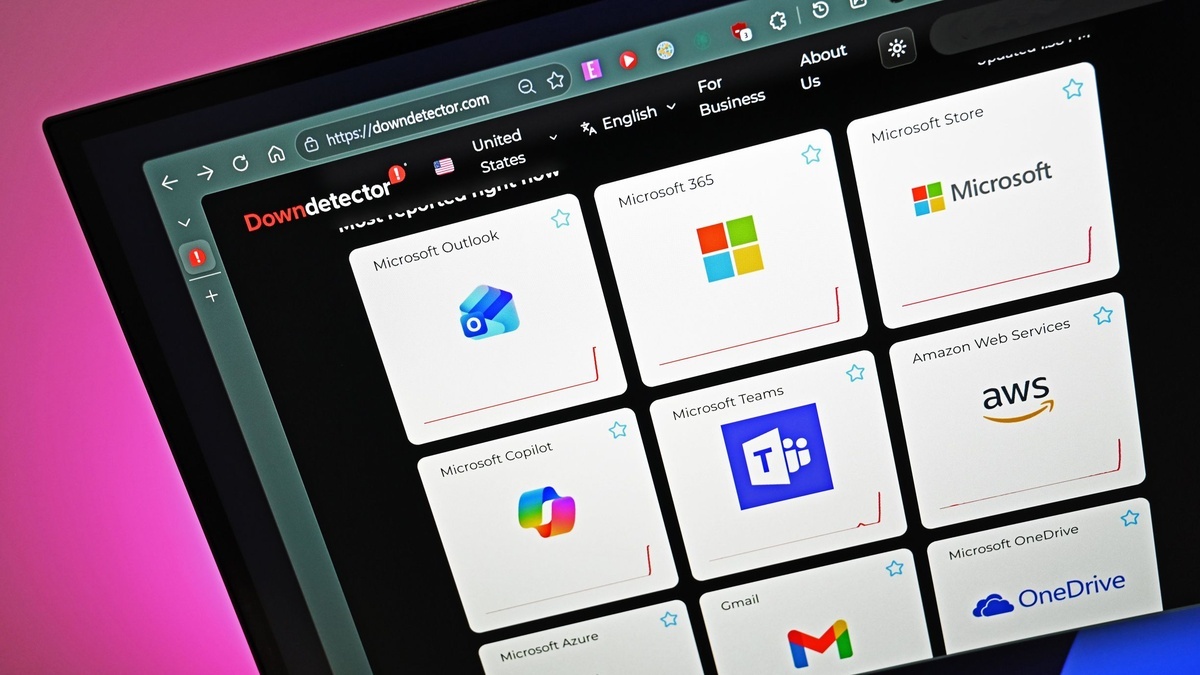
The strategic pivot toward automated workflows has intensified debate over software reliability across enterprise computing ecosystems. Similar modernization frictions were analyzed in our review of Nvidia ending Windows 10 driver support, where architectural transitions often leave legacy infrastructures vulnerable.
Industry observers argue that relying excessively on algorithmic maintenance tools cannot compensate for seasoned human oversight. As the Microsoft global service outage demonstrates, aggressive headcount reductions risk gutting the specialized expertise necessary to prevent monolithic infrastructure collapses.
Incident Impact and Recovery Velocity: Enterprise Services Timeline Matrix
To understand the operational severity, enterprise architects have begun contrasting this disaster against historical hyperscale incidents. Analyzing the Microsoft global service outage reveals how an internal configuration defect paralyzed authentication tokens and messaging pipelines on an unprecedented scale.
Large commercial tenants experienced widespread disruption across Microsoft Exchange, Teams scheduling, and specialized cloud environments. As documented during our analysis of Xbox Cloud Gaming subscription models, centralized cloud synchronization failures rapidly cascade across completely distinct product divisions.
| Enterprise Service Layer | Observed Failure Mode | Root Cause Dependency | Resolution & Current Health |
|---|---|---|---|
| Microsoft Exchange Online | Inbound and outbound transport timeout | Authentication token routing failure | Broad recovery; residual queues draining |
| Microsoft Teams Collaboration | Calendar scheduling and call disconnects | Synchronized shared directory lockouts | Full audio, video, and chat functionality restored |
| Apple Mail Exchange Sync | Account authentication handshake drops | Legacy gateway interface flapping | Synchronizing normally across macOS and iOS |
| Microsoft 365 Copilot | Document processing and query latency | API gateway capacity exhaustion | Operating at baseline enterprise throughput |
| Azure Admin Center Portal | HTTP 503 gateway unavailable errors | Control plane telemetry overload | Operational across all primary cloud regions |
Healthcare networks, municipal emergency services, and multinational financial institutions reported widespread communication blackouts during the crisis. For dozens of organizations, the Microsoft global service outage halted customer transactions and paralyzed internal scheduling for nearly twenty-four hours.
Telemetry data confirms that message queues backlogged into tens of millions of delayed transmissions globally. Even after transport gateways stabilized, enterprise mailbox servers required several hours of controlled throttling to ingest accumulated message payloads safely.
The failure illustrates why enterprise risk officers increasingly reject monolithic cloud dependencies in modern deployments. When core software pipelines fail simultaneously, organizations without diversified multi-cloud redundancies face complete operational paralysis without any fallback.
Operational Governance and Post-Incident Audit: Preventing Future Cloud Monoculture Failures
In its concluding public remarks, Microsoft pledged to deliver a comprehensive post-incident review once internal forensic investigations conclude. This upcoming report must provide granular packet-level analyses detailing why automated canary testing failed to isolate the corrupted configuration.
Enterprise customers have formally demanded transparency regarding automated health checks and failover isolation mechanisms. Corporate IT leaders insist that future Microsoft global service outage prevention requires rigorous architectural guardrails rather than generic executive apologies.
Regulatory bodies across Europe and North America are also expected to examine the prolonged cloud disruption. Given Microsoft’s critical role in public sector infrastructure, government agencies are demanding concrete verification that automated systems cannot bypass human approval.
Furthermore, cloud architects expect Microsoft to revise deployment pipelines to enforce absolute isolation between regional availability zones. Implementing strict blast-radius containment ensures that transport gateway misconfigurations remain quarantined within localized test environments rather than triggering global blackouts.
Until independent forensic audits verify these architectural safeguards, enterprise confidence in centralized cloud management remains noticeably shaken. The Microsoft global service outage serves as an urgent wake-up call for corporations prioritizing aggressive workforce downsizing over core engineering stability.
Frequently Asked Questions
Did hackers or cyberattacks cause the Microsoft global service outage?
No, Microsoft confirmed that external cyberattacks and malicious activity were not involved in the Microsoft global service outage. Defensive telemetry verified that the catastrophic collapse stemmed entirely from an internal network configuration defect during scheduled upgrades.
Were autonomous AI agents responsible for the network disruption?
Microsoft explicitly stated that autonomous artificial intelligence tools and vibe-coding agents did not cause the Microsoft global service outage. Technicians verified that standard transport capacity modifications created the routing regression across core datacenters.
How did Microsoft layoffs influence infrastructure stability?
Industry analysts argue that cutting 30,000 tech employees eliminated critical institutional knowledge required for safe updates. Critics suggest that aggressive downsizing contributed directly to oversight gaps during the Microsoft global service outage.
Why did service restoration require nearly twenty-four hours?
Microsoft deliberately restored services using a phased rollout to prevent cyclic flapping across newly recovered clusters. This staged validation minimized secondary traffic surges during the Microsoft global service outage.
Will Microsoft release a detailed post-incident review?
Yes, Microsoft committed to publishing an exhaustive post-incident report detailing root causes and safeguards. Enterprise clients expect complete architectural transparency following the Microsoft global service outage.
Final Verdict: Assessing Infrastructure Reliability and Corporate Restructuring Costs
The executive apology issued by Microsoft provides necessary transparency, yet it cannot erase the extensive economic fallout of the Microsoft global service outage. When foundational communication platforms collapse, millions of enterprise workflows suffer immediate paralysis.
Attributing the disruption to network modifications while clearing AI and hackers highlights the enduring risks of fragile configuration pipelines. Balancing aggressive workforce reductions against operational stability remains an unsustainable gamble for hyperscale cloud providers.
Ultimately, enterprise leaders must extract critical architectural lessons from this catastrophe by diversifying mission-critical infrastructure across multi-cloud environments. The Microsoft global service outage proves that relying exclusively on single-vendor monoliths invites unacceptable operational vulnerability.
