


Table of Contents
Six years into its hardware lifecycle, Sony is revitalizing standard console performance. The rollout of PS5 QSSR AI upscaling brings machine learning image reconstruction to existing hardware, delivering cleaner geometry and crisper textures without requiring mid-generation console upgrades.
Following its initial technology reveal last month, Sony confirmed that PS5 QSSR AI upscaling is expanding across major third-party and first-party titles. An immediate update for Marvel’s Spider-Man 2 is available today, with Remedy, Embark Studios, and Hello Games rolling out updates soon.
| Upscaling Technology | Target Hardware Platform | Compute Execution Core | Underlying Architecture | Developer API Pipeline |
|---|---|---|---|---|
| Quick Spectral (QSSR) | Base PlayStation 5 (2020) | RDNA 2 Compute Shaders | Project Amethyst ML Heuristics | Unified PlayStation SDK API |
| PlayStation Spectral (PSSR) | PlayStation 5 Pro (2024) | Custom Neural Compute Array | Hardware-Accelerated Tensor ML | Unified PlayStation SDK API |
| FidelityFX Super Res (FSR 3.1) | Cross-Platform PC & Console | Standard GPU Shader Array | Non-ML Temporal Accumulation | Open-Source AMD FidelityFX |
| Temporal Anti-Aliasing (TAAU) | Legacy Consoles & PC | Standard Pixel Shader Passes | Heuristic Motion Vector Blending | Proprietary Game Engine Loops |
Project Amethyst Architecture: How Machine Learning Scaled to Base PS5 Silicon
The technical foundation of PS5 QSSR AI upscaling stems directly from Project Amethyst, Sony’s extensive multi-year engineering collaboration with AMD. While the high-end PlayStation 5 Pro utilizes dedicated neural compute arrays, engineers developed a lightweight spectral reconstruction model specifically tailored for baseline RDNA 2 silicon.
Unlike traditional temporal accumulators that introduce ghosting, PS5 QSSR AI upscaling deploys neural heuristics via compute shaders. Much like the efficiency detailed in our breakdown of the AMD Ryzen 7 9800X3D gaming processor, extracting performance requires deep hardware co-design.
By partnering directly with AMD, PlayStation architects unified the developer toolchain across both console tiers. Developers target an identical API interface whether deploying full PSSR on enhanced hardware or running spectral upscaling on standard consoles.
This unified interface dramatically reduces developer engineering overhead when maintaining cross-generation visual parity. Rather than rewriting custom temporal pipelines, development teams can ingest high-resolution motion vectors and color buffers through the existing PlayStation graphics software development kit.
Consequently, studios adopting PS5 QSSR AI upscaling can reclaim precious GPU frame time. The neural inference pass resolves fine sub-pixel details from lower native internal render targets, freeing compute capacity for complex lighting calculations, enhanced volumetrics, and rock-solid framerate locks.
Marvel’s Spider-Man 2 Patch Analysis: Fidelity and Performance Mode Gains
Insomniac Games serves as the flagship pioneer for PS5 QSSR AI upscaling, releasing a comprehensive game patch for Marvel’s Spider-Man 2 immediately. Having perfected neural scaling routines during development of Marvel’s Wolverine, the studio successfully backported the algorithm to its 2023 blockbuster.
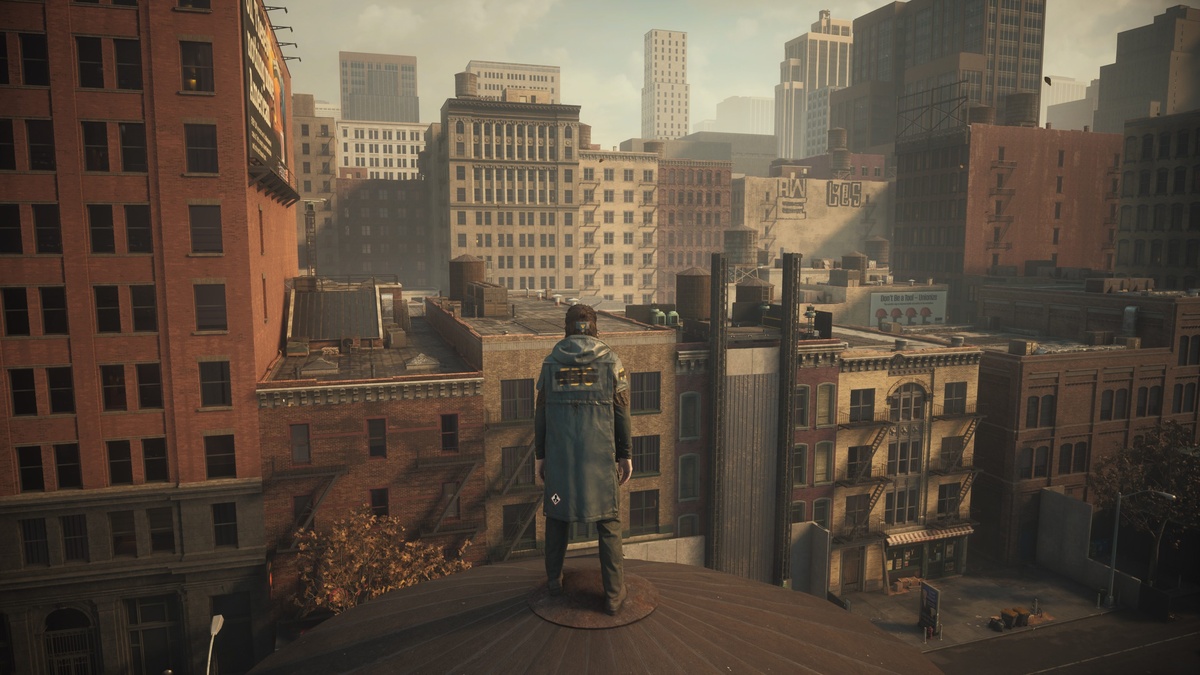
Mike Fitzgerald, Head of Technology at Insomniac Games, confirmed that the update targets both Fidelity and Performance display modes. Players swinging across Manhattan will immediately notice dramatically reduced edge jitter on intricate steel skyscraper frames and suspension bridge cables.
Under traditional temporal anti-aliasing upsampling, fast camera rotation across dense urban geometry frequently resulted in distracting motion smearing. With PS5 QSSR AI upscaling, thin high-frequency lines such as webbing strands and distant window grids maintain visual coherence even during rapid traversal.
Maintaining rigorous visual standards across aging hardware mirrors platform longevity strategies observed across the computing industry. As explored in our coverage of NVIDIA ending Windows 10 support, proactive software updates sustain user value long after initial product launches.
Furthermore, the patch enhances dynamic resolution scaling stability in intensive combat encounters. By allowing the internal render buffer to operate at lower base targets without sacrificing clarity, the game sustains locked sixty and one-hundred-twenty hertz outputs far more consistently.
Remedy and Control Resonant: Eliminating Temporal Artifacts and Geometry Shimmer
Remedy Entertainment is integrating PS5 QSSR AI upscaling into its upcoming title Control Resonant, targeting a December release window. The Finnish studio is renowned for pushing boundary-pushing visual technology, requiring robust upscaling solutions to support complex ray-traced reflections and indirect bounce lighting.
Erik Jansson, Senior Graphics Programmer at Remedy Entertainment, revealed that Sony’s spectral technology delivers a noticeable leap in image stability. The Northlight engine’s heavy reliance on temporal accumulation previously struggled with disocclusion fizzle around transparent office glass partitions.
By replacing legacy spatial passes with PS5 QSSR AI upscaling, Control Resonant reconstructs specular highlights without temporal blurring. Moving reflections across polished marble floors remain razor-sharp, eliminating the noisy boiling artifacts commonly associated with aggressive sub-surface screen space passes.
Balancing aggressive graphical fidelity against strict thermal constraints requires sophisticated software optimization. Similar balance principles surfaced in our analysis of the Apple M4 Mac mini redesign, where unified architectures depend heavily on intelligent memory bandwidth allocation.
Remedy worked directly alongside Sony platform engineers to fine-tune network weights for brutalist architectural geometry. The resulting December update ensures that base console owners experience visual fidelity remarkably comparable to high-end PC ray tracing implementations.
Multiplayer Dynamics: Frame Pacing and Environmental Clarity in Fast-Paced Combat
Competitive multiplayer titles demand exceptional environmental clarity alongside razor-sharp reaction times. Embark Studios confirmed that PS5 QSSR AI upscaling will arrive across both The Finals and their upcoming extraction shooter ARC Raiders, elevating visual identification across massive destruction sandboxes.
Mikael Linderholm, Technical Art Director at Embark Studios, emphasized that enhanced image sharpness directly influences combat readability. When buildings collapse into thousands of dynamic physics debris pieces, traditional upscalers suffer from catastrophic temporal ghosting and loss of silhouette definition.
Implementing PS5 QSSR AI upscaling enables The Finals to reconstruct collapsing mortar, shattered glass, and flying particle debris cleanly. Players can track enemy silhouettes across chaotic destruction zones without the smearing artifacts that previously compromised target acquisition.
Low-latency visual reconstruction is equally essential for modern network-driven experiences, as examined in our report on Xbox cloud gaming pay-as-you-go pricing. Consistent frame pacing prevents competitive disadvantages during high-stakes multiplayer gunfights.
Similarly, ARC Raiders leverages PS5 QSSR AI upscaling to render dense, wind-swept foliage across sprawling wilderness battlegrounds. Sub-pixel foliage edges and distant mechanical threats resolve crisply, giving survival squads crucial situational awareness across complex outdoor environments.
Tactical Battlefields and Procedural Universes: Hell Let Loose and No Man’s Sky
Tactical warfare and procedural exploration represent two challenging rendering workloads where PS5 QSSR AI upscaling demonstrates remarkable versatility. Expression Games announced that Hell Let Loose: Vietnam will incorporate the spectral upscaler to preserve visual clarity across dense, foliage-heavy battlefield encounters.
Paul Rustchynsky, Game Director at Expression Games, stated that console visual fidelity remains a passionate priority for their community. Resolving tiny enemy soldiers concealed behind dense jungle bamboo and vibrating foliage requires exceptional edge stability that standard upscaling cannot deliver.
Through PS5 QSSR AI upscaling, Hell Let Loose: Vietnam eliminates shimmering tree canopies during artillery barrages and strafing runs. Iron sight and optic magnifications retain crisp reticle lines without visual breakup, significantly improving tactical engagement accuracy across vast historical conflict zones.
| Game Title | Development Studio | Engine Architecture | Deployment Schedule | Primary Visual & Performance Benefit |
|---|---|---|---|---|
| Marvel’s Spider-Man 2 | Insomniac Games | Proprietary Insomniac Engine | Live Now (November 2026) | Sub-pixel edge clarity and reduced motion smearing in 60 FPS |
| Control Resonant | Remedy Entertainment | Northlight Engine | December 2026 | Elimination of specular reflection boiling and ray tracing noise |
| The Finals | Embark Studios | Unreal Engine 5 | Coming Soon | Sharp particle debris reconstruction during dynamic destruction |
| ARC Raiders | Embark Studios | Unreal Engine 5 | Coming Soon | Enhanced distant target silhouettes and foliage edge resolution |
| Hell Let Loose: Vietnam | Expression Games | Unreal Engine | Upcoming Update | Clean jungle foliage stability and sharp long-range optic reticles |
| No Man’s Sky | Hello Games | Custom Procedural Engine | Next Few Weeks | Sharper planetary geometry and stable planetary orbital entry |
Simultaneously, Hello Games is deploying the technology to No Man’s Sky in an update scheduled over the coming weeks. Founder Sean Murray explained that rendering an infinite procedural universe requires absolute pixel efficiency when every visible star represents a fully traversable star system.
By integrating PS5 QSSR AI upscaling, No Man’s Sky renders procedurally generated planetary flora, planetary rings, and volumetric space clouds with greater detail. Base console players will enjoy smoother planetary entries and rock-solid framerates while traversing endless alien horizons.
Frequently Asked Questions
What is Quick Spectral Super Resolution and how does it function?
PS5 QSSR AI upscaling is an advanced machine learning image reconstruction algorithm developed by Sony and AMD. It reconstructs high-resolution images from lower render targets using trained neural heuristics running directly on standard RDNA 2 GPU compute shaders.
How does QSSR differ from PSSR on PlayStation 5 Pro?
While both technologies share the same underlying Project Amethyst architecture and software API, PSSR runs on dedicated hardware neural arrays in PS5 Pro. PS5 QSSR AI upscaling executes via optimized compute shaders on base console silicon.
Which games currently support QSSR on PlayStation 5?
Marvel’s Spider-Man 2 has a live patch supporting PS5 QSSR AI upscaling today. Confirmed upcoming titles include Control Resonant in December, followed by The Finals, ARC Raiders, Hell Let Loose: Vietnam, and No Man’s Sky.
Does QSSR improve both Fidelity and Performance modes?
Yes, PS5 QSSR AI upscaling enhances both display profiles. In Fidelity mode it refines geometric edges and ray-traced reflections, while in Performance mode it delivers crisp 4K reconstruction from lower base resolutions at smooth sixty frames.
Do developers need to rewrite their code to support QSSR?
No, studios do not need custom rewrites because QSSR shares an identical API with PSSR. Any game already engineered to support PlayStation 5 Pro upscaling can easily enable baseline console support with minimal friction.
Final Verdict: Base PlayStation 5 Extends Its Lifecycle Through Intelligent Upscaling
The expansion of PS5 QSSR AI upscaling demonstrates Sony’s commendable commitment to supporting standard PlayStation 5 owners six years into the console generation. By leveraging Project Amethyst research, Sony brings advanced machine learning benefits to tens of millions of existing living room consoles.
From the immediate web-swinging visual improvements in Marvel’s Spider-Man 2 to upcoming ray-traced stability in Control Resonant, PS5 QSSR AI upscaling bridges the generational gap. Developers gain substantial rendering headroom, delivering cleaner visuals without demanding premium hardware upgrades from their community.
As studio adoption accelerates across multiplayer shooters and procedural sandboxes, PS5 QSSR AI upscaling establishes a new technical baseline for modern console development. Players can expect increasingly sharp, stable, and fluid gameplay experiences across their favorite PlayStation 5 libraries for years to come.
