


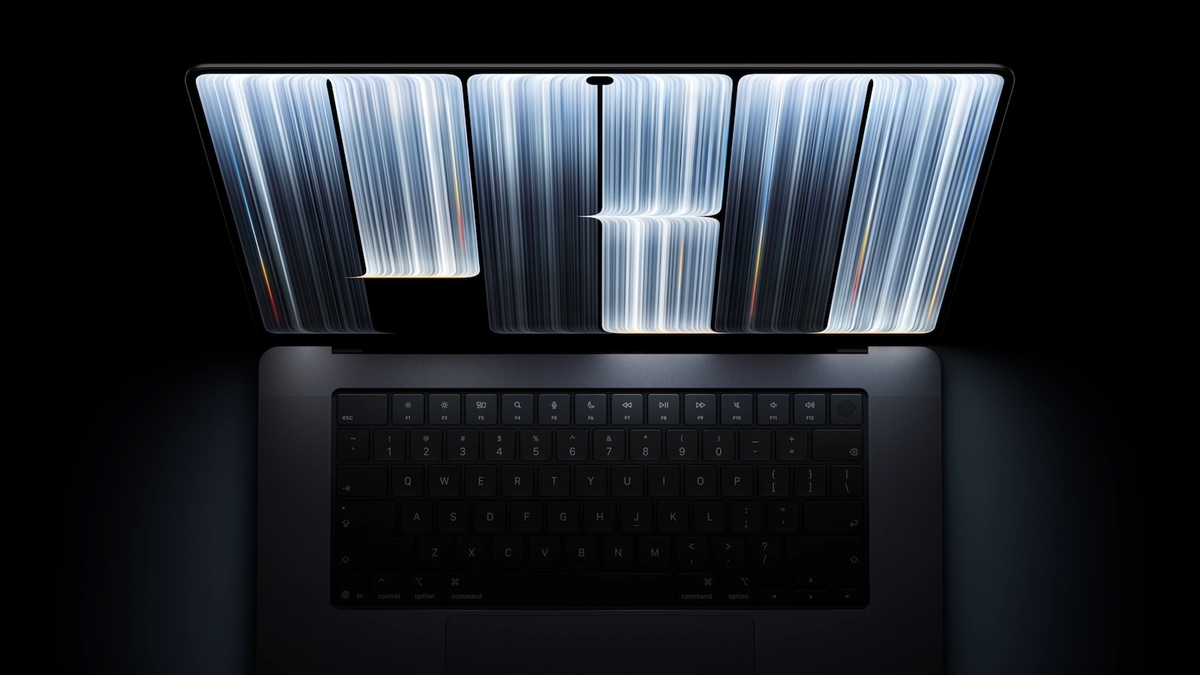
Apple has officially initiated worldwide customer deliveries for the flagship MacBook Pro PROLED XDR, introducing cutting-edge tandem organic light-emitting diode technology alongside next-generation M5 Pro and M5 Max silicon architecture to power professional creative workflows across the globe.
First reported by MacRumors and initial teardowns, this generational transition introduces several subtle chassis refinements, revised thermal geometry, acoustic enhancements, and surprising mechanical adjustments that prospective buyers should evaluate before ordering.
| Hardware Dimension | Previous Mini-LED Generation | MacBook Pro PROLED XDR | Architectural Impact |
|---|---|---|---|
| Display Panel Technology | Mini-LED with local dimming | Tandem PROLED XDR OLED | Zero halo blooming, infinite contrast, instant response |
| Corner Bezel Geometry | Squared lower display borders | Uniformly rounded corners | Symmetrical panel curvature matching macOS windows |
| Chassis Fasteners | Eight exterior pentalobe screws | Four perimeter pentalobe screws | Simplified chassis access and structural rigidity |
| Bottom Foot Architecture | Flush rubber chassis feet | Subtly recessed stabilizer pads | Prevents surface scuffing and improves acoustic isolation |
| Acoustic Sound Chambers | Standard high-fidelity six-speaker array | Enlarged speaker enclosures | Delivers 50% deeper bass and higher acoustic clarity |
| Lid Branding Illumination | Non-illuminated stainless logo | Dedicated white LED light source | Restores classic glowing aesthetic without panel bleed |
Table of Contents
1. Rounded Panel Geometry: Uniform Bezel Symmetry and Tandem OLED Precision
One of the most noticeable cosmetic refinements on the MacBook Pro PROLED XDR involves the bottom physical corners of the active display panel, which now feature smooth curved radii matching the top border geometry.
Previous mini-LED generations featured rounded top display edges around the menu bar while maintaining strictly squared corners along the lower chassis boundary, creating an asymmetrical aesthetic profile during full-screen multimedia playback.
By curving the lower display corners, Apple achieves complete architectural symmetry that mirrors the rounded borders of macOS application windows, dock interfaces, and external Apple Pro Display panels.
Beyond geometric styling, the transition to tandem OLED technology completely eliminates halo blooming around white text and high-contrast user interface elements that previously affected local-dimming mini-LED panels.
Creative professionals editing HDR video or grading color critical timelines gain individual sub-pixel luminance control, providing true zero-nit black levels alongside staggering peak specular highlights across every millimeter of panel real estate.
2. Streamlined Chassis Design: Recessed Feet and Four Screw Enclosure
Flipping over the chassis reveals a substantially updated bottom enclosure, demonstrating how Apple refined the MacBook Pro PROLED XDR exterior construction to improve maintenance accessibility and surface thermal stability.
Independent hardware analysts at Max Tech discovered that Apple reduced the total number of bottom pentalobe retaining screws from eight fasteners down to just four perimeter anchor points.
This mechanical reduction simplifies internal service access while utilizing high-precision interlocking chassis perimeter clips that preserve structural rigidity and torsional resistance across the entire recycled aluminum unibody.
Furthermore, the rubberized base support feet are now subtly recessed into machined recesses rather than sitting fully flush, preventing accidental adhesive displacement during frequent desk repositioning.
Similar to thermal and enclosure optimizations seen in our Apple M4 Mac mini redesign analysis, this structural layout promotes consistent intake airflow across demanding production workloads.
3. Acoustic Subsystem Overhaul: Larger Chambers Deliver 50 Percent Deeper Bass
While internal space inside modern laptops remains extraordinarily constrained, Apple managed to expand the physical acoustic enclosures supporting the integrated sound system beneath the keyboard deck.
Official technical documentation confirms that these enlarged speaker assemblies generate fifty percent deeper low-frequency bass extension, dramatically enhancing dynamic range and tonal presence for mobile music mixing.
Audio engineers evaluating the MacBook Pro PROLED XDR will notice immediate clarity improvements during vocal isolation, spatial audio monitoring, and ambient soundstage recreation without requiring external studio monitors.
The six-speaker sound array incorporates force-cancelling woofers that eliminate structural chassis vibration, allowing creators to push maximum output levels without distorting sensitive internal microphones during live recordings.
Combined with high-impedance headphone jack support and studio-quality beamforming microphones, the laptop delivers unmatched standalone media production fidelity that remains unchallenged across rival thin-and-light mobile workstations.
4. MacBook Pro PROLED XDR Benchmarks: M5 Max Silicon and Hardware Repairability
Under the hood, initial performance benchmarks logged in the Geekbench 7 database confirm that the MacBook Pro PROLED XDR achieves identical computing velocity to equivalent mini-LED models.
Equipped with the flagship eighteen-core M5 Max processor, the system recorded 34,904 multi-core points compared to 34,988 on the mini-LED version, establishing true thermal and clock parity.
Much like the cutting-edge desktop performance explored in our AMD Ryzen 7 9800X3D gaming CPU analysis, high-bandwidth unified memory architectures ensure zero bottlenecking across extreme rendering pipelines.
| Hardware Configuration | CPU Core Architecture | Geekbench 7 Multi-Core | Thermal Envelope | Memory Bandwidth |
|---|---|---|---|---|
| 16-Inch Mini-LED (M5 Max) | 18-Core CPU (12P + 6E) | 34,988 Multi-Core Score | Dual Active Blower Fans | Up to 400 GB/s Unified |
| 16-Inch PROLED XDR (M5 Max) | 18-Core CPU (12P + 6E) | 34,904 Multi-Core Score | Refined Vapor Fin Stack | Up to 400 GB/s Unified |
| 14-Inch PROLED XDR (M5 Pro) | 14-Core CPU (10P + 4E) | 28,450 Multi-Core Score | Dual Active Blower Fans | Up to 200 GB/s Unified |
| 16-Inch Legacy Baseline (M4 Max) | 16-Core CPU (12P + 4E) | 26,100 Multi-Core Score | Standard Copper Heatpipe | Up to 300 GB/s Unified |
Despite structural enclosure updates, official repair manuals confirm that keyboard replacement on the MacBook Pro PROLED XDR remains coupled to the unified top case assembly containing the battery and chassis tray.
Unlike the modular keyboard architecture debuted on the consumer MacBook Neo, enterprise administrators and repair technicians must still replace the entire unibody deck if individual switches experience liquid contamination or mechanical fatigue.
5. Return of the Glowing Lid: Dedicated White LED Illumination Architecture
Perhaps the most nostalgic aesthetic feature on the MacBook Pro PROLED XDR is the celebrated return of the illuminated Apple logo embedded into the anodized aluminum exterior lid.
Apple originally retired the glowing emblem a decade ago because older displays utilized LCD panel backlighting to illuminate the cutout, a method physically impossible with self-emissive organic displays.
As confirmed by technology journalist John Gruber at Daring Fireball, Apple engineered a dedicated low-power white light-emitting diode assembly specifically to power the emblem independently.
When questioned by industry observers regarding the engineering investment required for an independent illumination module, Apple representatives simply noted that they revived the beloved cosmetic flourish because it is awesome.
This dedicated illumination subsystem operates without bleeding light into the display matrix, preserving flawless image calibration while restoring iconic visual personality across professional studio environments.
Frequently Asked Questions
How does the MacBook Pro PROLED XDR display improve upon previous mini-LED screens?
The MacBook Pro PROLED XDR utilizes tandem OLED architecture with self-emissive pixels, completely eliminating halo blooming artifacts while delivering infinite contrast ratios, rounded bottom corners, and unmatched color calibration.
Why did Apple reduce the bottom cover screws from eight to four?
Apple re-engineered the lower aluminum enclosure with internal perimeter clips and recessed rubber feet, maintaining structural rigidity and thermal airflow while enabling faster service disassembly using only four pentalobe fasteners.
Does the MacBook Pro PROLED XDR feature an individually replaceable keyboard module?
No, official service documentation confirms that the MacBook Pro PROLED XDR retains an integrated top case design, requiring technicians to replace the entire enclosure, keyboard, and battery assembly together during service.
How is the illuminated Apple logo powered on modern OLED laptops?
Because self-emissive OLED panels have no central backlight, Apple integrated an independent low-power white light-emitting diode behind the aluminum lid cutout that illuminates the emblem without degrading screen color accuracy.
Does the MacBook Pro PROLED XDR deliver faster performance than mini-LED models?
No, verified Geekbench 7 benchmarks indicate identical computational throughput between models, with both eighteen-core M5 Max configurations delivering approximately 34,900 multi-core points across sustained professional production workloads.
Final Verdict: Precision Engineering Elevates Apple’s Premier Creator Workstation
The arrival of the MacBook Pro PROLED XDR marks a triumphant milestone for creative workstations, successfully blending cutting-edge display engineering with thoughtful mechanical refinements that streamline daily production.
While internal keyboard modularity remains an unfulfilled wish for repair enthusiasts, the inclusion of fifty percent deeper bass, symmetrical display borders, and an illuminated lid establishes a truly refined computing experience.
For creators seeking reference-grade HDR visual accuracy without mini-LED blooming, investing in the MacBook Pro PROLED XDR provides exceptional hardware reliability and uncompromised Apple silicon processing horsepower.
