


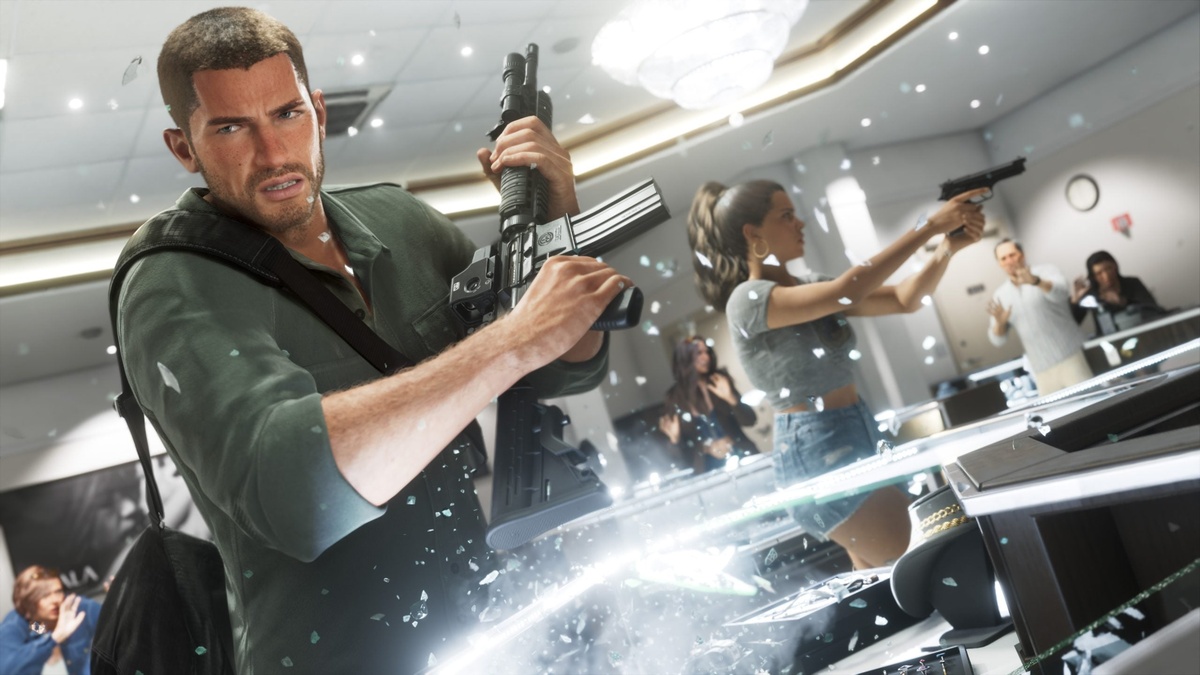
Freshly initiated console preloads have triggered an extensive technical analysis, unearthing configuration profiles indicating that the GTA 6 120Hz Mode provides a specialized high-refresh display output container for television panels supporting modern HDMI 2.1 video standards.
First uncovered in console configuration archives by renowned dataminer Tez2 and verified by Insider Gaming, these executable parameters confirm that Rockstar Games is prioritizing strict frametime consistency over unattainable native sixty frames-per-second targets.
| Technical Parameter | Standard PS5 Profile | PS5 Pro Enhanced Profile | 120Hz Display Container | Target 60 FPS Mode |
|---|---|---|---|---|
| Target Framerate & Pacing | 30 FPS locked (33.3ms) | 30 FPS or 40 FPS balanced | 40 FPS balanced (25.0ms) | Excluded from current builds |
| Display Output Frequency | 60Hz fixed refresh rate | 60Hz or 120Hz output | 120Hz HDMI 2.1 fixed rate | 60Hz standard refresh rate |
| Variable Refresh Rate (VRR) | Unsupported in datamine | Unsupported in datamine | Disabled in datamined files | Not applicable (Excluded) |
| Image Upscaling Pipeline | Dynamic 1440p FSR baseline | Proprietary PSSR2 Build | PSSR2 Multi-Frame Model | Not applicable |
| Frametime Latency Budget | 33.3ms baseline delivery | 25.0ms to 33.3ms frame budget | 25.0ms (33% latency cut) | 16.6ms (Hardware constrained) |
Table of Contents
1. Datamined Display Profiles: 120Hz Container and Frame Pacing Architecture
Dataminers inspecting early PlayStation encrypted package manifests discovered display resolution flags confirming that the GTA 6 120Hz Mode establishes a dedicated high-bandwidth communication pipeline with compatible premium living-room displays.
Rather than rendering internal scene geometry at native triple-digit frame rates, this architecture utilizes a 120Hz hardware sync signal to eliminate display judder while maintaining uncompromising visual fidelity across Vice City.
Much like system bandwidth bottlenecks evaluated in our deep-dive on the AMD Ryzen 7 9800X3D gaming CPU specs, managing complex open-world compute loops requires strict synchronization between display output buffers and graphics hardware.
According to datamined parameters discussed across GTAForums, executable engine routines establish that the GTA 6 120Hz Mode relies on strict display pipeline negotiations to ensure stable video sync timings.
Engineering teams frequently implement high-frequency container buffers to circumvent legacy 60Hz frame pacing artifacts, providing television processors with evenly spaced video frames that preserve fluid camera motion through sprawling urban landscapes.
2. The 40 FPS Sweet Spot: Latency Reductions Over Traditional 30 FPS Caps
Technical analysis indicates that deploying the GTA 6 120Hz Mode allows developers to implement an optimal forty frames-per-second fidelity profile that dramatically transforms controller responsiveness.
At standard thirty frames per second, each rendered frame persists on screen for 33.3 milliseconds, whereas a forty frame target inside a 120Hz container drops frame delivery down to exactly 25.0 milliseconds.
This mathematical reduction yields a noticeable thirty-three percent decrease in frame latency, delivering substantially snappier steering response, sharper combat aiming, and reduced motion blur without sacrificing complex ray-traced lighting pipelines.
Similar to latency challenges addressed when Xbox Cloud Gaming introduces pay-as-you-go pricing bundles, cutting frame transport times directly improves tactile immersion during fast-paced simulation sequences.
For players equipped with HDMI 2.1 televisions, the GTA 6 120Hz Mode provides the ideal equilibrium between dense cinematic crowds and crisp vehicular handling across sun-drenched highways.
3. Absence of VRR Support: Frame Delivery Constraints on PS5 and PS5 Pro
The most surprising revelation from recent package dumps is the confirmed absence of native variable refresh rate flags within the initial GTA 6 120Hz Mode executable profiles.
Variable Refresh Rate technology dynamically matches television panel scan rates to instantaneous console rendering speeds, softening momentary framerate drops during intense vehicle collisions or heavily populated street intersections.
Just as architectural transitions force hard hardware trade-offs when NVIDIA ends Windows 10 support for PC gamers, console developers must balance fixed frame scheduling against dynamic display scaling routines.
Without active variable refresh support, any sudden rendering dips below forty frames per second within the GTA 6 120Hz Mode could result in perceptible stutter or duplicate frame presentation.
Rockstar software architects appear confident that fixed pacing algorithms and aggressive dynamic resolution scaling will keep frametimes pinned to target intervals throughout demanding narrative missions.
4. Next-Gen PSSR2 Integration: Sony Multi-Frame Super Resolution Evolution
Code inspects reveal that the GTA 6 120Hz Mode pairs advanced display timings with an unreleased, bleeding-edge iteration of Sony PlayStation Spectral Super Resolution machine-learning reconstruction architecture.
Dataminer Tez2 identified references pointing toward internal build versions exceeding the PSSR 13.00A codebase currently deployed in high-profile flagship releases like Cyberpunk 2077 and Assassin Creed Shadows.
Much like thermal and silicon efficiencies observed in our evaluation of the Apple M4 Mac mini redesign and specs, dedicated neural hardware accelerates reconstruction without drawing excessive operational wattage.
| Engine Architecture Metric | 30 FPS Fidelity Mode | 40 FPS High-Refresh Mode | Hypothetical 60 FPS Mode |
|---|---|---|---|
| Display Refresh Frequency | 60Hz Standard Television | 120Hz HDMI 2.1 Interface | 60Hz Standard Interface |
| Target Frame Interval | 33.33 milliseconds | 25.00 milliseconds | 16.66 milliseconds |
| Upscaling Architecture | Dynamic Temporal Upscaling | Proprietary Custom PSSR2 | Aggressive Spatial Scaling |
| Ray Tracing Integration | Full Global Illumination | Full GI with Scaled Rays | Unsupported / Stripped |
| Target Hardware Profile | Base PS5 and PS5 Pro | PlayStation 5 Pro Priority | Unachievable on Consoles |
This upgraded Multi-Frame Super Resolution pipeline analyzes multi-frame temporal vectors, generating sharp 4K reconstruction while maintaining the computational headroom necessary for the GTA 6 120Hz Mode.
By offloading intensive pixel reconstruction to specialized neural tensor cores on PlayStation 5 Pro, Rockstar engineers maximize CPU resources for complex simulation algorithms and pedestrian artificial intelligence.
5. Console Hardware Faceoff: PS5 Pro Enhancements Versus Base Hardware Limits
Examining datamined configuration files confirms that significant architectural differences will separate the standard PlayStation 5 experience from enhanced gameplay utilizing the GTA 6 120Hz Mode.
While base console silicon features identical Zen 2 CPU architecture, thermal and compute limits make sustaining stable forty frames-per-second rendering unrealistic on foundational hardware.
Consequently, the GTA 6 120Hz Mode emerges as a cornerstone selling proposition for PlayStation 5 Pro hardware, showcasing tangible real-world performance benefits for enthusiast console buyers.
Hardware enthusiasts hoping for native sixty frames per second must recognize that massive physical simulation workloads across Leonida County fundamentally constrain console CPU draw calls.
By targeting forty frames per second in a high-refresh container, the GTA 6 120Hz Mode provides the single most compelling technical showcase of this console generation.
Frequently Asked Questions
Does the GTA 6 120Hz Mode mean the game runs at 120 frames per second?
No, the GTA 6 120Hz Mode utilizes a 120Hz display container to output a smooth forty frames per second, which divides evenly into 120 to eliminate frame pacing stutter.
Why is native sixty frames per second not supported on consoles?
Complex simulation loops, dense pedestrian artificial intelligence, and advanced physics calculations overload console Zen 2 CPU threads, preventing stable sixty frames-per-second performance on either PlayStation 5 model.
Will the GTA 6 120Hz Mode work on standard 60Hz television sets?
No, activating the GTA 6 120Hz Mode requires an HDMI 2.1 television panel capable of native 120Hz input, as standard 60Hz displays cannot accept high-frequency video signals.
Why is Variable Refresh Rate support absent from the datamined files?
Datamined executable flags indicate Rockstar opted for fixed-cadence frame synchronization, relying on aggressive dynamic resolution scaling rather than variable refresh rate buffers to maintain frame delivery targets.
What makes the PSSR2 reconstruction build in GTA 6 unique?
Datamines reveal that GTA 6 incorporates an unreleased, advanced revision of Sony PSSR2 Multi-Frame Super Resolution, surpassing build versions previously deployed in other high-profile PlayStation 5 Pro releases.
Final Verdict: Navigating Display Technologies and Framerate Trade-Offs
The discovery of the GTA 6 120Hz Mode offers illuminating insight into how Rockstar Games and Sony are engineering modern console experiences within strict hardware boundaries.
While enthusiasts dreaming of sixty frames per second may experience initial disappointment, implementing an ultra-stable forty frames-per-second profile inside a high-refresh container represents a masterclass in frame delivery.
As console preloads proceed worldwide, the GTA 6 120Hz Mode stands as definitive proof that smart engineering and temporal machine learning can deliver breathtaking next-generation fidelity.
