


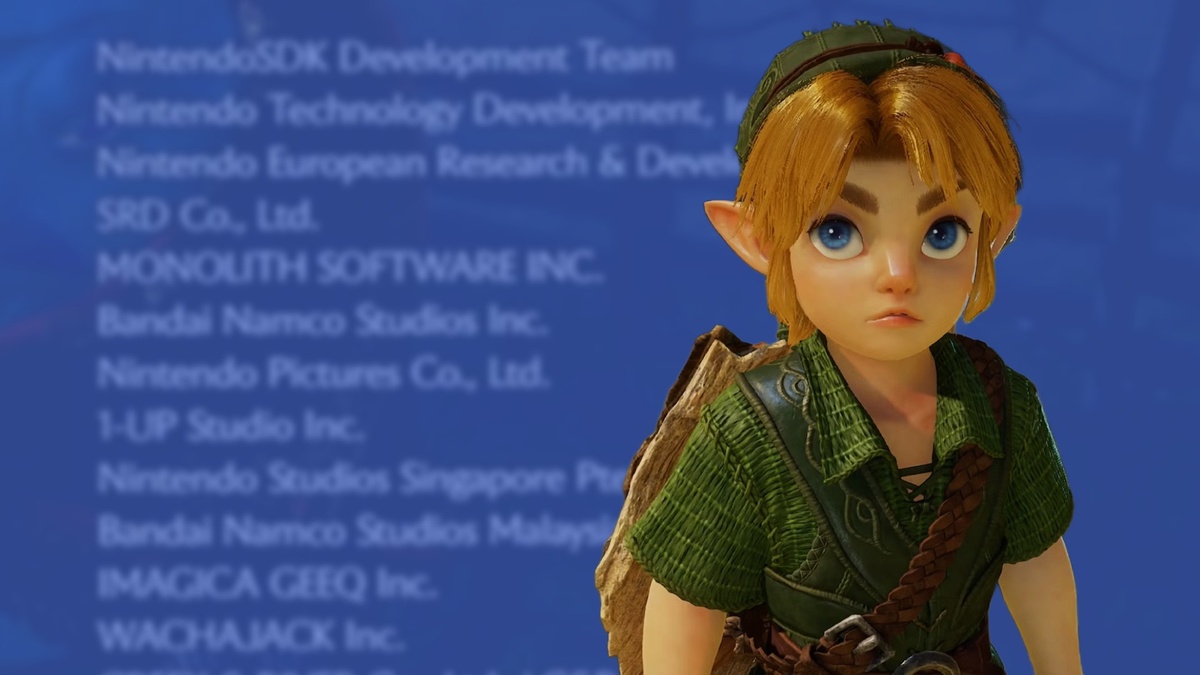
Nintendo has officially confirmed that acclaimed developers Monolith Soft and Bandai Namco Studios served as core co-development partners for Ocarina of Time Switch 2, overhauling visual fidelity, character models, terrain geometry, dynamic lighting, and cinematic cutscenes.
First reported by Eurogamer, special thanks and technical co-developer credits reveal extensive multi-studio engineering behind the release, ensuring the legendary Nintendo 64 masterpiece leverages the full graphical capabilities of next-generation hardware.
| Architectural Component | Nintendo 64 Original (1998) | Nintendo 3DS Remaster (2011) | Switch 2 Re-Engineering (2026) | Engineering Partner & Technical Significance |
|---|---|---|---|---|
| World Geometry & Terrain Engine | Low-poly partitioned mesh, 320×240 resolution, aggressive fog culling | Enhanced geometry, stereoscopic 400×240 display, fixed draw distances | Full volumetric terrain streaming, 4K DLSS reconstruction, unlimited draw distance | Monolith Soft bespoke terrain pipeline with physical foliage and global illumination |
| Character Meshes & Animation | Single-jointed skeletal hierarchies, static textured facial planes | Upgraded polygonal count, basic facial blending, pre-baked animations | Multi-layered skeletal rigs, cloth physics simulation, high-poly models | Bandai Namco Studios character pipeline delivering expressive micro-animations |
| Cinematics & Staging Pipeline | Pre-rendered fixed angles, 20 FPS script-driven camera paths | Stereoscopic 30 FPS playback, upgraded textures, legacy timing | Real-time dynamic cinematic direction, 60 FPS target, volumetric lighting | Bandai Namco cinematic team overhauling cameras, depth-of-field, and choreography |
| User Interface & HUD Architecture | Fixed low-DPI bitmap overlays, restricted button mapping | Dual-screen touch interface, instant item swapping on bottom panel | Modern vector UI, high-DPI scaling, radial item wheels, haptic feedback | Studio 2 and Studio S streamlining inventory navigation and accessibility |
| Expansion & Secondary Codebase | Ura Zelda cancelled, unreleased 64DD peripheral expansion | Master Quest included on cartridge with mirrored dungeon layouts | Datamined Master Quest framework embedded for future content delivery | Unified codebase prepared for high-frame-rate Master Quest dungeon expansions |
Table of Contents
1. Monolith Soft Terrain Architecture: Re-Engineering Hyrule’s Vast Landscapes
The integration of Monolith Soft into Ocarina of Time Switch 2 represents a natural evolution for Nintendo, leveraging the Xenoblade studio’s unmatched mastery of sweeping open-world terrain engineering and streaming technology across Hyrule Field.
Rather than relying on flat geometric planes from the 1998 classic, the environment in Ocarina of Time Switch 2 features dense foliage, dynamic wind simulation, and photorealistic rock formations sculpted by seasoned landscape artists.
Much like the thermal and architectural breakthroughs explored in our analysis of the Apple M4 Mac mini redesign and specs, modern game engines demand sophisticated resource management to maintain seamless performance.
By deploying advanced Level-of-Detail scaling algorithms, Monolith Soft ensures that Death Mountain and Lake Hylia render with breathtaking atmospheric depth in the reimagined Hyrule, eliminating historical fog walls while preserving aesthetic wonder.
This environmental overhaul transforms Hyrule into a living, reactive ecosystem, where volumetric grass bends beneath Link’s boots and water shaders simulate realistic currents throughout Zora’s Domain and Gerudo Valley.
2. Bandai Namco Character Pipeline: High-Poly Meshes and Expressive Animation
Bandai Namco Studios officially confirmed its commissioned involvement in Ocarina of Time Switch 2, handling crucial character art, rigged mesh assets, dynamic cloth physics, and expressive character animation across the campaign.
Specialized internal divisions Studio 2 and Studio S spearheaded model upgrades, elevating Link, Princess Zelda, and Ganondorf into stunning high-polygon characters that respect original Shigeru Miyamoto and Yoshiaki Koizumi character concepts.
Every primary character in the modern release features modern subsurface scattering shaders, natural hair physics, and subtle facial micro-expressions that deliver unprecedented dramatic weight during critical narrative turning points.
Secondary non-player characters throughout Market Square and Kakariko Village received equal artisan care, shedding outdated polygon limitations in favor of unique clothing textures, distinct idle animations, and responsive eye-tracking behaviors.
By combining Bandai Namco’s seasoned character expertise with Nintendo’s strict art direction, Ocarina of Time Switch 2 achieves an exquisite balance between nostalgic authenticity and contemporary visual brilliance.
3. Real-Time Cinematic Cutscenes: Modernized Direction and Dynamic Lighting
One of the standout achievements in Ocarina of Time Switch 2 is the complete rebuild of real-time cinematic cutscenes, supervised by Bandai Namco’s dedicated animation and staging teams.
Iconic sequences, such as Link drawing the Master Sword from the Temple of Time pedestal, now exhibit cinematic anamorphic depth of field, ray-traced ambient occlusion, and physically based particle illumination.
According to technical impressions highlighted by The Verge, modern hardware reconstruction allows developers to present cinematic storytelling without sacrificing responsive 60 frames-per-second gameplay transitions.
The terrifying confrontation with Ganondorf atop Ganon’s Castle showcases volumetric smoke, dynamic lightning flashes, and real-time reflection probes in Ocarina of Time Switch 2, heightening emotional intensity during the legendary finale.
These modernized staging techniques elevate storytelling beyond simple visual enhancement, creating an unforgettable cinematic experience for both returning veterans and newcomers experiencing the classic journey for the very first time.
4. Overhauled User Interface: High-DPI Scaling and Modern Quality-of-Life Systems
In addition to visual asset production, Bandai Namco collaborated on complete user interface redesigns for Ocarina of Time Switch 2, addressing decades of inventory friction and item swapping bottlenecks.
Players navigating Ocarina of Time Switch 2 benefit from responsive radial item wheels, instant Iron Boot toggles, high-resolution vector map displays, and customizable HUD elements calibrated specifically for modern displays.
Much like system architectures detailed when evaluating the AMD Ryzen 7 9800X3D gaming CPU specs, optimizing input pathways and system latency directly improves player engagement and responsiveness.
| Platform Release & Architecture | Native Resolution & Scaling | Framerate Target & Pacing | Lighting & Shadow Engine | Texture Filtering & Memory Budget |
|---|---|---|---|---|
| Nintendo 64 Original (1998) | 320×240 (240p) analog composite | 20 FPS fixed refresh (variable drops) | Vertex lighting with static vertex color shading | 4 KB TMEM texture cache limits, 4 MB system RAM |
| Nintendo GameCube Edition (2002) | 640×480 (480p) component video | 20 FPS locked emulation | Unmodified N64 vertex lighting pipeline | Direct ROM emulation with identical asset textures |
| Nintendo 3DS Remaster (2011) | 400×240 stereoscopic 3D | 30 FPS locked presentation | Pre-baked directional lightmaps and dynamic Link shadow | Upgraded polygonal geometry and 128 MB system RAM |
| Switch NSO Emulation (2021) | 1280×720 upscaled to 1080p | 20 FPS legacy emulation pacing | Emulated N64 vertex fog with initial input latency issues | Original textures rendered through software wrapper |
| Switch 2 Native Re-Engineering (2026) | Dynamic 1440p upscaled to 4K via DLSS | 60 FPS stable refresh rate | Dynamic global illumination, volumetric fog, ray-traced shadows | High-res 4K texture streaming with 12 GB unified RAM |
Just as PC enthusiasts adapt when NVIDIA ends Windows 10 support for PC gamers, legacy console titles must modernize control paradigms to meet contemporary accessibility standards.
The refined control setup in Ocarina of Time Switch 2 utilizes gyro targeting and ergonomic button assignments, making archery challenges and Hookshot navigation feel remarkably fluid compared to legacy hardware.
5. Engine Architecture & Master Quest Datamine: Future Expansion Roadmaps
Beyond the launch content, datamined executable files for Ocarina of Time Switch 2 have revealed dormant Master Quest dungeon tables, signaling imminent post-launch content updates from Nintendo.
Code investigators discovered mirrored dungeon coordinate configurations, altered enemy spawn indices, and updated puzzle flags within Ocarina of Time Switch 2, confirming that Master Quest integration is already architecturally supported.
Similar to subscription content strategies explored in our breakdown of Xbox Cloud Gaming pay-as-you-go pricing bundles, modular content updates keep flagship software ecosystems actively engaged long after initial release.
The codebase in the updated engine exhibits clean multi-threaded modularity, suggesting that Monolith Soft and Bandai Namco engineered an extensible framework designed to support additional challenges seamlessly.
This modular software design guarantees that Ocarina of Time Switch 2 will remain a flagship showcase for Nintendo’s hardware, offering expanded replayability through future dungeon updates and speedrun leaderboards.
Frequently Asked Questions
Why did Nintendo enlist Monolith Soft and Bandai Namco for Ocarina of Time Switch 2?
Nintendo partnered with Monolith Soft and Bandai Namco Studios to leverage their specialized expertise in large-scale terrain rendering, high-polygon character modeling, real-time cutscene direction, and modernized user interface design.
What specific visual assets did Bandai Namco Studios develop for Ocarina of Time Switch 2?
Bandai Namco Studios confirmed that its dedicated teams produced 3D character models, environmental props, character animations, cinematic cutscenes, and modernized user interface elements for the newly launched title.
How does Monolith Soft enhance the terrain in Ocarina of Time Switch 2?
Monolith Soft utilized its open-world expertise to completely rebuild Hyrule Field, adding dense foliage, realistic water simulation, volumetric weather effects, and seamless draw distances without legacy draw-distance pop-in.
Has Master Quest been discovered in the Ocarina of Time Switch 2 datamine?
Yes, dataminers have uncovered dormant configuration files, mirrored dungeon coordinates, and altered puzzle tables embedded in the launch executable, indicating that Master Quest will likely arrive as future content.
What performance targets does Ocarina of Time Switch 2 achieve?
Ocarina of Time Switch 2 targets a smooth 60 frames per second at dynamic 1440p resolution, scaling up to 4K output on compatible displays via advanced hardware-accelerated upscaling technology.
Final Verdict: A Masterclass in Collaborative Next-Gen Game Remaking
The launch of Ocarina of Time Switch 2 marks an extraordinary triumph for collaborative video game development, successfully modernizing an untouchable masterpiece without compromising its foundational soul.
By uniting the terrain engineering prowess of Monolith Soft with the character animation craft of Bandai Namco, Nintendo has delivered an essential showcase title for the hybrid platform.
With datamined Master Quest expansions already on the horizon, Ocarina of Time Switch 2 establishes an uncompromising new benchmark for how legendary video game remakes should be realized on next-generation hardware.
