


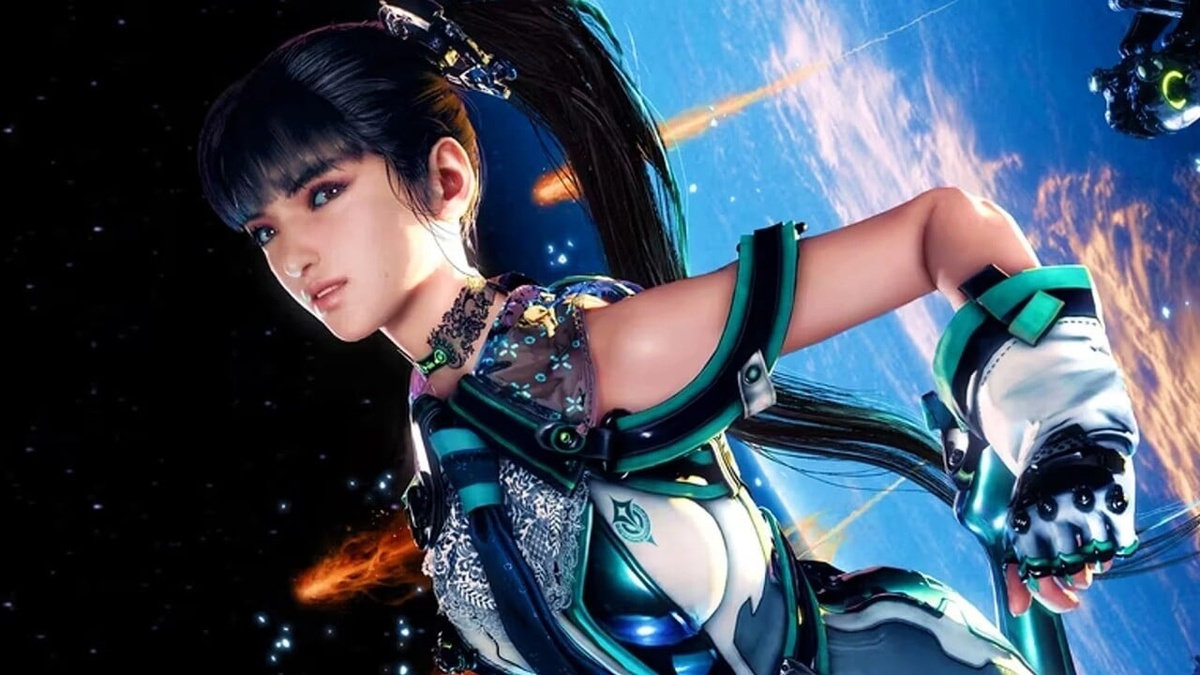
Technical analysts at Digital Foundry have delivered their definitive hardware verdict on the new Stellar Blade Switch 2 edition, evaluating how Shift Up’s acclaimed sci-fi action title translates to Nintendo’s next-generation hybrid platform.
According to benchmarking published by Nintendo Life, the port exceeds early expectations by preserving essential visual character while deploying innovative frame generation toggles and custom upscaling solutions.
| Technical Metric | Switch 2 Docked Profile | Switch 2 Handheld Profile | PlayStation 5 Baseline | Digital Foundry Verdict |
|---|---|---|---|---|
| Dynamic Resolution | 1080p Target (DLSS reconstruct) | 720p Native (DLSS reconstruct) | 1440p to 4K Dynamic Scaling | Gentle compromises preserve overall visual identity |
| Frame Rate Target | 60 FPS (Frame Gen ON) / 40 FPS Native | 60 FPS (Frame Gen ON) / ~38 FPS Native | 60 FPS Performance Mode Locked | 40 FPS native mode delivers superior frame pacing |
| Upscaling Architecture | Hardware Nvidia DLSS Super Resolution | Hardware Nvidia DLSS Super Resolution | Custom Temporal Anti-Aliasing (TAA) | Tegra Tensor cores provide remarkably clean image reconstruction |
| Engine Pipeline | Unreal Engine 4.26 Custom Branch | Unreal Engine 4.26 Custom Branch | Unreal Engine 4 Custom Branch | Avoids Nanite lighting cuts common in UE5 ports |
| Frame Generation | Supported (Optional In-Game Toggle) | Supported (Optional In-Game Toggle) | Not Supported (Native Rasterization) | Innovative mobile implementation tailored to hardware boundaries |
| Storage Installation | 32.4 GB (Complete Edition Package) | 32.4 GB (Internal NVMe / MicroSD Express) | 35.8 GB (High-Res Asset Base) | Optimized texture compression ensures rapid load times |
Table of Contents
1. Unreal Engine 4 Architecture: Preserving Core Lighting on Hybrid Silicon
Bringing high-budget action blockbusters to compact mobile hardware often forces severe compromises, yet the Stellar Blade Switch 2 port avoids the disastrous graphical amputations that frequently plague contemporary hybrid conversions.
Digital Foundry emphasizes that the underlying technical architecture of the Stellar Blade Switch 2 release benefits immensely from utilizing custom Unreal Engine 4 technology rather than unoptimized modern implementations.
Because the title relies on well-understood lighting and shading pipelines, developer Shift Up avoided excising primary volumetric illumination models, global ambient occlusion passes, or core environmental reflections during platform migration.
Rather than gutting the atmospheric aesthetic, the hybrid console conversion introduces gentle, iterative asset reductions across secondary foliage densities, background terrain tessellation, and distant shadow cascades.
Side-by-side comparisons demonstrate that Eve’s character models and intricate costume designs retain crisp geometric density, ensuring that high-stakes combat encounters feel visually faithful to home console standards.
2. Frame Generation Analysis: Toggling Between 40 FPS Native and 60 FPS Interpolation
One of the most consequential technical revelations in the Stellar Blade Switch 2 analysis centers on Shift Up’s inclusion of an integrated frame generation toggle inside settings menus.
Leveraging Nvidia’s custom silicon within Nintendo’s hardware, the remastered action port can synthesize intermediary display frames, pushing perceived on-screen fluidity to a fluid sixty frames per second.
Technical analysts at Digital Foundry note that frame interpolation represents a clever engineering decision given the thermal and memory constraints of portable gaming hardware.
However, testing indicates that running the Stellar Blade Switch 2 release with frame generation disabled yields a remarkably stable native baseline hovering around forty frames per second during intense sword battles.
For players utilizing high-refresh displays or variable refresh rate panels, locking to forty frames per second provides significantly tighter controller input responsiveness without synthetic visual interpolation artifacts.
3. Handheld vs Docked Benchmarks: Resolution Scaling and DLSS Implementation
Evaluating resolution scaling across form factors demonstrates why the Stellar Blade Switch 2 implementation serves as an exemplary showcase for Nvidia’s AI-assisted deep learning super sampling.
When docked to an external television, the software dynamically scales internal render targets between 720p and 1080p, utilizing DLSS reconstruction to present clean output across large screens.
Transitioning to handheld mode maintains impressive clarity on the portable display, where the hybrid handheld build resolves dynamic sub-native buffers without suffering heavy pixel shimmering or temporal blurring.
Gamers monitoring mobile graphics hardware evolution should explore how Nvidia ends Windows 10 support for PC gamers as next-generation display architectures advance across platforms.
Although fine alpha textures like cascading hair strands show occasional reconstruction softness in handheld play, overall image stability remains leagues ahead of older mobile upscaling techniques.
4. Hardware Specifications & Generational Faceoff: Switch 2 vs PS5 Baseline
Comparing the underlying silicon powering the Stellar Blade Switch 2 experience against dedicated domestic consoles illustrates how strategic architectural design compensates for raw compute differences.
While modern living room platforms deploy massive power envelopes exceeding two hundred watts, Nintendo’s portable platform operates within a disciplined power budget under fifteen watts.
Despite these electrical restrictions, the compact mobile conversion leverages dedicated tensor hardware cores to offset the computational deficits inherent in mobile silicon form factors.
| Hardware Specification | Nintendo Switch 2 System | PlayStation 5 Console | Architectural Real-World Impact |
|---|---|---|---|
| SoC / Compute Architecture | Custom Nvidia Tegra T239 Processor | Custom AMD Oberon APU Processor | Dedicated Tensor cores enable hardware DLSS upscaling |
| GPU Compute Configuration | 1,536 CUDA Cores (Ampere/Ada Hybrid) | 36 RDNA 2 Compute Units (2.23 GHz) | Targeted mobile shader pipeline prioritizes energy efficiency |
| Memory Pool & Bandwidth | 12 GB Unified LPDDR5X (102 GB/s) | 16 GB Unified GDDR6 (448 GB/s) | Aggressive texture streaming mitigates bandwidth restrictions |
| Upscaling & Reconstruction | Hardware-Accelerated DLSS Pipeline | Software Temporal Anti-Aliasing (TAA) | Switch 2 produces cleaner geometry edges despite lower native buffers |
| Thermal Design Envelope | Approx. 10W to 15W Total System Power | Approx. 180W to 220W System Draw | Enables complete action RPG gameplay in mobile form factor |
Desktop enthusiasts seeking peak gaming performance can examine our benchmark breakdown of AMD Ryzen 7 9800X3D gaming CPU specs to understand modern computational benchmarks.
By balancing memory allocation between texture storage and runtime buffers, developer Shift Up ensures the Stellar Blade Switch 2 port maintains steady pacing without encountering severe memory starvation.
5. Port Economics & Buyer Verdict: Is the Complete Edition Worth It?
From an economic and consumer standpoint, the Stellar Blade Switch 2 arrival represents substantial value by incorporating all post-launch content updates directly into the base package.
Purchasers gain immediate access to expanded wardrobe options, specialized boss challenge modes, extensive quality-of-life adjustments, and high-resolution photo mode capabilities from initial boot.
Nintendo Life awarded the port a solid seven out of ten rating, confirming that the ambitious action package delivers an enjoyable, responsive, and thoroughly playable journey.
While purists seeking uncompromised sixty frames per second fidelity may prefer desktop or stationary console hardware, handheld flexibility provides an undeniable lifestyle convenience.
Subscribers and buyers interested in portable gaming libraries will find that the Stellar Blade Switch 2 cartridge stands among the most impressive early technical achievements for Nintendo’s hardware.
Frequently Asked Questions
What is the frame rate for Stellar Blade Switch 2?
The action RPG port targets sixty frames per second with frame generation enabled, while running around a stable forty frames per second natively when frame generation is toggled off.
Does the game support Nvidia DLSS upscaling on Switch 2?
Yes, the Stellar Blade Switch 2 edition utilizes hardware-accelerated Nvidia DLSS upscaling on Nintendo Switch 2 silicon to reconstruct dynamic 720p and 1080p internal render targets with exceptional edge stability.
What bonus content is included in the Switch 2 Complete Edition?
The Stellar Blade Switch 2 Complete Edition includes the full base campaign, all post-launch bonus outfits, comprehensive photo mode enhancements, boss rush challenges, and recent crossover event features.
Is there a playable demo available for Stellar Blade Switch 2?
Yes, players can download a free playable demo directly from the Nintendo eShop, allowing curious buyers to evaluate performance metrics and swordplay responsiveness before purchasing the complete game.
How large is the storage download for Stellar Blade Switch 2?
The full digital installation for Stellar Blade Switch 2 requires approximately 32.4 gigabytes of internal storage or high-speed MicroSD Express capacity, reflecting extensive texture optimization by Shift Up.
Final Verdict: A Remarkable Technical Milestone for Hybrid Gaming
Digital Foundry’s comprehensive technical teardown proves that the Stellar Blade Switch 2 release exceeds expectations by delivering a thoroughly competent and enjoyable translation of demanding action gameplay.
By capitalizing on Unreal Engine 4 foundations and Nvidia’s DLSS feature suite, Shift Up successfully preserved crucial atmospheric lighting while introducing versatile performance toggles for players.
For enthusiasts seeking high-octane sci-fi combat on portable hardware, the Stellar Blade Switch 2 edition stands as an impressive benchmark for what Nintendo’s next-generation console can achieve.
