


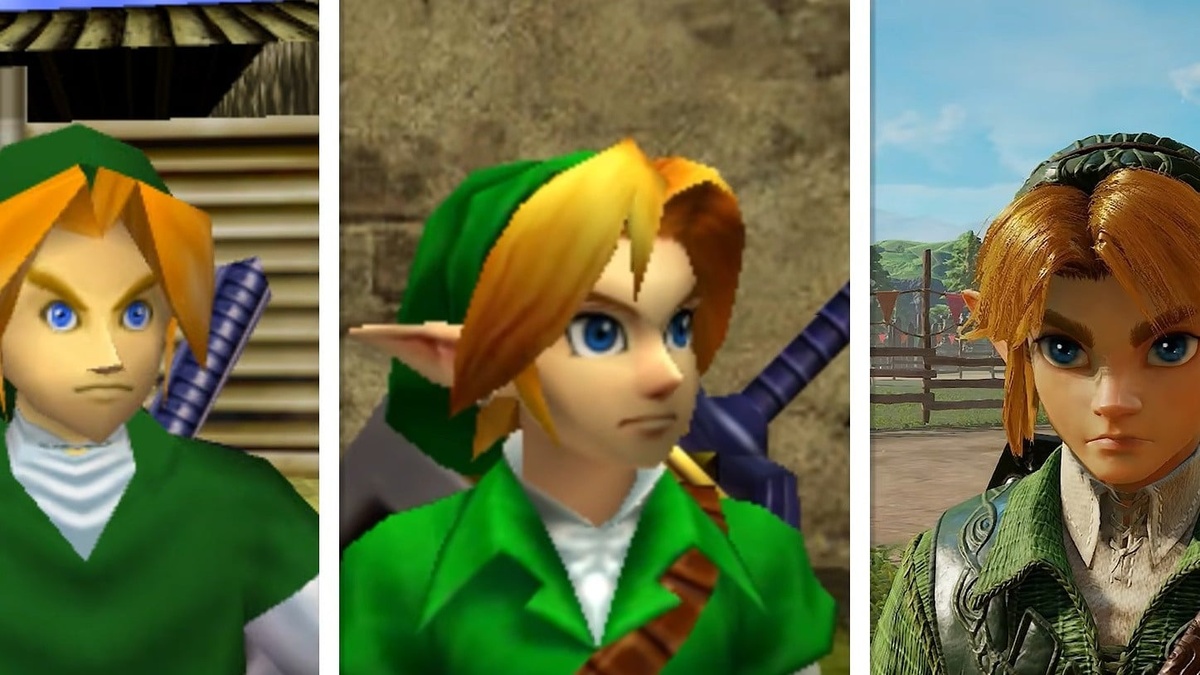
A comprehensive new Ocarina of Time Graphics Comparison has surfaced online, juxtaposing the freshly launched Nintendo Switch 2 remake against its 2011 Nintendo 3DS predecessor and the groundbreaking 1998 Nintendo 64 original to measure decades of visual evolution.
Published by technical analysis outlet ElAnalistaDeBits and reported via Nintendo Life, the side-by-side footage highlights transformative generational advancements across geometric detail, dynamic lighting, fluid simulations, and frame rate stability.
| Visual & Architectural Metric | Nintendo 64 Original (1998) | Nintendo 3DS Remake (2011) | Nintendo Switch 2 Remake (2026) |
|---|---|---|---|
| Target Display Resolution | 240p / 320×240 Native Analog | 240p / 400×240 Autostereoscopic | 1080p–1440p Docked / 720p–1080p Handheld |
| Target Frame Rate & Pacing | 20 FPS Analog Refresh (Unstable) | 30 FPS Locked Digital Refresh | 60 FPS Rock-Solid Performance |
| Anti-Aliasing & Reconstruction | Primitive Edge Blurring Filter | Zero Hardware Anti-Aliasing | Nvidia DLSS / Temporal Reconstruction |
| Character Geometry & Meshes | Under 500 Polygons per Model | ~2,500 Polygons per Model | 50,000+ Polygons per Character Mesh |
| Lighting & Material Engine | Fixed-Function Flat Shading | Simple Vertex Dynamic Lighting | Physically Based Rendering & Volumetrics |
| Environmental Water Shader | Scrolling 2D Bitmap Textures | Basic Alpha Reflection Textures | Dynamic Screen-Space Reflection & Wave Physics |
Table of Contents
1. Polygon Meshes and Character Models: Sub-Pixel Geometry Overhauls Hyrule
Inspecting the side-by-side footage reveals that the Ocarina of Time Graphics Comparison demonstrates a generational leap in character model fidelity, completely discarding the low-polygon angular silhouettes that defined fifth-generation console gaming.
On the original Nintendo 64 hardware, Link’s model comprised fewer than five hundred polygons, resulting in mitten-shaped hands, sharp angular shoulders, and facial textures painted directly onto flat geometric surfaces without three-dimensional depth.
While Grezzo’s 2011 Nintendo 3DS edition expanded polygon budgets to roughly twenty-five hundred vertices to add separated fingers and modeled facial features, the handheld platform remained severely constrained by mobile fill-rate limits.
On Nintendo Switch 2, Link and supporting cast members boast over fifty thousand polygons per mesh, displaying individual tunic stitching, articulated hair strand physics, and expressive skeletal kinematics during dialogue.
This staggering geometrical density ensures that the Ocarina of Time Graphics Comparison captures emotional nuance across key story cinematics that vintage hardware could merely suggest through low-resolution character portraits.
2. Dynamic Global Illumination and PBR Shaders: Eliminating Flat Ambient Lighting
Beyond raw mesh complexity, the Ocarina of Time Graphics Comparison highlights a complete paradigm shift in atmospheric illumination, migrating from archaic vertex-lit environments to modern physically based rendering pipelines.
The 1998 original relied heavily on static pre-baked lightmaps and flat vertex shading, leaving dungeon corridors looking uniform and devoid of realistic light bouncing or localized shadow casting.
In contrast, the Switch 2 hardware harnesses custom Nvidia graphics silicon to render real-time dynamic global illumination across cavernous dungeon chambers like the Temple of Time and Shadow Temple.
Torch flames and glowing crystal switches cast dynamic soft-edged shadows that stretch across weathered stone masonry, reflecting lighting architectural philosophies explored in our coverage of Nvidia ends Windows 10 support for PC gamers.
By accurately simulating real-world light absorption across metallic armor and aged timber surfaces, the Ocarina of Time Graphics Comparison establishes a dark, cinematic tone without sacrificing original artistic intent.
3. Water Rendering and Environmental Physics: Lake Hylia’s Modern Fluid Simulation
Examining aquatic environments within the Ocarina of Time Graphics Comparison underscores how advanced shader pipelines completely revitalize landmark locations such as Lake Hylia and the treacherous Water Temple.
The legendary Nintendo 64 release famously simulated rippling water using sliding two-dimensional texture layers, producing iconic yet obviously flat surfaces lacking volumetric refraction or true physical depth.
Although the 3DS version introduced subtle surface normal maps and translucent reflections, the water remained largely static and failed to react realistically to Link’s swimming motions.
On Switch 2, water surfaces utilize compute-driven fluid simulation and real-time screen-space reflections, dynamically responding as waves crash against shoreline cliffs or ripple outward from swimming characters.
This sophisticated fluid rendering elevates underwater traversal, ensuring that the Ocarina of Time Graphics Comparison delivers visual spectacle during deep dive exploration inside submerged dungeon puzzle chambers.
4. Frame Rates and Resolution Scaling: Generational Benchmark Analysis
Performance analysis showcased throughout the Ocarina of Time Graphics Comparison presents a revelatory contrast between historic console limitations and modern high-refresh computational capabilities.
According to frame-time benchmarks verified by Digital Foundry, the Switch 2 version sustains an uncompromised sixty frames per second baseline across both docked television and handheld configurations.
This locked sixty frames per second refresh rate triples the sluggish twenty frames per second cadence of the N64 original, fundamentally sharpening sword swings and dodging mechanics.
Docked gameplay resolves between 1080p and 1440p dynamic resolution before scaling via DLSS, mirroring hardware efficiency gains analyzed in our review of AMD Ryzen 7 9800X3D gaming CPU specs.
| Console Platform & Edition | Baseline Frame Rate | Rendering Resolution | Draw Distance Radius | Color Depth & HDR Support |
|---|---|---|---|---|
| Nintendo 64 (1998 Original) | 20 FPS (Variable / Frame Dips) | 320×240 Analog Output | Severe Fog Culling at 50 Meters | 16-bit Color / No HDR Support |
| Nintendo 3DS (2011 Remake) | 30 FPS Locked Target | 400×240 (Handheld Screen) | Moderate Culling at 150 Meters | 24-bit RGB / Standard Gamma |
| Switch 2 Handheld Mode (2026) | 60 FPS Locked Output | 720p–1080p Dynamic Range | Infinite Horizon / Zero Fog Pop-in | 10-bit HDR / Wide Color Gamut |
| Switch 2 Docked Mode (2026) | 60 FPS Locked Output | 1080p–1440p with DLSS Scaling | Full Hyrule Horizon Rendering | 10-bit HDR / 4K Scaled Output |
With temporal reconstruction eliminating jagged pixel edges, the Ocarina of Time Graphics Comparison proves that high frame rates transform classic mechanical responsiveness into modern fluid action.
5. Draw Distances and Volumetric Fog: Hyrule Field Free of Retro Culling
Hyrule Field has always served as the emotional center of the journey, and the Ocarina of Time Graphics Comparison demonstrates how modern hardware finally fulfills Shigeru Miyamoto’s grand open-world vision.
Hardware memory limitations on the Nintendo 64 forced developers to shroud Hyrule Field in thick distance fog, abruptly culling terrain geometry beyond fifty virtual meters to preserve processing power.
The Switch 2 architecture eliminates geometric pop-in entirely, allowing players standing atop Lon Lon Ranch to gaze across rolling hills directly toward Death Mountain’s distant fiery crater.
Volumetric fog now rolls naturally through low-lying valleys at dawn, reflecting system efficiency breakthroughs highlighted in our breakdown of Apple M4 Mac mini redesign specs.
Dense procedural foliage blankets the grasslands and sways in the wind, illustrating why the Ocarina of Time Graphics Comparison feels like an expansive modern epic rather than an aging vintage simulation.
Frequently Asked Questions
What does the latest Ocarina of Time Graphics Comparison reveal?
The latest Ocarina of Time Graphics Comparison reveals significant generational upgrades across character models, volumetric lighting, fluid simulations, draw distance, and a fluid sixty frames per second presentation on Switch 2.
What frame rate does the Ocarina of Time Graphics Comparison demonstrate on Switch 2?
The Switch 2 remake runs at a locked sixty frames per second in both docked and handheld modes, tripling the original Nintendo 64 version’s sluggish twenty frames per second baseline.
What resolution does the game target on Switch 2?
According to technical benchmarks in the Ocarina of Time Graphics Comparison, the game dynamically targets 1080p to 1440p docked with Nvidia DLSS reconstruction, and 720p to 1080p in portable handheld mode.
How do character models compare across versions?
Link’s model has evolved from under five hundred polygons on N64 and twenty-five hundred on 3DS to more than fifty thousand polygons on Switch 2, complete with realistic clothing physics.
Is this Ocarina of Time Graphics Comparison based on official gameplay?
Yes, the Ocarina of Time Graphics Comparison analyzes retail Switch 2 launch footage alongside verified captures from the 2011 3DS release and the original 1998 Nintendo 64 cartridge.
Final Verdict: The Definitive Visual Leap for Hyrule
Ultimately, this comprehensive Ocarina of Time Graphics Comparison confirms that Nintendo and its development partners have delivered far more than a simple high-definition remaster for the Switch 2 era.
By rebuilding character geometry, engineering dynamic global illumination, and locking performance at sixty frames per second, the creators have established a new high-water mark for retro preservation.
For longtime fans and newcomers alike, the visual triumphs documented in this Ocarina of Time Graphics Comparison make the Switch 2 reimagining the undisputed definitive way to experience Hyrule.
