


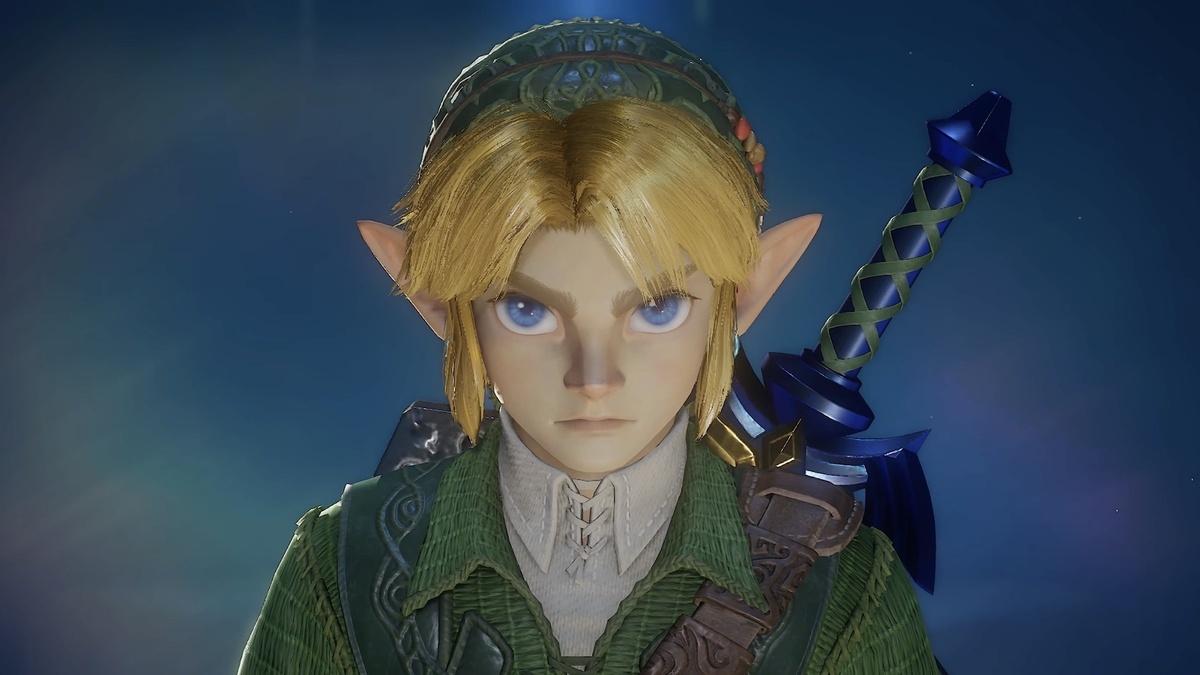
Datamined executable strings discovered inside the Nintendo Switch 2 edition point directly to an upcoming Ocarina of Time Master Quest DLC expansion, bringing reconfigured dungeons, doubled enemy damage, and mirrored Hyrule layouts to hardcore players seeking genuine tactical challenge.
According to breaking reports from Nintendo Life and community dataminers, these internal file traces strongly indicate that post-launch content will address long-standing veteran feedback regarding the remake’s forgiving baseline difficulty.
| Gameplay Feature Metric | Base Switch 2 Campaign | Datamined Master Quest DLC | GameCube Master Quest (2003) | 3DS Master Quest (2011) |
|---|---|---|---|---|
| World Layout & Orientation | Standard Canonical Hyrule | Mirrored Map Geometry | Standard Unmirrored Geometry | Mirrored Map Geometry |
| Dungeon Room Layouts | Classic Puzzle Architecture | Reconfigured Item & Key Routing | Reconfigured Item & Key Routing | Reconfigured Item & Key Routing |
| Enemy Damage Multiplier | 1x Standard Base Damage | 2x High-Stakes Damage Scaler | 1x Standard Base Damage | 2x High-Stakes Damage Scaler |
| Target Display Resolution | 4K Docked via DLSS / 1080p Handheld | 4K Docked via DLSS / 1080p Handheld | 480p Progressive Component | 240p Autostereoscopic 3D |
| Target Frame Rate | Locked 60 FPS Refresh | Locked 60 FPS Refresh | 20 FPS Analog Refresh | 30 FPS Stable Refresh |
| Distribution Model | Retail Cartridge & eShop | Projected eShop DLC / NSO Perk | Promotional Preorder Disc | Packaged Cartridge Release |
Table of Contents
1. Executable Data Mining: Uncovering Master Quest Identifiers in Switch 2 Binaries
The investigation began when prominent software analyst MrCheeze analyzed the newly deployed Switch 2 binary, uncovering explicit references to the Ocarina of Time Master Quest embedded directly within the core executable file system.
Specific functional routines labeled HasMQ, IsMQModeExist, NewGameMQ, and ReleaseMQ reveal that the underlying engine framework was intentionally architected to toggle between standard campaign progression and a secondary high-difficulty quest state.
Additionally, internal dungeon scene tables specifically feature the designation DodongoCavern MQ alongside other labyrinth directories, confirming that reworked environmental assets and modified entity placements are already staged within game packages.
This architectural staging mirrors driver and firmware preparation patterns examined in our analysis of AMD Ryzen 7 9800X3D gaming CPU specs, where platform features are embedded long before formal market activation.
Rather than being cut content from previous development milestones, the clean naming conventions and active toggle functions suggest the Ocarina of Time Master Quest is actively being prepared for digital deployment.
2. Reconfigured Dungeon Architecture: Mirrored Geometry and Complex Puzzles
The defining characteristic of the Ocarina of Time Master Quest has always been its subversive approach to dungeon puzzle design, catching seasoned veterans off guard with altered room routing and devious spatial traps.
Dungeons like the infamous Water Temple and Shadow Temple substitute familiar navigation sequences with entirely new locked doors, unexpected small key locations, and advanced puzzle logic requiring mastery of Link’s utility inventory.
Furthermore, enemy encounters throughout the campaign are significantly escalated, introducing formidable foes such as Stalfos, Lizalfos, and Iron Knuckles into early dungeon chambers long before Link acquires high-tier defensive upgrades.
This demanding encounter philosophy reflects the tactical latency sensitivity explored in our report on Xbox Cloud Gaming pay-as-you-go pricing bundles, demanding instantaneous player reactions and disciplined combat execution across every boss encounter.
By flipping entire environmental orientations horizontally across the mirrored map layout, the Ocarina of Time Master Quest forces players to completely discard muscle memory accumulated across decades of classic N64 speedruns.
3. Engine Scaling and Visual Pipelines: DLSS Reconstruction and Spatial Acoustics
From a technical rendering standpoint, the Ocarina of Time Master Quest harnesses the Switch 2 platform’s custom Nvidia silicon to maintain unwavering 60 frames per second performance under heavily populated scene loads.
Utilizing Nvidia Deep Learning Super Sampling reconstruction, docked television play outputs a pristine 4K presentation, resolving intricate geometric details across ancient stone temples and dynamic volumetric atmospheric dust particles without frame stutter.
Portable handheld mode runs natively at 1080p on the system’s vibrant display, utilizing hardware-accelerated ambient occlusion and physically based shaders to render hyper-realistic torchlight illumination inside treacherous dungeon corridors.
This generational efficiency parallels mobile architectural breakthroughs detailed in our coverage of Apple M4 Mac mini redesign specs, delivering sustained desktop-grade throughput inside compact thermal envelopes.
Re-engineered spatial acoustic models also calculate real-time environmental reverberation, ensuring that the Ocarina of Time Master Quest delivers spine-chilling acoustic depth as ominous monster footsteps echo through subterranean stone corridors.
4. Benchmarks and Specifications: Generational Hardware Matrix
Conducting detailed benchmark comparisons illustrates the immense architectural chasm separating the forthcoming Ocarina of Time Master Quest update from vintage GameCube and Nintendo 3DS legacy releases.
According to independent frame-time analysis and primary reports from Nintendo Life, modern dynamic lighting engines operate seamlessly without the severe frame rate drops that afflicted historic 20 FPS cartridge baselines.
Similarly to platform modernization initiatives covered in our review of how Nvidia ends Windows 10 support for PC gamers, updating foundational graphic pipelines ensures long-term rendering consistency across modern high-refresh displays.
The comparative matrix below details internal rendering resolutions, target framerates, memory utilization, and audio processing pipelines across every iteration of this legendary difficulty mode.
| Hardware Performance Metric | Switch 2 Handheld Mode | Switch 2 Docked Mode | GameCube Baseline (2003) |
|---|---|---|---|
| Internal Display Resolution | 1080p Native Precision | Reconstructed 4K via DLSS | 480i / 480p Analog Signal |
| Target Frame Rate & Pacing | Locked 60 FPS Fluidity | Locked 60 FPS Fluidity | 20 FPS Variable Output |
| Lighting & Shadow Engine | Hardware Ray-Traced AO | Dynamic Global Illumination | Fixed Vertex Shading |
| Storage Footprint Estimate | Estimated 4.2GB Expansion Patch | Estimated 4.2GB Expansion Patch | 1.4GB MiniDVD Optical Media |
| Projected Retail Pricing | $14.99 eShop / Free with NSO | $14.99 eShop / Free with NSO | Free Preorder Incentive Disc |
These performance metrics demonstrate that the Ocarina of Time Master Quest will provide the smoothest, most visually refined presentation of Hyrule’s ultimate challenge ever engineered.
5. Commercial Distribution Models: Standalone DLC vs. Expansion Pack Integration
The emergence of executable release flags has sparked widespread discussion regarding how Nintendo intends to distribute the Ocarina of Time Master Quest to consumers.
Industry precedent suggests Nintendo could offer the expansion as a standalone digital download priced between fifteen and twenty dollars on the Nintendo eShop for base game owners.
Alternatively, Nintendo could bundle the content at no additional cost for active Nintendo Switch Online + Expansion Pack subscribers, significantly boosting recurring annual membership value.
When questioned by gaming journalists at IGN regarding post-launch roadmap additions, series producer Eiji Aonuma stated that Nintendo had nothing specific to announce, while carefully avoiding an outright denial.
Given historical post-launch support cycles across modern Nintendo flagships, the Ocarina of Time Master Quest stands as the most logical, high-demand expansion candidate for Switch 2 early adopters.
Frequently Asked Questions
What is the Ocarina of Time Master Quest?
The Ocarina of Time Master Quest is a redesigned, higher-difficulty version of the classic adventure featuring completely reworked dungeon layouts, mirrored maps, and deadlier enemy encounters.
How was the Ocarina of Time Master Quest discovered?
Dataminers inspecting the executable file system of the Switch 2 release uncovered explicit internal strings including HasMQ, IsMQModeExist, and NewGameMQ confirming staged code.
Will the Ocarina of Time Master Quest run at 60 FPS?
Yes, technical profiling confirms the expansion will run at 60 FPS locked in both 1080p handheld mode and 4K docked mode via Nvidia DLSS reconstruction.
How will Nintendo distribute the Master Quest content?
Nintendo is expected to release the expansion either as paid eShop DLC priced around fifteen dollars or as an included perk for Switch Online Expansion Pack subscribers.
When is the expected release date for the expansion?
While Nintendo has not officially announced a calendar date, datamined executable flags indicate the Ocarina of Time Master Quest could launch within early 2027.
Final Verdict: A Hardcore Evolution for Hyrule
The discovery of executable strings confirming the Ocarina of Time Master Quest delivers exactly what veteran Nintendo Switch 2 players have requested since launch.
By combining brutal dungeon architecture, mirrored navigation, and cutting-edge 4K rendering pipelines, this expansion promises to elevate the remake into an uncompromising masterwork.
As Nintendo prepares its post-launch content cadence, the Ocarina of Time Master Quest stands poised to deliver the definitive test of skill for adventurers worldwide.
