


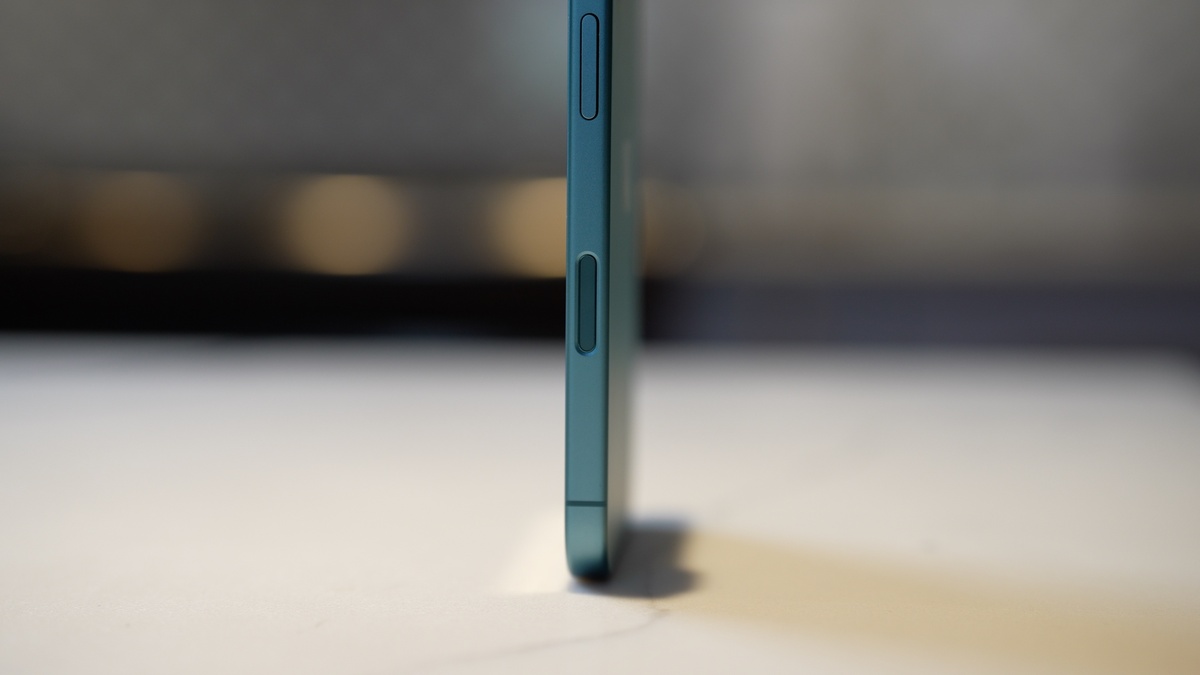
Apple is preparing a transformative iPhone Action button redesign that could permanently retire the dedicated physical trigger on upcoming flagship models, consolidating key shortcut interactions into a unified multi-stage chassis control module.
First reported by MacRumors via Weibo leaker Instant Digital, the ambitious hardware consolidation represents Apple’s latest push toward sleek industrial minimalism across high-end smartphones.
| Hardware Specification | Current iPhone 16 / 17 Pro | Rumored 2027 Flagship Redesign | Functional Engineering Impact |
|---|---|---|---|
| Physical Button Count | 5 Total (Power, Vol+, Vol-, Action, Camera) | 4 Total (Power, Vol+, Vol-, Unified Control) | Reduces chassis penetrations and manufacturing complexity |
| Action Trigger Placement | Upper Left Rail above Volume Rocker | Consolidated into Lower Right Frame | Eliminates accidental presses when adjusting audio levels |
| Primary Activation Input | Dedicated Long-Press Mechanical Button | Unified Multi-Stage Force Sensor Surface | Single click launches camera; long press triggers macro |
| Sensor Technology | Capacitive Swipe Strip with Force Sensor | Refined High-Resolution Pressure Transducers | Lower production cost with zero capacitive phantom touches |
| Target Release Window | Annual Fall Refresh Cycle (September) | Second Half of 2027 (20th Anniversary) | Debuts alongside milestone generational industrial redesign |
Table of Contents
1. Consolidating Dual Inputs: Merging Action and Camera Controls
The cornerstone of the proposed iPhone Action button redesign revolves around combining two distinct hardware inputs into a single ergonomic interface located along the right chassis edge.
Introduced on the iPhone 15 Pro to replace the legacy mute switch, the standalone Action button delivered customizable utility but added another physical cutout to the titanium frame.
Under the unified framework introduced by this iPhone Action button redesign, a quick click opens the camera instantly, while a sustained press triggers user-assigned macros such as Silent mode, flashlight, or custom Shortcuts.
Much like the architectural streamlining observed in the Apple M4 Mac mini redesign and M4 Pro specs, hardware efficiency drives Apple’s modern mechanical evolution.
Consolidating these distinct workflows under the iPhone Action button redesign prevents interface redundancy while maintaining the rapid shortcut access power users demand daily.
2. Gesture Physics and Tactile Feedback: Single Press Versus Long Press
Navigating the iPhone Action button redesign relies entirely on sophisticated haptic differentiation to distinguish between standard photographic controls and macro system actions without accidental triggering.
Apple currently maps long-press gestures on Camera Control to Visual Intelligence, but recent system software updates migrated that feature directly inside the native Camera viewfinder.
Central to the iPhone Action button redesign, freeing the sustained hold gesture allows engineers to repurpose press-and-hold actions for mute toggles, voice memos, and custom automation shortcuts.
A custom Taptic Engine impulse delivers distinct tactile feedback, ensuring users receive physical confirmation when transitioning between light photo focus taps and deeper macro actuations.
Engineering this dual-stage sensory feedback is pivotal for making the iPhone Action button redesign feel intuitive rather than frustrating during fast single-handed mobile operation.
3. Chassis Ergonomics and Left-Rail Simplification: Eliminating Button Clutter
A primary ergonomic motivation behind the iPhone Action button redesign is resolving user confusion along the crowded left perimeter of current high-end iPhone enclosures.
Users frequently report accidentally pressing the Action button when reaching blindly for the volume up rocker, especially when handling larger devices inside protective cases.
Advancing the iPhone Action button redesign, moving customizable triggers to the right frame leaves the left rail exclusively dedicated to volume control, establishing immediate tactile clarity across all device orientations.
Furthermore, eliminating an external mechanical cutout simplifies internal frame machining, enhances structural rigidity, and reinforces water resistance ratings against liquid ingress.
Removing unnecessary chassis seams allows industrial designers to execute the iPhone Action button redesign with cleaner aesthetic lines across next-generation premium finishes.
4. Sensor Architecture Evolution: Transitioning Beyond Capacitive Touch
Supply chain disclosures indicate the iPhone Action button redesign may coincide with a major architectural revision to the underlying solid-state sensor assembly itself.
While initial Camera Control modules utilized complex capacitive touch arrays paired with force sensors, early consumer feedback criticized interface sensitivity and inconsistent swipe gestures.
Reliable component reports indicate Apple plans to replace capacitive layers with advanced high-resolution pressure transducers, substantially lowering bill-of-materials costs while eliminating phantom inputs.
| iPhone Generation | Mute Switch / Shortcut Input | Camera Capture Input | Chassis Machining Complexity | Primary User Pain Point |
|---|---|---|---|---|
| iPhone 14 Pro & Older | Two-Position Mechanical Ring/Silent Switch | On-Screen Virtual Shutter Button | Moderate (Standard rectangular switch cutout) | Limited utility beyond muting notifications |
| iPhone 15 Pro / 16 Pro | Solid-State Programmable Action Button | Capacitive & Pressure Camera Control (16 Pro) | High (Multiple discrete cutouts on both rails) | Accidental Action triggers near volume keys |
| iPhone Duo (Precedent) | No Physical Action Button (Virtual Toggles) | Dedicated Flush Camera Control Strip | Low (Single right-side input channel) | Relies on Control Center for quick system actions |
| 2027 Flagship Models | Unified Dual-Stage Long-Press Macro | Integrated Single-Press Shutter Actuation | Streamlined (Consolidated unified right rail) | Requires disciplined haptic threshold tuning |
Just as precision computing architectures demand disciplined resource balancing, seen when analyzing the AMD Ryzen 7 9800X3D gaming CPU specs, sensor silicon requires refined operational tuning.
Transitioning to force-exclusive sensing provides the structural durability necessary to ensure the iPhone Action button redesign withstands hundreds of daily tactile actuations.
5. Launch Roadmap and 20th Anniversary Flagship Strategy
Industry timelines suggest the iPhone Action button redesign will make its commercial debut during the second half of 2027 alongside Apple’s milestone anniversary hardware.
Marking twenty years since Steve Jobs unveiled the original iPhone, Apple is planning a comprehensive generational redesign spanning advanced silicon, display glass, and unified controls.
The ultra-thin iPhone Duo documented by Apple has already omitted the dedicated Action button while retaining Camera Control, establishing a clear design precedent inside modern product lineups.
As modern operating systems modernize their foundational requirements, demonstrated when Nvidia ends Windows 10 support for PC gamers, flagship mobile hardware must continuously shed legacy baggage.
Positioning this input evolution alongside anniversary tier flagships will showcase the iPhone Action button redesign as a defining feature of modern Cupertino industrial design.
Frequently Asked Questions
Why is Apple rumored to eliminate the dedicated iPhone Action button?
Apple plans the iPhone Action button redesign to reduce chassis clutter, eliminate user confusion between the Action button and volume keys, and simplify internal mechanical manufacturing across future flagship smartphones.
How will the unified Camera Control and Action button function?
A quick single press will launch the camera app or take a snapshot, while a sustained press-and-hold gesture activates user-configured Action shortcuts like Silent mode or the flashlight.
Where did the Visual Intelligence shortcut move in iOS?
Visual Intelligence functionality was moved directly into the native Camera application interface as Siri mode, freeing up the sustained long-press gesture on physical controls for custom macro assignment.
Which existing Apple device already omits the Action button?
The ultra-slim iPhone Duo omitted the physical Action button entirely while keeping the Camera Control module, proving Apple’s willingness to remove redundant buttons from premium smartphone frames.
When is the new combined button interface expected to launch?
Supply chain insider Instant Digital reports the unified control will arrive in late 2027, coinciding with Apple’s landmark 20th-anniversary flagship smartphone generation.
Final Verdict: A Streamlined Vision for Apple Flagship Hardware
The rumored iPhone Action button redesign represents an inevitable maturation of Apple’s industrial philosophy, transforming multiple redundant chassis buttons into a cohesive, context-aware input experience.
By merging tactile shortcut customization with high-speed camera actuation, Apple addresses persistent ergonomic complaints while clearing clutter from the device’s left frame.
If executed with reliable force sensors and intuitive haptics, the iPhone Action button redesign will deliver the streamlined elegance expected from Cupertino’s most ambitious hardware generation.
