


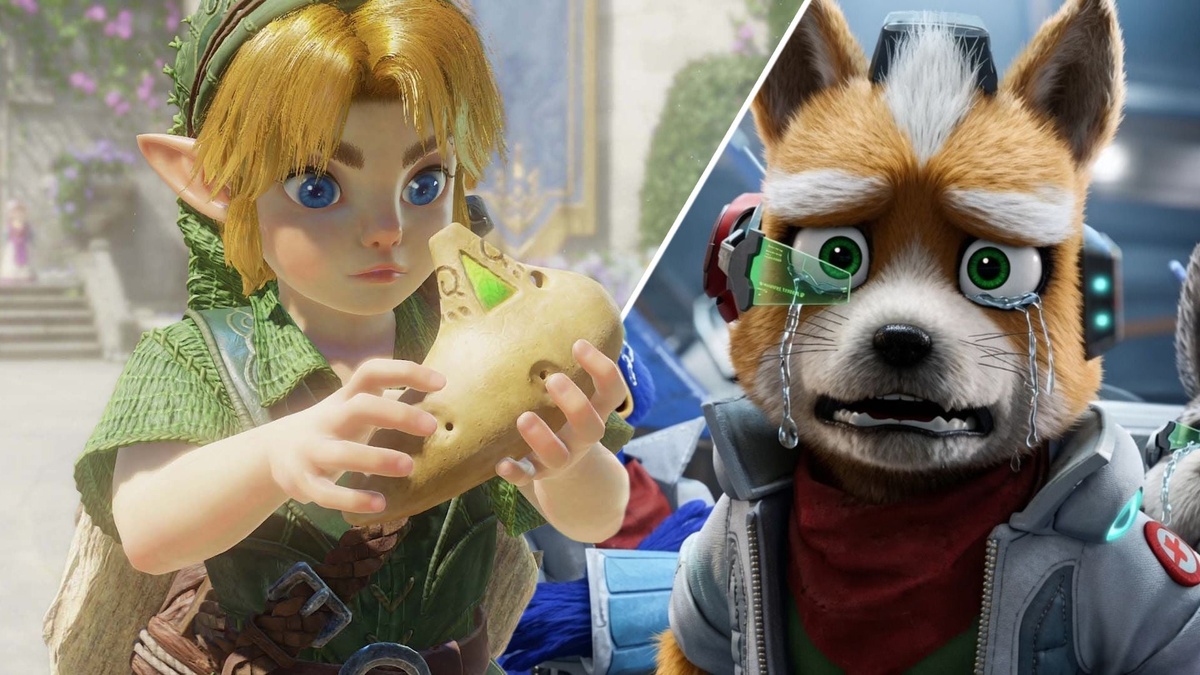
Nintendo has officially confirmed that Nintendo Switch 2 remakes share equal strategic priority alongside brand-new original intellectual properties, validating a comprehensive software roadmap designed to sustain long-term engagement across its next-generation hybrid console hardware ecosystem.
Speaking at the global launch event for The Legend of Zelda: Ocarina of Time reported by Eurogamer, senior vice president Nate Bihldorff revealed that revitalized historical classics hold equivalent institutional importance.
| Title & Release | Original Platform | Switch 2 Enhancement | Sales Benchmark | Core Gameplay Upgrade |
|---|---|---|---|---|
| Star Fox (2026) | Nintendo 64 (1997) | 60 FPS / Modern Shading | 1.17M Copies (Top 10) | Analog Pitch & Reticle Precision |
| The Legend of Zelda: Ocarina of Time | Nintendo 64 (1998) | Rebuilt 3D World / HDR | Critical & Viral Hit | Dynamic Camera & Streamlined Water Temple |
| Fire Emblem: Fortune’s Weave | Brand New Release | Native 4K Docked Engine | Major Series Milestone | Strategic Turn-Based Tactical Combat |
| Xenoblade Chronicles 3 (Enhanced) | Nintendo Switch (2022) | DLSS Upscaled Resolution | Multi-Million Platform Hit | Uncapped Performance & Shorter Loads |
| Animal Crossing: New Horizons (Deluxe) | Nintendo Switch (2020) | Expanded Island Assets | Flagship System Seller | Seamless Multiplayer & High-Res Textures |
Table of Contents
1. Official Pipeline Strategy: Remakes and Brand-New IPs Share Equal Priority
Publishing leadership confirmed that Nintendo Switch 2 remakes occupy a permanent pillar in modern production cycles, dispelling previous community assumptions that historical overhauls merely served as secondary filler between major marquee console franchise launches.
In an in-depth conversation published by Polygon, Bihldorff emphasized that millions of modern console adopters have never experienced classic twentieth-century titles in their original formats.
Rebuilding legendary adventures using modern development frameworks provides an approachable entry point for younger players while satisfying nostalgic veteran enthusiasts eager to revisit formative gaming experiences with contemporary convenience.
Nintendo clarified that funding allocated to Nintendo Switch 2 remakes does not siphon engineering talent away from ambitious unannounced software, ensuring a dependable, continuous cadence of diverse first-party releases throughout upcoming calendar quarters.
This unified dual-track publishing framework establishes software stability across the platform lifespan, providing consistent retail velocity regardless of unexpected production delays in ambitious mainline series titles.
2. Commercial Momentum: Star Fox and Ocarina of Time Drive Hardware Adoption
Financial filings substantiate executive confidence in Nintendo Switch 2 remakes, highlighted by the runaway commercial triumph of Star Fox, which surpassed one point seventeen million copies worldwide shortly after its debut.
Surpassing initial sales projections, Star Fox swiftly secured ninth position on the platform’s all-time commercial software charts, demonstrating immense consumer hunger for beautifully polished classic arcade action on updated hardware.
Industry analysts expect the newly minted Ocarina of Time overhaul to eclipse Star Fox entirely, generating viral social momentum that cements Nintendo Switch 2 remakes as foundational console system sellers.
Player engagement metrics indicate that these remastered releases drive substantial digital deluxe adoption and higher recurring online engagement than traditional re-releases on legacy hardware platforms.
Strong consumer willingness to invest in premium re-creations proves that these first-party revivals provide indispensable financial ballast for publishers, generating predictable software revenue that offsets costly experimental game prototypes.
3. Modern Engine Overhauls: Upgraded Visual Assets and Generational Fidelity
From a technical standpoint, Nintendo Switch 2 remakes represent ambitious ground-up architectural reconstructions rather than simple resolution upscale patches typically seen in rudimentary retro emulation bundles.
Engineering teams deploy physically based rendering, dynamic volumetric illumination, and re-orchestrated acoustic scores, revitalizing nostalgic game worlds with the visual fidelity expected of contemporary premium retail software.
Advanced graphics pipelines resolve vintage gameplay friction through responsive sixty-frames-per-second targeting and updated camera kinematics, ensuring that Nintendo Switch 2 remakes maintain timeless design elegance without historical mechanical awkwardness.
These modernization techniques align closely with hardware advancements evaluated across modern microarchitectures, such as the thermal efficiency seen in our Apple M4 Mac mini redesign M4 Pro specs, prioritizing refined computing pipelines.
Preserving vintage gameplay physics while implementing responsive inputs ensures that modern iterations honor historical authenticity while satisfying contemporary ergonomic controller performance benchmarks.
4. Hardware Specifications & Performance Matrix: Generational Faceoff
Targeting cutting-edge mobile graphics silicon, Nintendo Switch 2 remakes harness sophisticated hardware features including modern machine-learning super sampling and expanded unified memory allocations to deliver immaculate fidelity.
Deep architectural assessments by AnandTech demonstrate how modern mobile silicon bridges the performance gap between handheld gaming devices and dedicated home living-room consoles through intelligent hardware upscaling.
Thermal optimization and silicon efficiency ensure that Nintendo Switch 2 remakes sustain stable portable frame rates without excessive fan acoustic noise or aggressive battery drain during prolonged portable sessions.
| Hardware Dimension | Original N64 Hardware | Legacy Nintendo Switch | Nintendo Switch 2 Profile | Generational Benefit |
|---|---|---|---|---|
| Target Resolution | 240p / 320×240 Native | 720p Mobile / 1080p Docked | 1080p Mobile / 4K DLSS Docked | Crystal Clear Modern Displays |
| Frame Rate Baseline | 20 FPS (Tolerated Dips) | 30 FPS Locked Target | 60 FPS Smooth Pipeline | Zero Input Latency Friction |
| Asset Geometry & Textures | Low-Poly Gouraud Shading | Standard Compressed Textures | Physically Based 3D Models | Living, Vibrant Game Worlds |
| Audio Architecture | Compressed MIDI Synthesizer | Stereo 16-Bit Linear PCM | Dynamic Orchestral Surround | Immersive Acoustic Soundscapes |
| Storage Media & Loading | Cartridge (Up to 64MB) | MicroSD / Flash Memory | High-Speed UFS Solid State | Instantaneous Level Transitions |
This performance consistency mirrors the demanding architectural expectations examined in our analysis of the AMD Ryzen 7 9800X3D gaming CPU specs, where memory throughput defines frame pacing.
Dynamic silicon power scaling guarantees that players enjoy desktop-grade visual clarity during docked television play while retaining portable efficiency when playing these visual upgrades away from home.
5. Pricing Analysis & Catalog Verdict: Long-Term Value for Console Owners
Evaluating software pricing economics reveals why consumers widely embrace Nintendo Switch 2 remakes, as comprehensive ground-up remakes offer dozens of hours of refined entertainment at standard retail pricing tiers.
Unlike ephemeral digital-only subscriptions, physical cartridge availability and robust secondary trade-in liquidity protect consumer purchasing investments across Nintendo’s physical media retail distribution channels.
Comparing ownership value against alternate distribution ecosystems, such as Xbox Cloud Gaming pay as you go bundles, highlights Nintendo’s traditional hardware-bound catalog strengths.
Furthermore, as legacy operating systems lose mainstream compatibility—much like how Nvidia ends Windows 10 support for PC gamers—dedicated console preservation ensures enduring access to classic titles.
Consequently, investing in Nintendo Switch 2 remakes guarantees long-term library stability, giving enthusiastic collectors enduring value across multiple iterative hardware iterations without fear of sudden software obsolescence.
Frequently Asked Questions
Why does Nintendo prioritize remakes alongside new games?
Nintendo confirmed that Nintendo Switch 2 remakes hold equal importance because they introduce seminal franchises to younger generations while giving longtime enthusiasts modernized, high-fidelity versions of beloved classic adventures.
How well did the Star Fox remake perform commercially?
Star Fox achieved outstanding success among Nintendo Switch 2 remakes, moving over one point seventeen million copies worldwide and ranking as the platform’s ninth best-selling title shortly after launch.
Are remakes taking resources away from brand-new games?
No, Nintendo executive Nate Bihldorff confirmed that Nintendo Switch 2 remakes operate on dedicated development tracks that do not compromise the steady pipeline of wholly new upcoming first-party titles.
What visual enhancements do these classic remakes feature?
Engineers build Nintendo Switch 2 remakes with completely rebuilt three-dimensional assets, advanced volumetric lighting, sixty-frame-per-second performance targets, responsive camera controls, and high-definition re-recorded orchestral audio scores.
Which classic games are expected to receive remakes next?
Following the triumph of Star Fox and Ocarina of Time, community expectations for future first-party overhauls center on fan favorites such as Pokemon Black and White, Metroid, and F-Zero.
Final Verdict: The Future of Nintendo’s Hybrid Ecosystem
Nintendo’s strategic commitment to Nintendo Switch 2 remakes reflects a mature, balanced publishing philosophy that honors historic software achievements while driving next-generation hardware adoption across diverse player demographics.
By delivering uncompromising audiovisual enhancements alongside thoughtful quality-of-life gameplay refinements, the company transforms cherished nostalgic masterworks into modern, must-play showcase experiences.
With Star Fox and Ocarina of Time establishing spectacular commercial standards, these classic releases remain an essential cornerstone of Nintendo’s long-term hybrid console leadership.
