


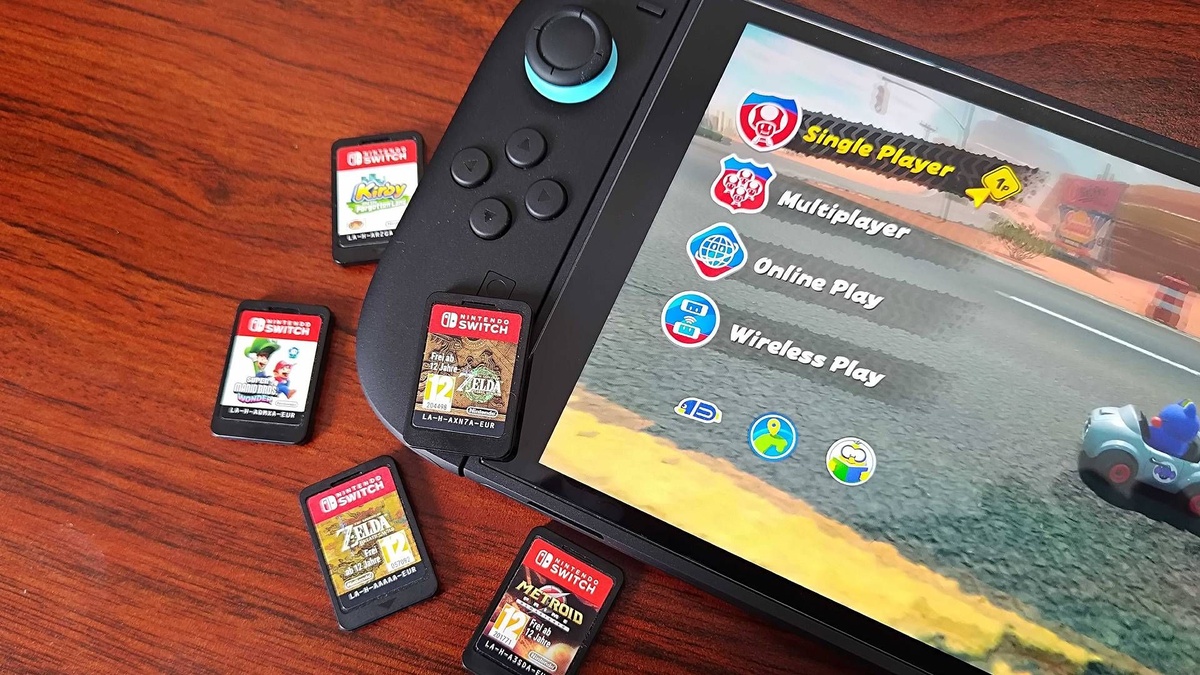
The global semiconductor landscape is witnessing a massive transition as memory fabricators pivot capacity toward artificial intelligence infrastructure. Amid this shift, reports confirm that Nintendo Switch 2 Cartridges remain entirely insulated despite longtime cartridge supplier Macronix winding down legacy physical ROM chip fabrication.
According to primary reporting from GamesRadar and financial disclosures in Taipei Times, Macronix is reallocating manufacturing lines to high-margin enterprise data center flash. However, teardowns confirm next-generation Nintendo Switch 2 Cartridges rely on entirely different fabrication partners.
| Hardware Metric & Spec | Legacy Switch Cartridges | Next-Gen Nintendo Switch 2 Cartridges | Industry Enterprise AI Memory |
|---|---|---|---|
| Silicon Manufacturer | Macronix International (Taiwan) | Rohm Semiconductor & Secondary Fab | TSMC, Micron, SK Hynix |
| Memory Architecture | Planar ROM & XtraROM Flash | High-Density 3D NAND Flash | High-Bandwidth HBM3e & NOR Flash |
| Maximum Storage Capacity | Up to 32 GB (64 GB abandoned) | 64 GB standard high-capacity | Multi-Terabyte enterprise arrays |
| Peak Read Bandwidth | ~300 MB/s proprietary bus | High-speed PCIe NVMe read bus | Up to 1.2 TB/s ultra-wide bus |
| Backward Compatibility Status | Native on original Switch 1 | Full physical backward read support | Not applicable (Server clusters) |
| Supply Chain Disruption Risk | Tapering legacy production run | Zero impact from Macronix exit | Severe hyperscaler allocation crunch |
Table of Contents
1. Macronix Semiconductor Pivot: The Enterprise AI Memory Gold Rush
Macronix International has long served as Nintendo’s primary silicon partner for physical game media, producing proprietary read-only memory chips across generations. However, surging demand for artificial intelligence hardware has prompted the Taiwanese fabricator to redirect production lines toward enterprise hyperscalers.
During recent investor briefings, Macronix chairman Miin Wu announced record quarterly earnings while confirming the company would not expand fabrication capacity. Instead, executive leadership emphasized price increases and prioritization of robust data center flash contracts over low-margin consumer ROM production.
Hyperscale server clusters running large language models consume unprecedented volumes of flash memory chips at premium contract valuations. Consequently, fabricators can capture substantially higher operating margins selling enterprise silicon than stamping physical cartridges for eighth-generation handheld gaming devices.
While this operational pivot sounds alarming for physical preservationists, upcoming Nintendo Switch 2 Cartridges do not depend on Macronix fabs. Nintendo structured its next-generation component sourcing years in advance, avoiding overreliance on legacy mask ROM foundries.
This massive infrastructure realignment parallels the silicon supply trends explored in our AMD Ryzen 7 9800X3D gaming processor breakdown. When semiconductor packaging priorities pivot toward enterprise compute, consumer hardware divisions must engineer agile silicon roadmaps.
2. Switch 2 Cartridge Architecture: Rohm Semiconductor and 3D NAND Silicon
Technical teardowns and patent tracking by Nintendo Patents Watch reveal that Nintendo Switch 2 Cartridges utilize an evolved storage architecture. Rather than relying on Macronix mask ROM, Nintendo partnered with Kyoto-based Rohm Semiconductor to engineer next-generation physical game cards.
Macronix reportedly attempted internal research and development to compete for next-generation media contracts but never finalized commercial qualification. Consequently, Nintendo Switch 2 Cartridges entered pre-production without Macronix integration, leaving the hardware supply chain completely unaffected by today’s announcements.
Architecturally, modern games demand read bandwidth that legacy mask ROM technology cannot deliver without excessive loading latencies. Modern next-generation game cards leverage dense 3D NAND flash memory, allowing streaming open-world titles to ingest assets at speeds competitive with internal solid-state storage.
Transitioning to high-density NAND architectures also resolves persistent capacity constraints that plagued third-party publishers throughout the previous generation. While original cartridges topped out at thirty-two gigabytes, next-generation Nintendo Switch 2 Cartridges easily accommodate sixty-four gigabyte game packages at reasonable manufacturing yields.
These bandwidth advancements mirror the compact architecture enhancements analyzed in our Apple M4 Mac mini silicon deep-dive. Eliminating memory throughput bottlenecks ensures modern processors sustain maximum computational efficiency across demanding interactive gaming workloads.
3. Backward Compatibility Safeguards: Legacy Switch Media on Next-Gen Hardware
The departure of Macronix from ROM fabrication naturally raises questions regarding legacy physical game preservation and backward compatibility. Fortunately, Nintendo Switch 2 Cartridges interface with a revised card reader mechanism engineered with dual-mode read logic.
Nintendo president Shuntaro Furukawa has repeatedly affirmed that backward compatibility remains a cornerstone pillar of the next console ecosystem. While new software arrives on Nintendo Switch 2 Cartridges, the physical slot maintains pin compatibility to read existing library cards seamlessly.
Because Switch 1 games utilize read-only mask ROM, existing cartridges will continue functioning indefinitely without relying on active server authentication. Players can transition their physical collections over to next-generation hardware alongside upcoming physical releases without friction or subscription gates.
For original Switch owners, boutique physical publishers may face tighter wafer supplies as Macronix completes its production wind-down. However, major distributors possess substantial stockpiles of blank memory dies, ensuring late-cycle Switch 1 physical releases complete scheduled distribution runs.
Managing generational software transitions mirrors the enterprise platform shifts evaluated in our Nvidia Windows 10 driver retirement report. Sustaining long-term backward compatibility safeguards customer investment while transitioning audiences seamlessly toward advanced next-generation silicon platforms.
4. Fabrication Logistics & Supply Chain: Mitigating Wafer Allocation Bottlenecks
Global memory markets are experiencing severe pricing pressure as artificial intelligence hyperscalers buy up available cleanroom wafer capacity. Securing dedicated manufacturing volume for Nintendo Switch 2 Cartridges required proactive multi-source silicon contracts with diversified semiconductor foundries.
Industry analysts note that memory shortages previously threatened to push next-generation console price points into unprecedented territory. By locking in primary volume agreements with Rohm Semiconductor, Nintendo ensured Nintendo Switch 2 Cartridges remain economically viable for retail software partners.
Dual-sourcing strategies protect consumer electronics manufacturers from sudden geopolitical or commercial shocks within regional manufacturing hubs. While Macronix reallocates fab tools to enterprise clients, secondary foundries ensure production of Nintendo Switch 2 Cartridges proceeds without factory downtime or delays.
| Architectural Feature | Switch 1 Game Card (Macronix) | Switch 2 Game Card (Rohm / Next-Gen) | Competitive Impact |
|---|---|---|---|
| Primary Memory Substrate | Mask ROM / XtraROM | 3D V-NAND Flash Silicon | High read density & throughput |
| Interface Bus Architecture | 8-bit Custom Parallel Bus | Multi-lane PCIe NVMe Bus | Eliminates texture loading hitching |
| Base Capacity Range | 8 GB, 16 GB, 32 GB | 16 GB, 32 GB, 64 GB | Accommodates 4K textures easily |
| Fab Allocation Security | Phasing out for AI data centers | Multi-vendor dedicated allocation | Stable retail cartridge pricing |
| Physical Enclosure Form | Standard red case card | Modified notched security shell | Prevents accidental cross-insertion |
Establishing resilient multi-source foundries prevents the supply chain vulnerabilities that frequently disrupt consumer hardware launches. Robust procurement ensures next-generation game media achieves steady delivery cadence throughout global holiday shipping channels without spot-market semiconductor markups.
These physical supply chain considerations parallel the cloud infrastructure economics detailed in our Xbox Cloud Gaming streaming architecture analysis. Balancing fixed hardware manufacturing expenses against recurring distribution channels dictates profitability across modern interactive entertainment ecosystems.
5. Retail Economics & Game Distribution: Physical Media Longevity vs. Digital Downloads
While competitors like PlayStation and Xbox increasingly steer consumers toward all-digital storefronts, Nintendo maintains a fierce commitment to physical retail. Commercial packaging for Nintendo Switch 2 Cartridges guarantees high-margin shelf space across major global retailers like Walmart, Target, and Best Buy.
Retail visibility remains fundamental to Nintendo’s family-focused marketing strategy, where physical game boxes represent prime gift items during holiday seasons. Ensuring steady production of physical game media protects this vital retail presence from digital erosion.
Furthermore, gamers frequently object to empty game cases containing mere digital download codes, derisively termed game-key cards. With modern high-capacity Nintendo Switch 2 Cartridges, publishers can store complete game builds on physical media without forcing massive launch-day patch downloads.
Consumer demand for tangible media explains why securing reliable fabrication partners for Nintendo Switch 2 Cartridges was essential. Gamers value physical ownership, offline playability, and secondary resale markets, attributes that purely digital distribution models cannot replicate.
Ultimately, Macronix’s pivot toward enterprise data centers underscores the diverging economic priorities between AI infrastructure and consumer electronics. By diversifying manufacturing partners, Nintendo ensures Nintendo Switch 2 Cartridges deliver premium physical gaming experiences for years to come.
Frequently Asked Questions
Why is Macronix exiting the cartridge ROM manufacturing business?
Macronix is pivoting fabrication capacity toward enterprise artificial intelligence data centers, where high-density NOR and NAND flash memory commands substantially higher profit margins and sustained commercial demand compared to legacy gaming ROM chips.
Will Macronix exiting ROM production delay or impact Nintendo Switch 2 cartridges?
No. Supply chain teardowns and patent filings confirm that Nintendo selected Rohm Semiconductor and alternative memory partners for next-generation silicon, leaving upcoming Nintendo Switch 2 Cartridges entirely insulated from Macronix’s legacy production shift.
Will Nintendo Switch 2 support physical backward compatibility for original Switch game cards?
Yes. Nintendo leadership has officially affirmed backward compatibility for existing physical cartridges. The next-generation console features hardware read-compatibility, allowing legacy physical games to run smoothly without requiring repurchase or cloud streaming.
How do next-gen Nintendo Switch 2 cartridges differ architecturally from Switch 1 cards?
Switch 1 cartridges relied on proprietary Macronix XtraROM flash memory topping out at thirty-two gigabytes, whereas next-generation cartridges adopt advanced high-speed 3D NAND architectures supporting up to sixty-four gigabytes and PCIe bandwidth.
Is Nintendo planning to phase out physical game cartridges in favor of all-digital distribution?
Nintendo has reiterated that it has no plans to abandon physical game media. Physical cartridges represent vital retail presence, strong collector demand, and direct consumer ownership that distinguish Nintendo from purely digital competitors.
Final Verdict: What the Cartridge Supply Shift Means for Nintendo Switch 2
The announcement that Macronix is winding down physical ROM fabrication marks the natural twilight of eighth-generation cartridge technology. However, gamers can rest assured that Nintendo Switch 2 Cartridges remain on schedule with advanced 3D NAND architecture and dedicated semiconductor fabrication lines.
By establishing manufacturing partnerships with Rohm Semiconductor and secondary memory fabricators, Nintendo successfully sidestepped the enterprise silicon crunch. Physical Nintendo Switch 2 Cartridges will deliver faster read speeds, expanded storage capacities, and authentic offline ownership without being compromised by data center competition.
As the gaming industry grapples with digital preservation challenges and server closures, Nintendo’s sustained commitment to physical cartridges offers welcome stability. Consumers investing in upcoming Nintendo Switch 2 Cartridges can expect robust hardware performance, seamless backward compatibility, and enduring physical media value.
