


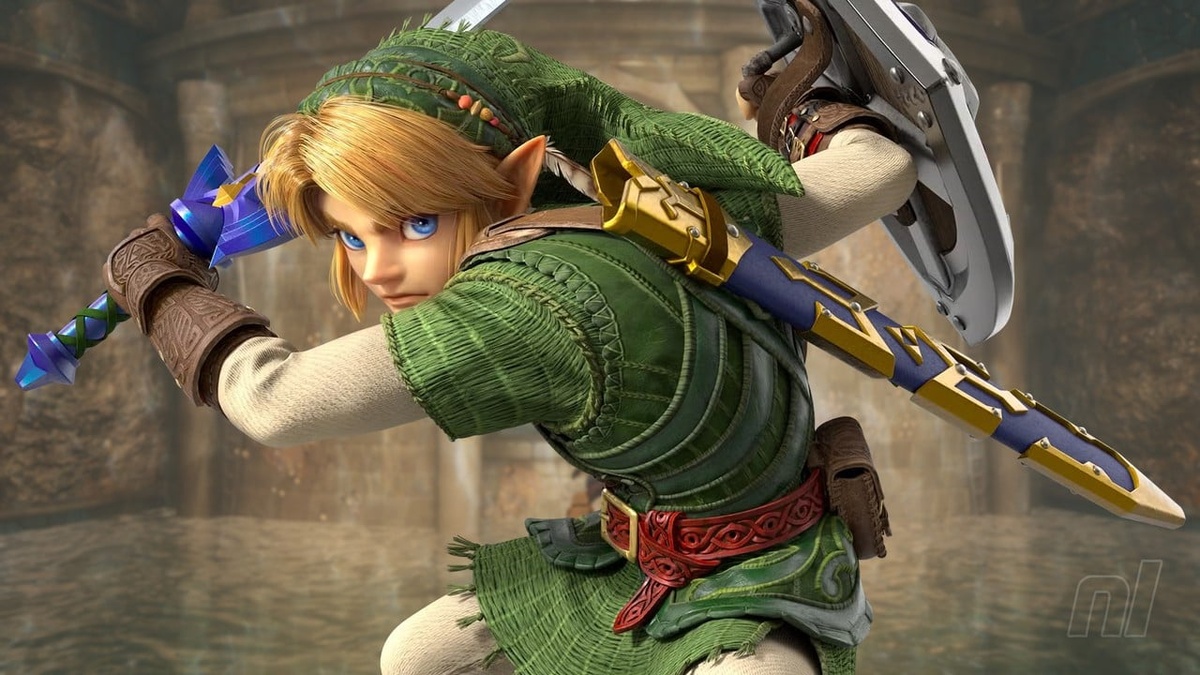
Nintendo has officially detailed major structural revisions for the Ocarina of Time Water Temple in the upcoming Nintendo Switch 2 remake. Series producer Eiji Aonuma described the overhaul as overdue homework, addressing mechanical frictions that persisted for twenty-eight years.
Through updated spatial geometry, streamlined equipment toggles, and contemporary rendering techniques, the beloved classic reimagines its most infamous labyrinth. Players can expect authentic environmental immersion without the tedious inventory management that historically hampered navigation.
At-a-Glance: Ocarina of Time Water Temple Specifications & Architectural Overhaul
| Dungeon Feature & Mechanic | N64 Original (1998) | Switch 2 Remake (2026) |
|---|---|---|
| Iron Boots Equipment Method | Pause Screen Sub-Menu Selection | Direct D-Pad Instant Toggle Shortcut |
| Chamber Visibility & Partitions | Solid Opaque Stone Walls | Ornate See-Through Lattice Structures |
| Water Elevation Level Cues | Static Geometric Wall Inscriptions | Dynamic Luminescent Waterline Markers |
| Acoustic & Audio Processing | Monophonic Submerged Filter | Full 3D Spatial Freediving Soundstage |
| Target Display & Frame Rate | 240p Output at 20 Frames Per Second | Dynamic 4K Output at 60 Frames Per Second |
| Combat & Camera Alignment | Rigid Z-Targeting Frame Locking | Dynamic Dual-Stick Free Camera & Tracking |
Table of Contents
1. D-Pad Iron Boots Toggling: Eliminating Decades of Menu Latency
The defining grievance of the original 1998 dungeon centered on the cumbersome pause menu required to equip and unequip footwear. In the updated Ocarina of Time Water Temple, director HokWai Ng confirmed that boot management is now mapped directly to the directional pad.
This input modernization mirrors the fluidity introduced in the handheld 3DS edition while eliminating repetitive screen transitions. Players can transition between floating and sinking in fractions of a second, preserving momentum across deep vertical water shafts.
Much like architectural efficiency gains highlighted in our breakdown of the AMD Ryzen 7 9800X3D processor, removing procedural bottlenecks fundamentally elevates real-time operational fluidity across complex interactive gameplay environments.
According to the official Ask the Developer interview on Nintendo Life, this responsive control scheme allows adventurers to engage underwater enemies dynamically without breaking atmospheric immersion.
Rapid footwear swapping transforms platforming sequences that once felt punitive into rewarding spatial tests. By unlinking gear alterations from full-screen inventory menus, the team restores natural exploration cadence across the entire subterranean structure.
Eliminating equipment latency represents the single most impactful ergonomic upgrade for the modern Ocarina of Time Water Temple. Modern control ergonomics allow the dungeon’s deliberate puzzle architecture to shine without artificial friction.
2. Lattice Wall Structural Redesign: Solving Spatial Disorientation
Spatial disorientation inside the central multi-tiered tower has confounded generations of adventurers tackling the Ocarina of Time Water Temple. Solid stone partitions previously obscured adjacent corridors, making it exceptionally difficult to track which chambers remained unexplored.
To address this disorientation, Nintendo redesigned key interior barriers into ornate lattice-style architectural structures. These see-through structural frameworks allow players to look directly into adjoining chambers, establishing intuitive visual landmarks across all three vertical water elevations.
Director HokWai Ng highlighted that visual transparency dramatically reduces accidental circular backtracking without simplifying the underlying spatial geometry. Adventurers can now observe water gates and Hookshot targets through intricate metalwork before altering reservoir volumes.
Preserving dungeon complexity while clarifying room relationships reflects an elegant approach to environmental game design. Rather than flattening layout challenges, visual sightlines empower players to solve intricate logistical puzzles through clear perceptual feedback.
Dynamic interior lighting further enhances these lattice partitions, casting realistic aquatic caustic reflections across nearby corridors. Players immediately grasp spatial connections between the central column and perimeter rooms throughout the revamped Ocarina of Time Water Temple.
3. Freediving Acoustics & Immersion: Eiji Aonuma’s Original Creative Vision
Eiji Aonuma revealed that his original 1998 design philosophy drew direct inspiration from personal freediving excursions. When drafting the initial concept, few 3D video games permitted full underwater traversal, prompting his ambition to capture distinct aquatic sensations.
Submerged acoustic resonance played a pivotal role in establishing that atmospheric distinction nearly three decades ago. On Nintendo Switch 2 hardware, advanced 3D spatial audio filters recreate the muffling, pressure shifts, and resonant echoes unique to deep-water submersion.
As discussed in our ongoing reporting on Nvidia ending Windows 10 support, modern consumer architectures prioritize dedicated processing pipelines to render lifelike physical simulations and immersive auditory environments seamlessly.
Echoing the historical design intent described on Nintendo’s official website, these acoustic enhancements realize Aonuma’s authentic vision. Submersion feels wondrous and physically grounded rather than merely serving as an obstacle course.
Fluid dynamics and bubble particle physics receive identical hardware acceleration, producing volumetric refraction when adjusting depth. Navigating the modernized Ocarina of Time Water Temple fulfills the developer’s creative aspiration of delivering pure, contemplative underwater exploration.
4. Generational Dungeon Architecture: N64, 3DS, and Switch 2 Compared
Examining the historical evolution of the Ocarina of Time Water Temple reveals how iterative hardware advances reshaped player experience. Each subsequent console generation dismantled technical constraints that previously compromised the temple’s ambitious multi-planar design.
The 1998 Nintendo 64 release pushed silicon boundaries with real-time liquid geometry, but cartridge memory limitations forced cumbersome inventory pauses. Furthermore, strict fill-rate limitations precluded transparent wall geometry, leaving interior chambers isolated by opaque stone.
In 2011, Grezzo’s 3DS remaster took vital first steps toward accessibility by adding touch-screen boot shortcuts and glowing wall paths. However, dual-screen ergonomics and modest portable compute power prevented full-scale spatial geometry re-engineering.
Similar to cloud gaming scalability analyzed in our review of Xbox Cloud Gaming subscription models, dedicated hardware capabilities dictate whether ambitious virtual architectures achieve seamless end-user performance.
With Switch 2 silicon, developers finally unify 60 FPS performance, lattice spatial visibility, and instant D-pad toggles. This technological leap cements the definitive presentation of the legendary Ocarina of Time Water Temple.
Generational Hardware Matrix: Ocarina of Time Water Temple Evolution
| Hardware Generation | Platform Architecture | Boot Swap Latency | Room Visibility Scheme | Spatial Navigation Aids |
|---|---|---|---|---|
| Generation 1 (1998) | Nintendo 64 (Cartridge ROM) | High (Full Pause Screen) | Solid Stone Partitions | Manual Map Orientation |
| Generation 2 (2011) | Nintendo 3DS (Dual Screen) | Low (Touch-Screen Tap) | Solid Walls with Decals | Color-Coded Floor Paths |
| Generation 3 (2026) | Nintendo Switch 2 (Custom Silicon) | Zero (Direct D-Pad Action) | Open Lattice Frameworks | 3D Markers & Fluid Caustics |
5. Quality-of-Life vs. Classic Challenge: Balancing Modern Accessibility
Modernizing classic game mechanics frequently sparks debate between purist preservation and user-friendly accessibility. Inside the updated Ocarina of Time Water Temple, Nintendo strikes an admirable equilibrium that respects veteran problem-solving while removing artificial frustration.
The labyrinth retains its signature three-tiered water elevation logic, requiring players to deduce causal links between distant valves. By keeping puzzle mechanics intact, the remake preserves the cerebral satisfaction of mastering a vast hydraulic puzzle box.
What disappears is the punitive busywork that historically generated community animosity. Misplacing a small key or forgetting an elevator shaft no longer demands dozens of slow menu cycles, transforming traversal into an engaging intellectual rhythm.
Encountering Dark Link in the misty illusion room similarly benefits from modernized lock-on responsiveness and steady camera tracking. Combat encounters inside the submerged fortress feel crisp, deliberate, and mechanically fair across handheld and docked play.
Modern players will discover why this subterranean facility remains a high-water mark of non-linear spatial puzzle design. Purged of menu sluggishness, the temple finally receives the unvarnished appreciation its visionary architecture originally warranted.
Frequently Asked Questions
What specific changes did Nintendo make to the Ocarina of Time Water Temple?
Nintendo updated the Ocarina of Time Water Temple with instant D-pad Iron Boots toggling, replaced solid walls with transparent lattice structures to improve spatial awareness, introduced 3D spatial underwater audio, and enhanced visual flow paths across all water elevation levels.
How does the Switch 2 handle Iron Boots compared to the N64 original?
On the N64, players had to pause the game and open the sub-screen inventory each time they equipped footwear. The Switch 2 remake maps the Iron Boots directly to the D-pad, enabling instantaneous toggling during active traversal.
Why did Eiji Aonuma call the Ocarina of Time Water Temple his overdue homework?
Series producer Eiji Aonuma created the original dungeon twenty-eight years ago. He acknowledged that interface friction and navigation issues haunted player perception for decades, prompting his personal commitment to polish the aquatic temple for the Switch 2 remake.
Does the lattice wall redesign make the Ocarina of Time Water Temple too easy?
No, the underlying puzzle logic, multi-tier water manipulation, and key placements remain completely intact. The lattice structures merely grant sightlines into adjacent rooms, reducing frustrating blind backtracking while preserving cerebral puzzle solving.
When does the Zelda remake containing the updated Ocarina of Time Water Temple release on Nintendo Switch 2?
The full Zelda Ocarina of Time remake launches worldwide in November 2026 alongside the Nintendo Switch 2, featuring complete graphical upgrades, 60 FPS performance, and comprehensive quality-of-life revisions for the subterranean dungeon.
Final Verdict: A Masterclass in Corrective Dungeon Design
Eiji Aonuma’s dedication to refining his twenty-eight-year-old creation demonstrates Nintendo’s thoughtful approach to legacy preservation. The reimagined Ocarina of Time Water Temple addresses every legitimate mechanical complaint without sacrificing its brilliant architectural complexity.
Through instant D-pad boot controls and transparent lattice sightlines, navigation friction dissolves into intuitive spatial discovery. Experiencing the Ocarina of Time Water Temple on modern hardware highlights the sheer ambition that defined the 1998 classic from its inception.
As the flagship title on Nintendo Switch 2, this definitive edition proves that classic dungeon design can thrive in the modern era. Adventurers preparing to dive into Lake Hylia will discover an enduring masterpiece finally operating at its fullest potential.
